


KT Returns to 1 Trillion Won Operating Profit for the First Time in 3 Years
 Published2016.01.29 12:18
KT has returned to the '1 trillion won annual operating profit club.' This is the first time in three years since 2012.
KT announced on the 29th that it recorded consolidated revenue of 22.2812 trillion won and an operating profit of 1.2929 trillion won in 2015. Total service revenue increased by 2.4% year-on-year due to growth in all sectors excluding the wired business. Operating profit turned significantly positive compared to the previous year, driven by subscriber and revenue growth resulting from the strengthening of core competitiveness in key businesses, coupled with efforts for structural cost innovation.
The wireless business recorded sales of 7.3707 trillion won. Wireless service revenue grew 3.4% year-on-year, driven by factors such as increased LTE penetration, higher data usage, and the 활성화 (revitalization) of sales for data value-added products like 'data top-up'. Despite a decrease in other revenues, such as the abolition of subscription fees and reductions in interconnection rates, total wireless revenue increased by 0.7% year-on-year.
At the end of last year, LTE subscribers reached 12.83 million, accounting for 71.1% of total subscribers. ARPU in the fourth quarter was 36,491 won, a 0.8% increase from the previous quarter. In particular, amidst accelerating competition in data-based services, KT's wired and wireless gigabit networks and product competitiveness were recognized in the market, leading to continued growth in wireless ARPU.
The wired business recorded sales of 5.1587 trillion won, down 6.9% from the previous year due to the decline in landline telephone revenue. However, Gig Internet is receiving a positive response, with customers recognizing its wide coverage and speeds up to 10 times faster than existing internet, achieving 1.1 million subscribers just over a year and three months after its nationwide commercial launch. With the popularity of gigabit internet driving a rebound in high-speed internet revenue and ARPU for two consecutive quarters starting from the third quarter of 2015, gigabit products are expected to contribute to improving the revenue structure of the wired business in the future.
The wired business decreased by 6.9% compared to the previous year due to the impact of declining landline telephone revenue.
Revenue from the media/content business increased by 10.2% year-on-year to 1.6623 trillion won.
Revenue from the media/content business increased by 10.2% year-on-year to 1.6623 trillion won. In particular, amidst increasingly fierce competition in the pay TV market, IPTV surpassed 6.5 million subscribers, achieving its net growth target from the previous year thanks to content optimized for customer preferences and the preemptive expansion of UHD channels. This year, KT will continue to maintain its leadership in the media/content market by strengthening cooperation with group companies such as Skylife, KTH, KT Music, and Nasmedia.
Revenue from the financial business recorded 3.411 trillion won, up 5.9% year-on-year, driven by strong BC Card sales resulting from increased card usage. Revenue from other services recorded 1.911 trillion won, up 29.5% year-on-year, as IT/solution sales grew significantly due to successful global ICT business orders.
Meanwhile, KT is concentrating its investment spending on Giga infrastructure this year. It plans to expand Giga coverage to 100% within the year, covering apartment complexes nationwide. Furthermore, the company intends to dramatically improve customer perception of KT's technology and services by upgrading Giga Internet, Giga Wi-Fi, and Giga LTE to the next level.
Future growth businesses accelerate performance through 'selection and concentration.' In the five major future convergence fields of smart energy, integrated security, next-generation media, healthcare, and intelligent traffic control, we secure business models capable of rapid expansion and continuously develop new models such as smart farms. The discovered growth business models are integrated with powerful gigabit infrastructure to jointly promote the transition into major platform-based businesses such as O2O, fintech, and IoT.
Strengthen 'Industrial IoT' business and 'Home IoT'
Will unveil home IoT platform 'IoTMakers'
In the IoT sector, KT is expanding 'Industrial IoT' business models that converge with other industries based on intelligent infrastructure such as big data and cloud computing, while simultaneously strengthening 'Home IoT' targeting general consumers. KT's Home IoT aims to go beyond simply controlling devices via mobile devices and continuously launch services that provide significant value to customers, focusing on areas such as family, home, and healthcare. It is also introducing convergence services linked to the Home IoT platform, 'IoTMakers'.
Following the introduction of home IoT-related products such as 'Olleh GiGA IoT Home Fitness' and 'Olleh GiGA IoT Home Cam' last year, KT launched 'Olleh GiGA IoT Home Manager' this year, which protects home safety through digital door locks and the like. In addition, we plan to incorporate IoT into home appliances such as air conditioners with Samsung Electronics during the first quarter.
“Last year, marking the 130th anniversary of telecommunications in Korea, KT succeeded in improving profitability through a clear turnaround in core businesses and structural cost improvements,” said Executive Vice President and CFO Shin Kwang-seok. “This year, we will do our utmost to leap forward as ‘Global No. 1 KT’ by further strengthening the growth and profitability of the telecommunications business based on KT’s unique top-tier technology and services, and by generating results in future growth businesses.”

관련뉴스
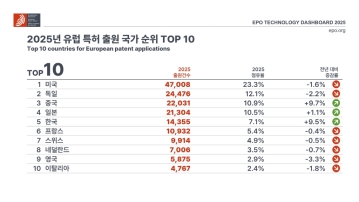
European Patent Applications Surpass 200,000 for the First Time… South Korea Maintains 5th Place, Led by Batteries and Telecommunications
유럽특허청(EPO)의 ‘기술 대시보드 2025’에 따르면 지난해 유럽 특허 출원은 20만1974건으로 처음 20만건을 넘었다. 한국 기업과 발명가의 출원은 1만4355건으로 전년보다 9.5% 증가해 국가별 5위를 유지했다. 배터리와 디지털 통신, 반도체가 증가세를 이끌었고, 삼성은 2년 연속 EPO 최대 출원 기업, LG는 3위에 올랐다. 서울·수원·용인 등 국내 주요 도시의 존재감도 확인됐다. 한국의 유럽 특허 전략이 개별 기술을 넘어 산업 전반으로 확장되고 있다는 점도 드러났다.
2026.03.24by 명세환 기자

SK Telecom First Applies AI-Based Network Operations at Gwanghwamun K-Pop Concert
SK텔레콤이 3월 21일 서울 광화문 일대에서 열린 대형 K-팝 공연에 AI 기반 네트워크 운영 시스템을 처음 적용해 통신 품질을 관리했다고 밝혔다. 공연 전후 3시간 동안 모바일 데이터 사용량은 12.15TB로 직전 주말 같은 시간대보다 약 2배 늘었다. SK텔레콤은 AI 시스템 ‘A-One’을 활용해 5분 단위, 50m 단위로 트래픽을 감시하며 과부하 가능성에 대응했고, 임시 통신 시설과 현장 인력 운영도 병행했다. 밀집 행사와 외국인 이용 수요가 동시에 늘어나는 환경에서 AI 기반 자율 네트워크 운영의 현장 적용 가능성을 확인한 사례로 해석된다.
2026.03.23by 명세환 기자
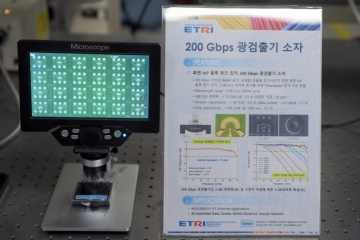
ETRI Develops 200Gbps Photodetector… Initiates Localization of Optical Receivers for AI Data Centers
한국전자통신연구원(ETRI)이 채널당 200Gbps급 광신호를 처리하는 광검출기 소자를 국내 최초로 개발했다. 이 소자는 광신호를 전기신호로 바꾸는 부품으로, AI 데이터센터와 5G·6G 통신망의 수신 성능을 좌우한다. ETRI는 70GHz 이상 대역폭과 0.75A/W 이상 광응답도를 구현했고, 칩 후면에 인듐인화물 렌즈를 집적해 광수신 효율과 정렬 편의성을 높였다고 밝혔다. 기술은 OECC 2025에서 발표됐고 최근 국제학술지 ‘Optics Express’에도 게재됐다.
2026.03.19by 명세환 기자
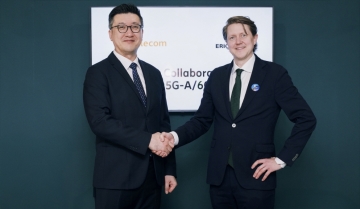
SKT and Ericsson Expand Joint Research on AI Networks… Preparing for 6G Beyond 5G Advancement
SK텔레콤이 에릭슨과 손잡고 AI 기반 모바일 네트워크 협력을 확대한다. 양사는 19일 5G 고도화부터 6G 표준화까지 아우르는 업무협약을 체결하고, AI-RAN, 개방·자율 네트워크, 보안, 미래 통신기술 분야에서 공동 연구와 검증에 나서기로 했다. 이번 협력은 현재 5G 운용 효율을 높이는 동시에, AI가 네트워크 전반에 내재화되는 6G 환경에 대비하려는 움직임으로 풀이된다. 통신망 운영 자동화와 멀티벤더 환경 대응, 에너지 효율 개선, 통신·센싱 융합 기술 검토도 포함됐다.
2026.03.19by 배종인 기자
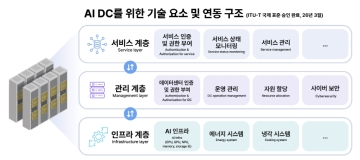
SKT Receives International Standard for AI Data Center Interconnection Structure… Establishes Operating System Standards
SK Telecom's proposed AI data center interworking architecture has received final approval as an international standard at the International Telecommunication Union Telecommunication Standardization Sector (ITU-T) conference. The core of this standard is the classification of AI data centers into three layers—service, management, and infrastructure—and the organization of signaling requirements between layers. As AI service proliferation increases the importance of interworking among various systems within data centers such as computation, power, cooling, storage, and security, this standard is significant in that it presents a common architecture for operations and service delivery. SK Telecom stated that it initiated the relevant standardization project in 2024 and achieved this approval following approximately two years of discussion.
2026.03.18by 명세환 기자











