



Lattice Semiconductor Expands Connectivity and Acceleration Products
 Published2016.02.25 10:12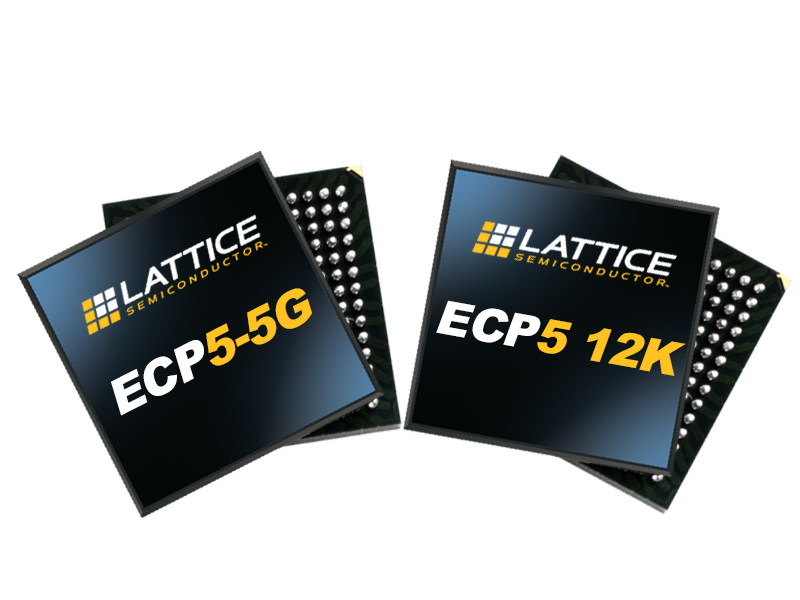
Cost-Optimized in 12K LUT Devices
Lattice Semiconductor, a leading provider of customized smart connectivity solutions, has announced an expansion of its ECP5™ connectivity and acceleration FPGA product family, which is characterized by low power consumption and small form factor. These new products are pin-compatible with ECP5 FPGAs, enabling OEMs to seamlessly update existing designs to meet continuously evolving interface requirements in industrial, communications, and consumer markets.
Lattice's ECP5-5G product family is the only FPGA product line that supports 5G SERDES and up to 85K LUT in a compact 10x10mm package form. The ECP5-5G products support multiple 5G protocols including PCI Express Gen 2.0, CPRI, and JESD204B. They provide seamless connectivity between ASICs and ASSPs in a variety of applications including cameras, displays, gaming platforms, small cells, and low-end routers. Additional resources such as software, device samples, soft IP, and hardware boards are available upon request.
The ECP5 12K product supports programmable I/O for currently prevalent interface bridging functions such as LVDS, MIPI, and LPDDR3. It also provides a cost-optimized combination of logic, memory, and DSP resources for additional pre- and post-processing operations in various applications such as LED controllers, machine vision, and motor control. Software and device samples are provided upon request.
Deepak Boppana, Director of Product Marketing at Lattice Semiconductor, stated, "The ECP5 FPGA product family has proven to be an ideal solution meeting the requirements for connectivity flexibility in applications where low power consumption, small form factor, and low cost are critical," and added, "The newly introduced ECP5-5G and ECP5 12K devices will enable customers to continue leveraging these differentiated advantages while bringing next-generation designs to market more rapidly."
Comments
Related news
Lattice Semiconductor's MachXO3™ Family Supports 900Mbps MIPI® D-PHY
Lattice Semiconductor announced that its MachXO3™ device family has expanded functionality to support up to 900Mbps per lane for MIPI D-PHY interfaces. These capabilities are immediately available upon receiving the latest Lattice Diamond 3.6 design tool suite software update.
2015.10.30by
Lattice to Supply Industrial USB 3.0 Cameras
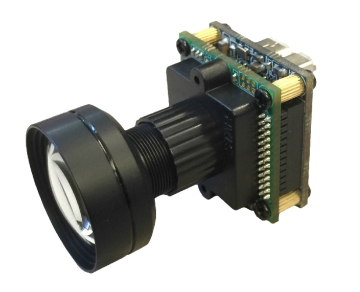
Lattice Semiconductor announced that its technology has been integrated into Leopard Imaging's new USB 3.0 camera module. Leopard Imaging is an embedded camera company.
2015.11.05by

Lattice Controller Adopted in Salcom's USB Type-C Charger
Lattice Semiconductor announced today that its flexible USB Type-C port controller, the LIF-UC™ device, has been adopted in Salcomp's SPEEDY charging adapter, the world's largest mobile device battery charger manufacturer. Salcomp stated that it plans to use Lattice's upgradeable port controller in future intelligent USB Type-C accessories that will deliver higher power to mobile devices.
2016.01.06by
Lattice Charge Controller supports Qualcomm's Quick Charge standard
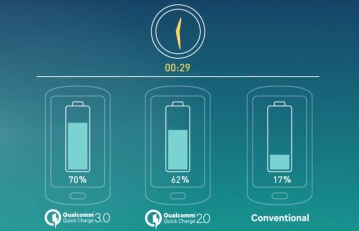
Lattice Semiconductor announced today that its flexible charging controller LIF-UC™ product family supports Qualcomm®'s Quick Charge™ standard. Quick Charge 2.0 and 3.0 technologies are products of Qualcomm Technologies, Inc., a subsidiary of Qualcomm Incorporated.
2016.01.07by
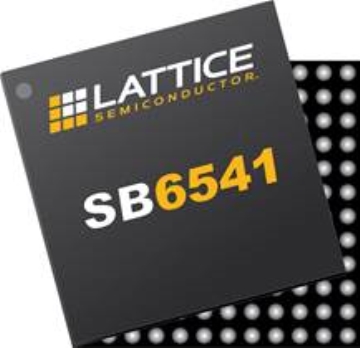
Lattice Semiconductor Announces Processor for Wireless Access and Backhaul Applications
Lattice Semiconductor announced today the launch of a new baseband processor. The SB6541 is designed to be used in fixed wireless access and wireless backhaul for urban broadband infrastructure such as LTE small cells and metro Wi-Fi access points, in combination with Lattice's Sil6340 and Sil6342 RF transceivers.
2016.02.18by 명세환 기자











