


Banking accounts for 20% of the global cognitive systems market, followed by retail and healthcare sectors.
 Published2016.03.25 22:41
According to a recent study (Worldwide Semiannual Cognitive Systems Spending Guide) by IT market analysis and consulting firm IDC (www.idc.com), the global cognitive systems market is projected to grow rapidly, showing a compound annual growth rate (CAGR) of 55% over the next five years starting from last year.
The market size is expected to reach $31.3 billion (*based on spending) in 2019. This study expanded the scope of research by including spending on cognitive computing-related hardware and services in addition to IDC's existing cognitive software forecasts. In addition, it provides detailed information on the cognitive systems market by region, industry, and use case.
Cognitive computing is one of the six innovative technologies defined by IDC, including IoT, next-generation data security, 3D printing, cognitive technology, robotics, and augmented/virtual reality, and is attracting attention as a key technology driving digital transformation by generating new revenue, leading information-based organizations, and changing the way work is done.
▲ Google DeepMind Artificial Intelligence
During the forecast period, more than 40% of the total cognitive systems market is expected to be concentrated on cognitive applications (including text and rich media analysis, tagging, search, machine learning, classification, clustering, hypothesis generation, question answering, visualization, filtering, alerting, and exploration) and cognitive software platforms (facilitating intelligence, advisory, and cognitive solutions).
The largest and fastest-growing field is cognitive applications
The largest and fastest-growing sector in cognitive systems is cognitive applications, which is projected to grow to $13.4 billion in 2019. Following this, cognitive computing-related services (*business services and IT consulting) are showing the second fastest growth, and the hardware sector (mainly servers and storage) is also expected to grow rapidly, rivaling that of software.
David Schubmehl, Research Director for Cognitive Systems and Content Analytics at IDC, stated, "A major innovation and resurgence is taking place in the information processing and analysis of unstructured and semi-structured data." "He said, 'This has equipped a new generation of tools and capabilities to provide intelligent assistance, advice, and recommendations to consumers and knowledge workers worldwide.'"
He went on to explain, "As cognitive solutions are developed and built based on cognitive software platforms, tools and functions have become possible to extract and build knowledge bases and knowledge graphs from unstructured/semi-structured information, and to provide predictions, recommendations, and intelligent support using machine learning, artificial intelligence, and deep learning."
In addition, the market for cognitively enabled applications and cognitive software platforms is just beginning to blossom, and IDC stated that it expects investment in this sector to accelerate during the forecast period.
The retail and healthcare sectors combined amount to $10 billion
The banking sector is projected to account for 20% of the global cognitive systems market during the forecast period and is expected to be the most heavily invested sector. Leading areas for cognitive systems in the banking industry include fraud analysis and investigation, automated threat intelligence and prevention, and program advisors and recommendations.
The retail and healthcare sectors account for the next highest share, and the combined size of the cognitive systems market for the two sectors is expected to reach $10 billion in 2019. Key use cases in the retail sector include automated customer service agents and merchandising for omnichannel operations, while key use cases in the healthcare sector include diagnostic and treatment systems.
"The potential for cognitive systems is diverse and rich," said Jessica Goepfert, Program Director leading Customer Insights and Analysis research at IDC. "For example, automated threat intelligence helps companies and organizations draw conclusions from pieces of information to strengthen security, while in the medical field, cognitive systems are improving human quality of life by aiding diagnosis and treatment at the individual patient level." She added, "Regardless of the field in which cognitive systems are utilized, workers and businesses are expected to be impacted by the power of more information, intelligence, and automation."
Geographically, North America (the United States and Canada) is currently the largest spender on cognitive systems and is expected to account for approximately 80% of the total global cognitive systems market during the forecast period. While Europe, the Middle East, and Africa (EMEA) is currently the second largest region, IDC forecasts that the Asia-Pacific region, including Japan, will overtake EMEA by the end of the forecast period.
관련뉴스
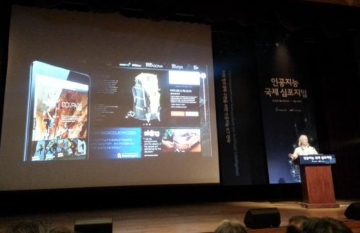
[AI Symposium] Rob High, IBM Chief Technology Officer: No Need to Fear AI. It Will Give Humans More Freedom
구글의 인공지능 알파고와 프로바둑기사 이세돌의 세기의 대결을 반영하듯 코엑스 컨퍼런스룸에서 개최된 인공지능 국제 심포지엄에 500여 명의 업계 관계자들이 몰렸다.미래 창조경제 구현을 위한 인공지능 ICT 전략을 주제로 열린 인공지능 국제 심포지엄(The International Symposium on Artificial Intelligence)은 미래창조과학부와 한국연구재단(NRF) 주최로 진행되었다.
2016.03.16by 신윤오 기자
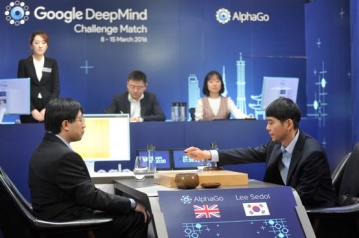
Following the rise of AlphaGo, a decision has been made to invest 1 trillion won in Korean-style 'artificial intelligence'.
최근 이세돌 9단과 알파고의 대국을 계기로 전국민적 관심사가 된 인공지능(AI) 기술과 관련하여,박근혜 대통령은 17일 오후 청와대로 AI 및 소프트웨어(SW) 관련 기업인과 전문가 20여명을 초청해 ‘지능정보사회 민관합동 간담회’를 가졌다. 간담회에는 최양희 미래창조과학부 장관, 유일호 경제부총리 겸 기획재정부 장관과 김진형 SW정책연구소장과 김대식 한국과학기술원(KAIST) 교수 등이 참석했다.
2016.03.18by 신윤오 기자
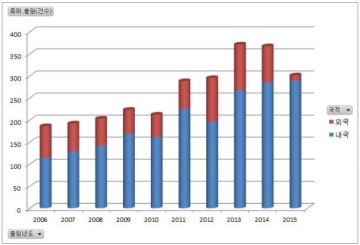
AI-related patents in the U.S. are nine times higher than those in Korea
특허청(청장 최동규)에 따르면, 인공지능 관련 국내 특허 출원을 자연어 검색 방법으로 분석한 결과, 지난 10년(2006~2015년)간 특허 출원은 총 2,638건으로 연평균 약 5%씩 증가하였다. 자연어 검색은 문장단위로 검색할 수 있는 검색방법으로 ‘인공지능, 머신러닝, 인공신경망, 딥러닝, 의사결정’을 검색어로 사용한다.
2016.03.21by 신윤오 기자
.jpg)
SalePoint Signs Multi-Year Partnership Agreement with AWS… Promoting Identity Security that Integrates Even AI Agents
세일포인트가 AWS와 다년간의 전략적 협력 계약을 체결하고, 인간과 비인간 아이덴티티를 함께 관리하는 통합 거버넌스 체계 구축에 나선다. AI 에이전트가 업무 수행 주체로 늘어나는 환경에서 접근 권한을 일관되게 관리하고, 최소 권한 원칙과 자동화된 정책 집행을 적용하겠다는 구상이다. 양사는 AWS 환경에서 AI 에이전트를 포함한 다양한 주체의 아이덴티티를 하나의 레이어에서 관리하는 기능을 공동 확대할 계획이다. 이번 협력은 AI 도입이 확대되는 기업 환경에서 보안과 거버넌스를 함께 설계하려는 움직임으로 해석된다.
2026.03.26by 배종인 기자
.png)
Databricks Unveils Open AI Security Monitoring 'Lakewatch'
데이터브릭스가 3월 24일 개방형 에이전틱 SIEM ‘레이크워치’를 공개하며 보안 시장에 진입했다. 이 제품은 보안, IT, 비즈니스 데이터를 단일 환경에서 통합 분석해 AI 기반 위협 탐지와 조사를 지원하는 것이 핵심이다. 회사는 고비용 구조 때문에 일부 데이터를 포기해온 기존 보안관제의 한계를 줄이고, 개방형 형식과 생태계를 바탕으로 대규모 데이터 분석과 자동화를 가능하게 한다고 설명했다. 레이크워치는 현재 프라이빗 프리뷰로 제공되며, 어도비와 드롭박스 등이 초기 고객으로 언급됐다. 데이터브릭스는 앤트로픽과 협력을 확대하고 안티매터, SiftD.ai 인수도 함께 발표했다.
2026.03.26by 배종인 기자











