



KT and Nokia Successfully Achieve Combined LTE and WiFi Transmission in Small Cell Environments
 Published2016.04.08 16:46
Following a pilot implementation in select regions such as Jeju Island within the first half of the year, verification in a commercial environment is scheduled.
KT (Chairman Hwang Chang-gyu, www.kt.com) announced on the 8th that it has succeeded in the world's first demonstration of a small cell (ultra-small base station) based on LWA (LTE-WiFi Aggregation) technology, which is attracting attention as a next-generation LTE technology, in collaboration with Nokia.
LWA refers to a 3GPP standard technology that combines licensed LTE frequencies and unlicensed WiFi frequencies at a base station rather than at a terminal for transmission.
This demonstration, conducted by KT at Nokia Labs (Arlington, Texas) in the United States, was carried out in a small cell environment with a terminal providing LWA functionality, and succeeded in merging and transmitting LTE and WiFi signals without any additional equipment.
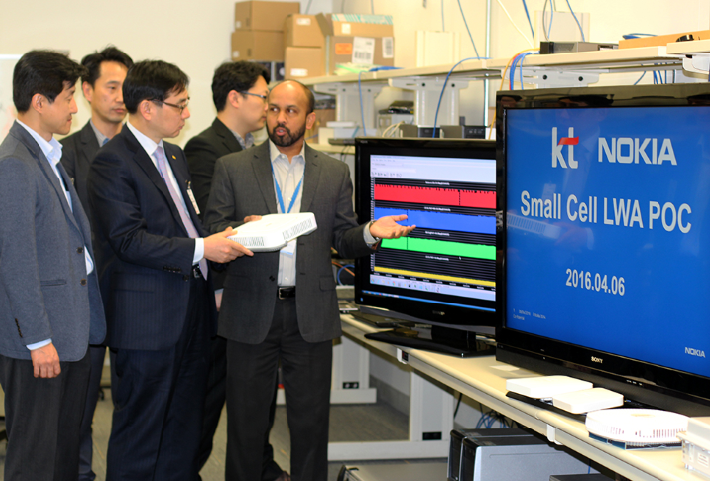
Previously, separate gateway equipment was deployed in large base station environments to merge LTE and WiFi signals, but the small cell demonstrated this time is capable of autonomous signal merging and transmission, enabling stable wireless services even if the communication environment changes upon future implementation.
In addition, small cells are much smaller than base stations, making them easy to deploy in urban areas with high traffic. Furthermore, because they consume less power than conventional systems, they can be easily installed outside of buildings using internet lines, thereby minimizing service dead zones.
KT plans to deploy the LTE-WiFi integrated small cell demonstrated this time to Jeju Island within the first half of this year We plan to implement a pilot system in select regions and verify it in a commercial environment.
"Through this technical cooperation with Nokia, we have secured effective LTE-WiFi integrated small cell technology," said Kim Young-sik, Senior Vice President and Head of KT's Field Technology Support Group. "We will strive to provide the world's highest level of wireless quality, extending not only to next-generation LTE evolution technology but also to the development of 5G technology."
Meanwhile, KT plans to strengthen cooperation with Nokia not only on next-generation LTE-WiFi merged technology but also on the development of upgraded LTE technology to provide high-quality wireless services.

관련뉴스
KT Ready for Commercialization of Technology to Improve LTE Download Speeds
KT는 LTE 다운로드 속도를 향상시키는 ‘다운링크 256QAM(Quadrature Amplitude Modulation)’ 기술을 상용망 기지국에서 시험 하고, 단말이 출시되는 즉시 서비스를 이용할 수 있도록 상용화 준비를 완료 하였다고 12일 밝혔다.
2016.02.12by 명세환 기자
LG Electronics Ranks First in LTE/LTE-A Standard Patents for 5 Consecutive Years
미국특허 분석기관 ‘테크아이피엠(TechIPM)’이 지난해까지 미국특허청에 출원된 단말기와 기지국 관련 LTE/LTE-A 표준특허를 분석해 최근 발표했다. 특허 출원 글로벌 기업 중 LG전자가 가장 많은 특허를 보유한 것으로 조사됐다. 표준특허는 해당 특허를 배제하고는 성능을 구현하기 힘든 기술을 통칭한다.
2016.03.10by 명세환 기자
LG Uplus Launches LTE Communication Module for IoT (Internet of Small Things) Together with LG Innotek
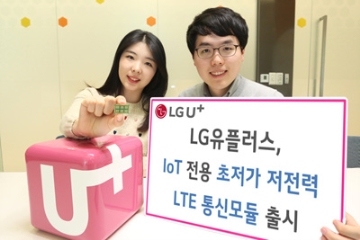
LG유플러스는 LG이노텍과 협업한 IoT 소물인터넷 전용 초저가 저전력 LTE 통신모듈 개발에 성공해 통신 모듈 출시 및 서비스를 상용화한다고 밝혔다. 이번에 출시하는 IoT 소물인터넷 전용 LTE 카테고리1(Cat.1) 통신모듈은 기존 LTE 통신망을 그대로 활용하기 때문에 IoT 소물인터넷 전용망인 협대역(NB) IoT, 저전력 장거리(LoRa) 통신기술, 초저전력 통신망 Sigfox 등과 달리 신규 네트워크 투자 및 개발에 시간과 비용을 추가로 투자할 필요 없어 전국망 서비스가 당장 가능하다.
2016.03.30by 명세환 기자
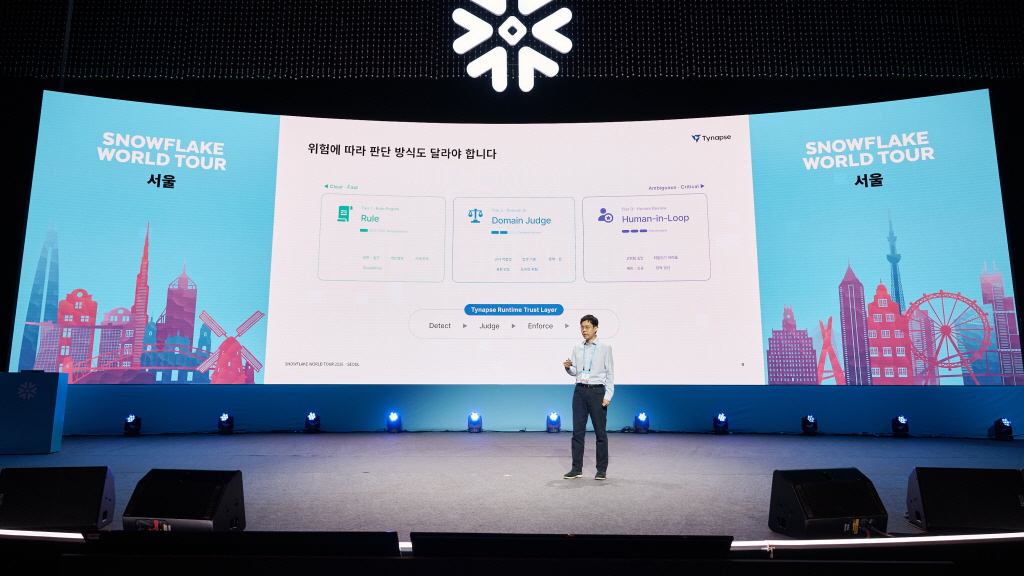
The Problem with AI is Not Performance, but Trust
CEO Kang Min-seung emphasized at Snowflake's World Tour Seoul that generative AI has entered a phase where "trust" rather than accuracy becomes the key competitive advantage. As AI is applied to various tasks including consultation, risk management, and operational automation, incorrect data, erroneous responses, and bias are creating actual business risks. He pointed out that enterprises must build a trust layer above AI. To achieve this, accurate data management, semantic structuring, governance, and prompt security are essential. He explained that AI is not merely an automation tool but a technology that reorganizes the entire organization's workflows and decision-making systems. Snowflake provides a platform that supports this trust-based AI operation, emphasizing that enterprises should build "trustworthy AI" rather than "intelligent AI."
2026.08.28by 배종인 기자
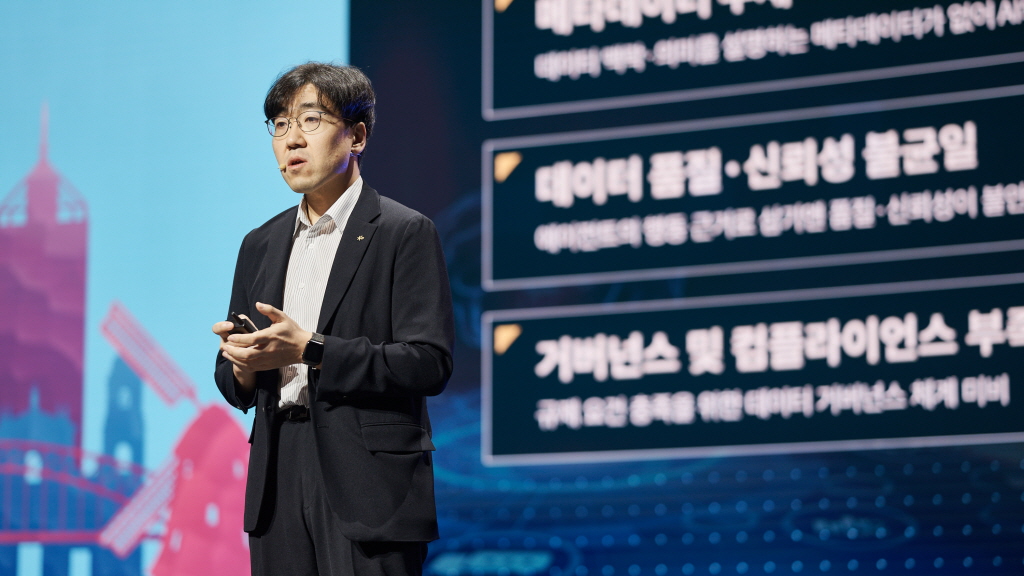
The Decisive Factor for AI Agents in Finance: "Trustworthy Data Infrastructure"
The key to spreading AI agents in the financial sector is establishing a trustworthy data system. KB Kookmin Bank is operating over 100 AI agents by 2025 and is promoting expansion to 300. AI is automating repetitive tasks across various areas such as consultation, risk management, wealth management, and relationship management. However, if data quality, governance, and semantic structuring are insufficient, errors and risks increase. KB is building an AI-Ready organization through a multi-model strategy of GPT, Gemini, and Claude, as well as a Snowflake-based data system. The bank emphasized that AI has entered a phase where it restructures not just simple automation but the entire work process and decision-making system.
2026.08.28by 배종인 기자











