

.png)

Vicor Launches Tool for Quickly and Easily Designing Multi-Output Power Systems
 Published2016.05.12 18:20
Vicor has launched a new online design tool called PSD (Power System Designer). PSD is a useful tool that enables system designers to configure and optimize end-to-end power systems using Vicor's PCDM (Power Components Design Methodology) and high-performance power components.
As small electronic products and systems become more multifunctional and complex, there is a growing demand for power systems that are much smaller, more efficient, and cost-effective. Accordingly, power designers must analyze various topologies, architectures, and products to develop optimal power systems.
To approach each of these diverse design methods, numerous tasks are becoming necessary, including performance calculations, data sheet searches, manual simulations, thermal projections, layout and package studies, Bill of Materials (BOM) preparation, and cost analysis. To facilitate these analyses, there is a trend toward developing various power design tools. However, these tools have limitations in that they cannot analyze complete power systems.
Addressing complex power requirements and simplifying power design complexity
The front end, which filters and conditions power received from AC or DC power sources, must be configured and analyzed separately from the downstream regulators that generate the voltage required by the system load. However, these tools have not been able to provide a perfect modular solution until now.
The resulting power system solutions must combine a limited number of modular power elements into numerous individual circuit solutions, each requiring dozens of components. However, as this threatens power density, designers face the challenge of properly integrating the front end and DC-DC power train to address various factors, including not only the layout of electrical circuit elements but also thermal management, packaging, and cost.
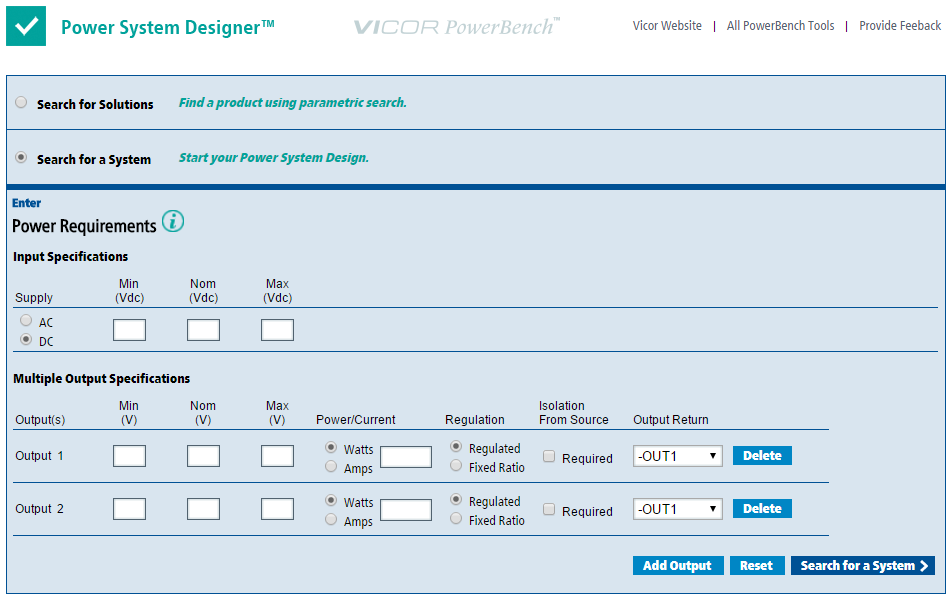
Vicor's PSD online design tool facilitates the quick and easy design of multi-output modular power systems, from input power (AC or DC) to system loads. Engineers simply need to define the AC or DC input source, operating range, required output voltage, and respective power (or current) regulation and isolation specifications, and the PSD tool automatically generates the optimal solution.
This tool provides a variety of optimal solutions recommended based on characteristics such as maximum efficiency, minimal components, minimum cost, and minimal space usage. Furthermore, by utilizing an editable whiteboard tool to analyze the design of each solution and directly adding or removing components to optimize them for system requirements, it can meet the precise needs of designers.
PSD tools not only visually represent the system layout for any design but also provide a bill of materials including order and pricing information.
Vicor's field-proven high-density modular power components meet the requirements of any front-end power train. All of Vicor's solutions help achieve rapid time-to-market with excellent power density by minimizing overall design errors that may occur with individual components, as well as uncertainties regarding system performance and development completion time.
As such, Vicor's new PSD Online tool facilitates power system design by enabling the specification determination, analysis, and configuration of complete multi-output power systems in just minutes with groundbreaking performance, efficiency, and density. You can view a simulation of the PSD Online tool by visiting http://www.vicorpower.com/video/psd?utm_source=Vicorpower&utm_medium=LandingPage&utm_content=psd_video&utm_campaign=ACPoL-PSD-Promotion.
Vicor's power component design methodology enables power system engineers to achieve system operational efficiency, power density, and economics when compared to the best alternative solutions. As a result, engineers can develop more competitive products by leveraging all the benefits of modular power component design—predictable functionality and reliability of components and systems, rapid design cycles, easy system setup, reconfiguration, and scalability.
Power system designers can design, optimize, and simulate complete power systems by referencing Vicor's diverse portfolio of proven components—ranging from input sources to the entire Point of Load (PoL)—in Vicor's online tools.
This innovative approach to power system design minimizes the potential for unexpected problems and delays commonly found in traditional or custom design methods, while providing rapid market access and cutting-edge capabilities.
It is possible to quickly execute Vicor's PSD directly. After testing how fast and efficient design using PSD is, you can directly apply it to your next project.

관련뉴스
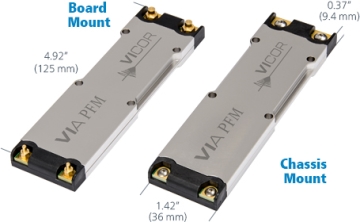
바이코, 고밀도 및 신속한 시장 진입을 제공하는 VIA PFM™ AC-DC 프론트 엔드 모듈 출시
2015.05.21by 명세환 기자
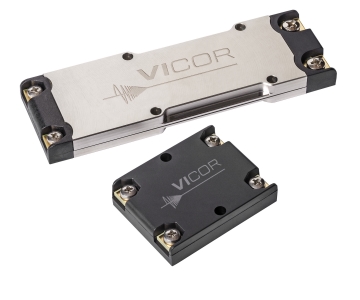
바이코, PFC기능을 갖춘 고밀도 절연형AC-DC 프론트엔드
바이코가 고밀도 PFM™ AC-DC 프론트엔드 모듈의 새로운 제품군을 추가 출시했다. 85-264VAC의 유니버셜 AC 입력 및 PFC 기능을 지원하며 완전 절연된 24 혹은 48VDC출력 전압으로 최대 효율 93%에서 400WDC 출력을 제공하는 이 신형 모듈은 9 mm의VIA Package에서 127 W/in3 (8 W/cm3)의 전례 없는 전력 밀도와 동급 최강 성능을 자랑 한다.
2016.01.07by 명세환 기자
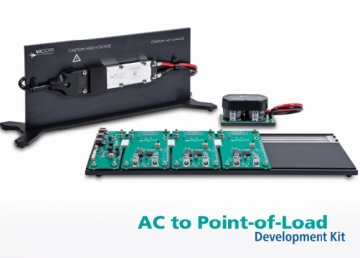
바이코, PoL 벅 레귤레이터 기능 가진 AC- PoL 개발 키트 출시
바이코(지사장 정기천)가 AC-PoL(Point-of-Load) 개발 키트(ACPoLDKit)를 출시했다.이 개발 키트는 업계 가장 얇은 크기로 최고의 성능과 최고 전력 밀도를 자랑하는 전원부품이라고 업체 측은 밝혔다. 전원 시스템 디자이너들은 이 개발 키트를 사용하여 프로토타입 보드, 시스템 인터커넥트, 에너지 스토리지 및 열 관리 부품들을 빠르고 간편하게 설계, 제작하는 것이 가능해졌다.
2016.03.23by 신윤오 기자

Intel Unveils Next-Generation 'Core Ultra Series 3' and vPro Platform for Enterprise PCs
Intel has officially unveiled the "Intel Core Ultra Series 3" for next-generation enterprise PCs and the latest vPro platform, addressing a wide range of demands from enterprise notebooks to high-performance workstations.
2026.03.26by 배종인 기자

ROHM Launches ESD Protection Diode Compatible with High-Speed Interfaces of 10Gbps or Higher
반도체 전문 기업 로옴(ROHM)이 10Gbps를 넘어서는 차세대 고속 데이터 통신 환경에 대응할 수 있는 ESD(정전기 방전) 보호 다이오드 ‘RESDxVx 시리즈’를 개발하며, 고속 인터페이스에서 요구되는 신호 품질 유지와 IC 보호 성능을 동시에 끌어올렸다.
2026.03.26by 배종인 기자











