



Reduce construction costs with 24-hour monitoring 'Smart Farm' greenhouse control
 Published2016.05.26 20:53
Establishment of 'Smart Farm Practical Training Center/Field Support Center' Capable of IT Utilization Education for Farmers and On-site Service Dispatch
KT announced the launch of the 'KT GiGA Smart Farm' service, which reduces the cost of building smart farm facilities by up to 40% and significantly improves the control performance of greenhouse facilities.
'KT GiGA Smart Farm' is a solution that analyzes temperature, humidity, solar radiation, CO2, and soil conditions in cultivation facilities using Internet of Things (IoT) devices equipped with sensors, and operates control devices based on the analysis results to create an optimal crop cultivation environment.
According to a public opinion survey conducted by the Ministry of Agriculture, Food and Rural Affairs in January 2016, the "burden of initial investment and management costs" and "difficulty in using ICT technology" ranked first and second, respectively, as obstacles to the introduction of smart farms, at 53.8% and 16.7%.
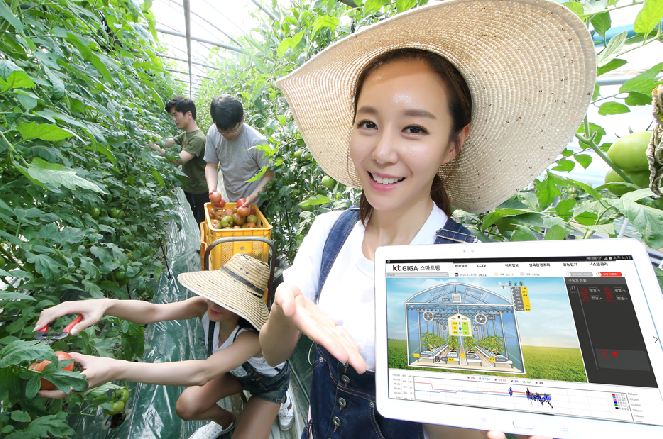
To reduce the burden of initial costs for farmers, KT applied a smart farm solution developed in-house by its Convergence Technology Institute and lowered the cost of adopting smart farms by up to 40% compared to existing standards (based on 5-linked vinyl greenhouses*, approximately 0.33 ha).
In addition, the 'Smart Farm Integrated Control Center' monitors farm facilities for any abnormalities 24 hours a day, so you can rest assured even when you are away. It is available for use. Meanwhile, the hacking prevention function for PCs and smartphones, which is pointed out as a vulnerability of IoT products, has been strengthened, and facility control performance has been significantly improved regardless of the greenhouse type by applying 'machine learning-based customized control for each greenhouse.'
In conjunction with the Ministry of Agriculture, Food and Rural Affairs' smart farm acceleration measures, KT is opening smart farm training centers and field support centers in 10 major hub regions nationwide to address the difficulties in using ICT technology and after-sales service issues, which are other concerns for farmers adopting smart farms.
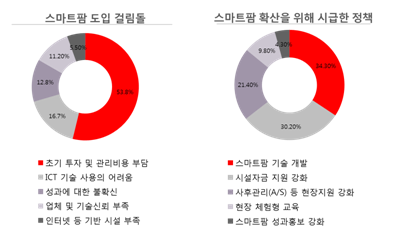
▲ Results of a public opinion survey on farmers' perceptions of smart farms (January 2016. Source: Ministry of Agriculture, Food and Rural Affairs)
At the smart farm training center, you can receive agricultural education using smart farm equipment in an environment identical to actual farming sites. Agricultural technology centers in five regions—Seoul, Yongin, Damyang, Buyeo, and Seongju—and KT are jointly operating the program, which is scheduled to open in July.
In addition, to resolve usage inconveniences and after-sales service issues for farms that have adopted smart farms, we are operating field support centers capable of dispatching personnel directly to five major production areas nationwide (Yongin, Gimje, Nonsan, Seongju, and Chuncheon), the first of its kind among smart farm solution providers.
Song Jae-ho, Head of Future Business Development (Senior Vice President) at KT’s Future Convergence Business Promotion Office, stated, "We placed the utmost emphasis on listening to farmers' voices and addressing their inconveniences to develop products that provide practical assistance to them," adding, "In the future, we will take the lead in increasing farmers' income by developing solutions that provide optimal cultivation information based on big data."
관련뉴스
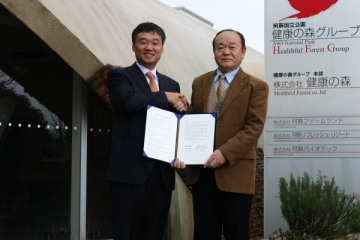
KT Starts Smart Farm Business Cooperation with World's Largest Agricultural Theme Park
KT is developing a smart farm themed complex in the country that combines agriculture with advanced ICT technology, opening a new chapter in "the sixth industrialization of agriculture" that integrates agricultural product production, processing, sales, tourism, experiences, and residential facilities. KT announced on the 18th that it has signed a "business agreement for large-scale smart farm themed complex project development" with Aso Farmland Co., Ltd. (Chairman Katuyuki Kitakawa), the world's largest agricultural theme park located in Aso, Kumamoto Prefecture, Japan, at Aso Farmland.
2016.01.18by 명세환 기자
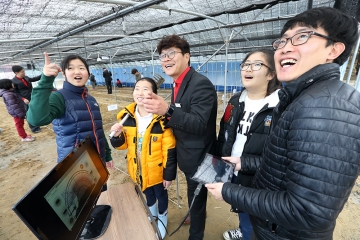
KT Opens Korea's Only Experiential Smart Farm for Children's Education
KT (Chairman Hwang Chang-gyu, www.kt.com) announced on the 20th that it has opened Korea's only children's experiential smart farm on Imja Island Giga Island. At the Imja Elementary School smart farm, crops can be monitored in real time, and greenhouse facilities can be automatically opened and closed through smart devices, as well as temperature and humidity can be controlled automatically anytime and anywhere.
2016.03.23by
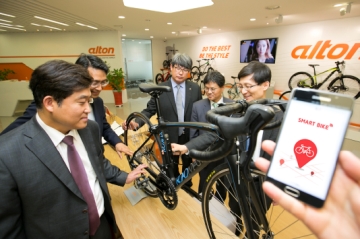
Will a riding bicycle emerge when the Internet of Things network and IoT platform meet?
KT (Chairman Hwang Chang-gyu) announced on the 25th that it will sign a 'Memorandum of Understanding for IoT Bicycle Market Activation' with Alton Sports, BC Card, KT Telecap, and Dongbu Fire & Marine Insurance at Alton Sports headquarters located in Pangyo, Seongnam-si, Gyeonggi-do. The 'IoT Bicycle' is a solution that leverages KT's nationwide narrowband IoT (LTE-M) network and IoT platform to provide features including vibration and alarm functions for theft prevention, sophisticated location tracking, and battery depletion warning capabilities. Under the memorandum of understanding signed on this day, ▲ KT will provide narrowband IoT communication modules and support for sophisticated IoT platforms, ▲ Alton Sports will distribute IoT bicycles utilizing its 111 Alton Bike Clinics nationwide, ▲ BC Card will conduct target marketing based on Big Data, ▲ KT Telecap will develop business models to minimize theft and loss, and ▲ Dongbu Fire & Marine Insurance will develop bicycle theft insurance products, with all parties agreeing to cooperate closely.
2016.05.25by 명세환 기자
Ecolab and K-water Discuss Innovation Collaboration in Advanced Industry Water Management
Ecolab and the Korea Water Resources Corporation jointly discussed cooperation directions for maximizing water use efficiency in advanced industries such as semiconductors and data centers and establishing sustainable water circulation. The two companies agreed to gradually develop a long-term cooperation model that combines water resource infrastructure and water management technology to promote water efficiency optimization, water reuse, and carbon reduction.
2026.08.28by 명세환 기자
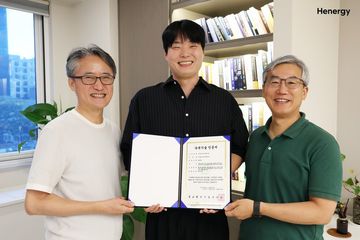
에이치에너지, 녹색기술인증 획득…솔라온케어 가동률 99.82%
에이지에너지가 태양광 발전예측 및 I-V커브 이상진단 기술로 중소벤처기업부 녹색기술인증을 획득했다. AI 기반 자산관리 플랫폼 솔라온케어는 전국 3,000개 이상 발전소에 적용되어 99.82%의 시스템 가동률과 3.7% 발전성능 개선을 달성했다. 실시간 데이터 분석을 통해 모듈 노화와 부분 음영 등 미세한 손실을 조기에 감지하고 관리함으로써 발전 수익을 보호한다.
2026.08.25by 명세환 기자











