


Silicon Labs Announces USB Type-C Reference Design Offering Superior Development Conditions
 Published2016.06.01 16:15
Silicon Labs (Branch Manager Bak Wun-dal) has announced a comprehensive reference design that reduces development costs and complexity for cables and cable adapters based on the USB Type-C™ specification.
Silicon Labs' new USB Type-C reference design provides cost-effective and ultra-low-power EFM8 microcontrollers (MCU), a USB Power Delivery (PD) protocol stack certified by USB-IF (USB Implementation Forum), and USB Billboard Device source code.
As USB Type-C is being rapidly adopted in laptops and monitors, demand is increasing for dongles and adapters that can connect legacy and existing products. Silicon Labs' reference design provides a complete solution for USB Type-C-to-DisplayPort (DP), enabling seamless communication with legacy products that do not support USB-C.

This reference design, provided free to verified developers, includes schematics, software libraries and stacks, source code, code examples, and access to the Simplicity Studio™ development tool, enabling developers to design USB-C cables and adapters quickly, easily, and at minimal cost.
Detailed information on Silicon Labs' USB Type-C reference design, including software stack, schematics, documentation, tools, and EFM8 MCU information, is available at www.silabs.com/usb-type-C. Silicon Labs will demonstrate its USB Type-C solution at Computex Taipei, held from May 31 to June 3 at Room 201F, 2nd Floor of the Taipei International Convention Center.
USB Type-C (USB-C™) is next-generation USB technology that, compared to existing USB connector products, supports faster data transfer speeds (up to 10 Gbps), faster charging via USB PD (up to 100W), superior flexibility, and a smaller form factor. End users can charge device batteries, stream audio and video, and transfer data using a single "all-in-one" USB-C cable instead of the complex array of existing cables.
The ultra-slim USB-C connector can be used with the plug and cable reversed, enabling developers to design thinner and more elegant products. For these reasons, USB-C is positioned to be selected as the connector standard suitable for mobile devices, PCs, docking stations, monitors, and other consumer electronics. According to IHS, 2 billion USB-C-enabled devices are projected to be deployed by 2019.
USB Type-C provides end users with the convenience of reducing cable count while enabling interoperability between devices. USB-C supports various protocols and provides backward compatibility between USB 3.0 and 2.0 protocols. However, the simplicity and diverse functionality of USB-C technology can present design challenges to developers. This is because simplified internal operations in USB cables, ports, dongles, and hubs must be replaced with more complex embedded components. Silicon Labs has addressed design complexity challenges through simple and easy-to-implement solutions using USB PD semiconductors certified by USB-IF and accelerating time-to-market for USB-C systems.
Jeff Ravencraft, USB-IF President and Chief Operating Officer (COO), states, "USB Type-C technology deployment requires a rich ecosystem of hardware and software vendors supplying solutions for developing USB-C compatible products," and "We welcome Silicon Labs' USB-C reference design with USB-IF certified USB PD in this growing solution ecosystem. Standards compliance ensures that end products interoperate with other certified products and provides end users with reliable connectivity."
Tom Pannell, Director of Microcontroller Product Marketing at Silicon Labs, says, "USB Type-C is the interface standard of the future. Silicon Labs is supporting innovation leadership in USB technology with our new reference design," and "Smartphones, tablets, and laptops equipped with USB-C ports are already commercialized, and these pioneering products are just beginning. Our new reference design provides developers with everything needed to deploy new USB designs immediately, alleviating the complexity of adding USB-C to applications."
Silicon Labs is a leading provider of USB connectivity solutions and smart interface ICs that enable developers to add USB to embedded designs without firmware development costs or complex processes. Silicon Labs provides not only bridges that support serial protocol conversion to USB, but also bridge solutions specialized for HID (human interface device) class and capacitive touch applications. Silicon Labs also supports USB functionality through its EFM8 8-bit MCU portfolio and EFM32 Gecko 32-bit MCU portfolio.

Related news
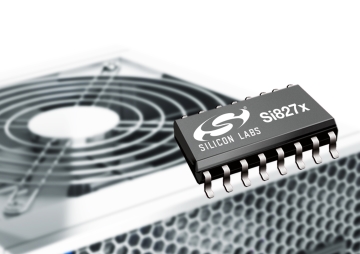
Silicon Labs Launches Isolated Gate Driver for High-Speed Power Supply Systems
Silicon Labs announced the launch of a new isolated gate driver product that meets critical requirements for advanced power supply design. The new Si827x ISOdriver product family, based on Silicon Labs' proven digital isolation technology, offers the highest noise immunity among commercially available gate drivers.
2016.03.07by 명세환 기자
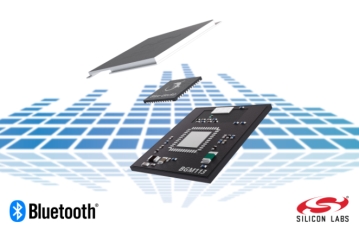
Silicon Labs Equippes Bluetooth Module with Embedded Software Stack
Silicon Labs (Branch Manager Baek Un-dal) announced the launch of a highly integrated, pre-certified Bluetooth module that optimally combines small footprint, ease of use, and low-energy technology for short-range wireless applications. Based on Silicon Labs' Blue Gecko wireless system-on-chip (SoC) incorporating energy-efficient Gecko MCU technology, the new Blue Gecko BGM113 module provides a Bluetooth 4.1-compatible connectivity solution in a compact form factor with 3dBm transmit power for applications that typically require a communication range of up to 50m.
2016.03.31by 신윤오 기자
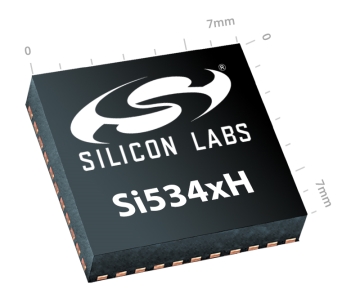
Silicon Labs Launches Jitter-Attenuating Clock That Reduces Costs and Simplifies Complexity
Silicon Labs announced the launch of a jitter-attenuating clock product family that simplifies the design of 100G/400G coherent optical line cards and modules. Silicon Labs' new Si534xH coherent optical clock replaces discrete timing solutions that rely on expensive and large-footprint VCSO (voltage-controlled SAW oscillator), providing low-jitter reference timing suitable for data converters. Unlike VCSO which supports a single fixed frequency, the new Si534xH clock operates across a wide frequency range and supports frequencies up to 2.7 GHz without requiring changes to the BOM (bill-of-material).
2016.04.26by
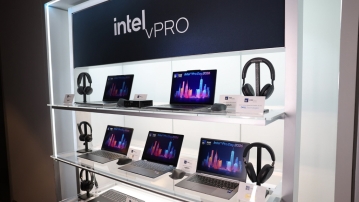
Intel Unveils Next-Generation 'Core Ultra Series 3' and vPro Platform for Enterprise PCs
Intel has officially unveiled the "Intel Core Ultra Series 3" for next-generation enterprise PCs and the latest vPro platform, addressing a wide range of demands from enterprise notebooks to high-performance workstations.
2026.03.26by 배종인 기자
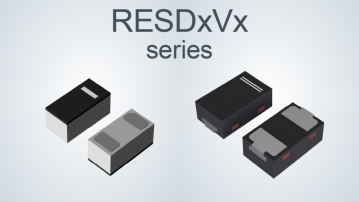
ROHM Launches ESD Protection Diode Compatible with High-Speed Interfaces of 10Gbps or Higher
Semiconductor specialist ROHM has developed the 'RESDxVx series' of ESD (electrostatic discharge) protection diodes capable of responding to next-generation high-speed data communication environments exceeding 10Gbps, simultaneously enhancing both signal quality maintenance required in high-speed interfaces and IC protection performance.
2026.03.26by 배종인 기자











