


Bluetooth, thriving in the IoT market, sparks fierce competition among semiconductor companies with 'low-power SoCs'
 Published2016.07.11 17:43
Bluetooth-enabled IoT devices expected to grow at an average annual rate of 34% until 2021
Competition among semiconductor companies is heating up over the Bluetooth market, which has emerged as a powerful front-range wireless communication solution optimized for the Internet of Things era.
This is because low-power Bluetooth technology, suitable for IoT devices with limited power usage, can be utilized in various fields such as wearable devices, retail beacons, wireless door locks, smart remotes, and industrial and medical monitors.
In particular, low-power Bluetooth technology used in BLE beacons has begun to receive increasing attention in the era of the Internet of Things, and its future utility is expected to grow further due to the advantage that a single device can simultaneously transmit the same data to multiple devices. Additionally, it is being selected as a communication technology that aligns well with the purpose of the Internet of Things because it can utilize IPv6, which allows access to all devices connected to the internet.
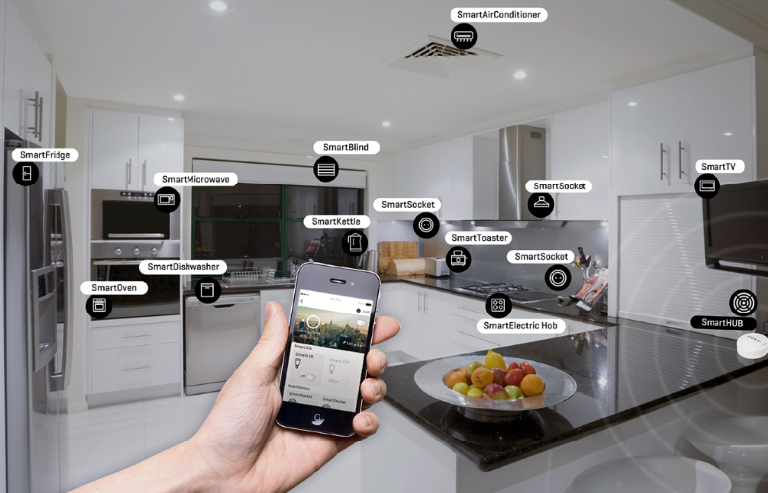
Last year, Nordic supplied Bluetooth Smart SoCs to OORT, a company specializing in connected devices and IoT.
According to ABI Research, shipments of IoT products supporting low-power Bluetooth are expected to reach 1.4 billion units by 2021, growing at an average annual rate of 34%. Accordingly, global semiconductor companies, including Nordic, a company specializing in short-range wireless communication, as well as Qualcomm, STMicroelectronics, Microchip, NXP, and TI, are engaging in fierce competition in the wireless communication market of the Internet of Things by successively launching integrated Bluetooth SoCs.
Semiconductor Companies Launch Boom in Single-Chip Bluetooth Low Energy SoC Releases
Nordic Semiconductor announced on the 5th that it has released a single-chip Bluetooth Low Energy SoC (nRF52832) based on an ultra-small package for next-generation wearable and IoT applications.
This Bluetooth SoC, based on WL-CSP (Wafer-Level CSP) which is only one-quarter the size of existing package types, is touted as capable of running ultra-low-power applications. In particular, the company stated that it can reduce power consumption by entering sleep mode much faster than competing devices, thanks to a powerful onboard processor (64MHz ARM® Cortex®-M4F) that can complete protocol and application processing tasks in a very short time.
This product enables designers to easily achieve optimal power consumption through an innovative, fully automatic power management system, making it possible to design space-constrained IoT applications.
In addition, last month Nordic [addressed] the latest connected car intelligent vehicle applications and in-vehicle wireless charging
It also launched the Bluetooth Low Energy SoC (nRF51824). This product targets the rapidly developing automotive Bluetooth market, driven by the emergence of connected cars and the rapid rise of in-vehicle connected ecosystems.
“Nordic Semiconductor Korea Country Manager Choi Soo-chul said, ‘Nordic has focused on ultra-low power technology for over 30 years.’” "We were able to have an advantage because Bluetooth Low Energy is suitable for ultra-low power technology, and Nordic was virtually the first in the world to establish BLE specifications and develop chips," he said.
Branch Manager Choi continued, “The recent trend in BLE is that MCU performance is steadily improving. The series released by Nordic this year features ARM Cortex-M4F performance with the smallest size (3.0 x 3.2 mm), and currently, we are the only ones offering such a product.” He added, “We are looking at all sectors in the domestic market where BLE is applied, but recently, we have been focusing our attention on PC peripherals and remote controls, which have great potential.”
Qualcomm plans to add Bluetooth SoC development environments targeting specific sectors this year.
STMicroelectronics provides power efficiency in frequently used modes like beacons
Qualcomm unveiled its first Bluetooth system-on-chip (SoC) at CES 2016 held earlier this year. This SoC (CSR102x), which supports Bluetooth Smart 4.2, is known to have been built using IP from CSR, a UK company acquired last year.
The CSR102x chip was optimized for beacons, keyboards, smartwatches, and remote control devices, but Qualcomm plans to release additional development environments targeting specific fields throughout this year. In the second half of this year, we will introduce a comprehensive development kit to be provided to developers targeting always-on products such as IoT nodes, smart home controllers, and wearable healthcare devices.
Along with this, Qualcomm, which also introduced the latest aptX HD codec and aptX Low Latency (aptX-LL) codec, plans to expand into markets such as band-type wearable devices, low-power wireless remote control devices, and home automation using Bluetooth SoCs.
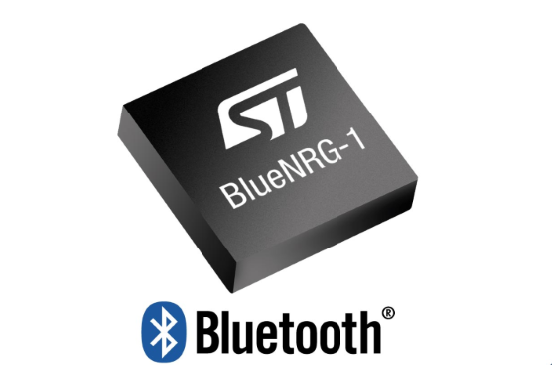
ST targeted mass-produced products in the low-power Bluetooth-based market.
STMicroelectronics launched a new low-power Bluetooth single-chip solution (BlueNRG-1) on the 8th. Developed by combining excellent power efficiency and wireless performance, this product targets mass production in the low-power Bluetooth-based market. By supporting the latest low-power Bluetooth version 4.2 specifications, the product offers enhanced privacy and security.
ST announced that the wireless transceiver integrated into the newly released programmable system-on-chip demonstrates excellent power efficiency in frequently used modes, such as the beacon function that establishes brief connections with guests for sharing shopping information. The ability to quickly switch between power saving mode and active mode allows for extending battery life from several months to several years.
In addition, this SoC supports operating temperatures up to 105°C, including a dedicated digital microphone input that can simplify voice-based applications as well as efficient performance and low power consumption, and can be applied to smart lighting and automotive applications (such as anti-theft features (PEPS)).
Microchip supports various beacon formats with RN-based modules
NXP Semiconductors provides twice the battery life for smart wearable devices
Last month, Microchip announced a next-generation Bluetooth Low Energy solution featuring an easy-to-use interface and built-in scripting capabilities. This solution is equipped with a simple ASCII command interface that simplifies device configuration and eliminates the need for complex code compilation. Supporting the latest Bluetooth 4.2 standard, the RN4870 and RN4871 feature an embedded Bluetooth stack with a scripting engine, allowing them to operate independently and eliminating the need for an MCU in simple applications.
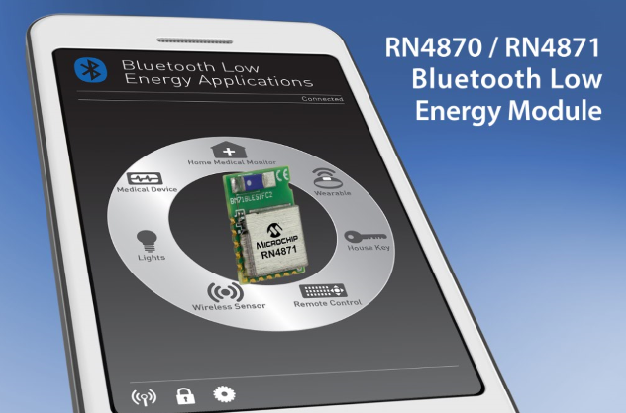
Microchip announced a next-generation Bluetooth Low Energy solution with an easy-to-use interface and built-in scripting capabilities.
In addition, serial data can be transmitted seamlessly through BLE devices, and various beacon formats such as iBeacon or Eddystone can be supported through a single command. The company stated that this new RN-based module is the easiest way to implement Bluetooth Low Energy solutions in products.
NXP Semiconductors also launched a new low-power solution (QN 9080) at the beginning of the year that provides twice the battery life for smart wearable devices.
The company stated that this new chip is up to 40% more energy efficient than competing products and provides an unprecedented twofold battery life for wearable and fitness tracking devices. Capable of running multiple applications, the chip is equipped with a fusion signal processor for uninterrupted detection in 'always-on' mode and provides a BLE SoC solution that enables personal users to wear smart devices for up to a month without charging.
Bluetooth 5 Unveiled with Significantly Improved Transmission Range and Speed
Meanwhile, with the release of the new Bluetooth 5 version last month, which significantly improved transmission distance and speed, the spread of Bluetooth technology to realize a connectionless Internet of Things world is expected to accelerate further.
Bluetooth 5, the new version of Bluetooth announced by Bluetooth SIG, provides significantly improved transmission distance, speed, and broadcast messaging capacity compared to the previous version. It expands range by providing robust and reliable IoT connectivity that enables use throughout the home, buildings, and outdoors, while speeding up data transmission and optimizing response performance.
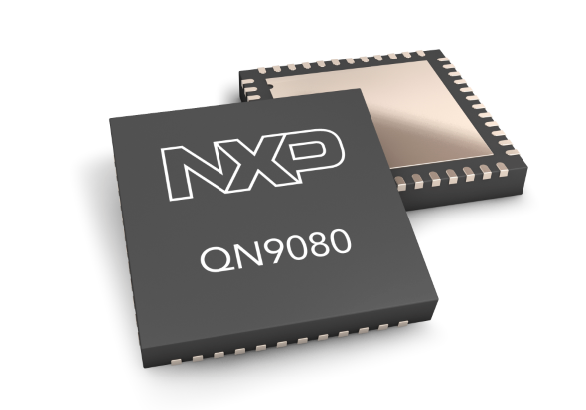
NXP Semiconductors' low-power solution provides twice the battery life for wearable devices.
The expansion of broadcast capacity is expected to enable next-generation 'connectionless' services such as beacons, location-related information provision, and navigation functions. Bluetooth 5, scheduled for release in the second half of this year or the first half of 2017, has improved transmission distance fourfold and low-power connection speeds twofold compared to previous versions, and has increased connectionless data broadcast capacity by 800%.
Choi Su-cheol, General Manager of Nordic, said, “Three to four years ago, there were only four BLE companies, but now there are over 20 chip vendors alone. Conversely, this is largely because companies have jumped in seeing the great potential as the Bluetooth market has grown that much,” adding, “The upcoming Bluetooth 5 version will have larger data sizes, allowing for the transmission of richer information over longer distances, so the market is expected to grow even larger than it is now.”
Professor Kim Hak-yong of Soonchunhyang University stated, “The Internet of Things is a network where devices with diverse characteristics are connected, enabling high-speed communication from low speeds up to a certain level, supporting unidirectional or bidirectional communication methods, and allowing communication with low power.” He predicted, “Therefore, I think the role of Bluetooth in the Internet of Things will become even more significant in the future.”
Comments
Related news
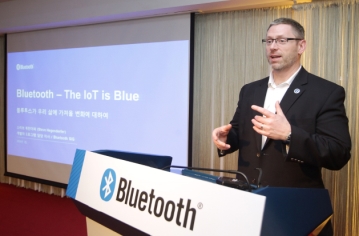
New Bluetooth Architecture Will Further Accelerate the Spread of the Internet of Things
Bluetooth SIG announced an architecture for connecting the Internet of Things and billions of devices. At the presentation, the latest Bluetooth trends and Bluetooth Mesh were presented by Steve Hegenderfer, Director of Developer Programs at Bluetooth SIG, along with product demonstrations from member companies.
2016.03.31by 신윤오 기자
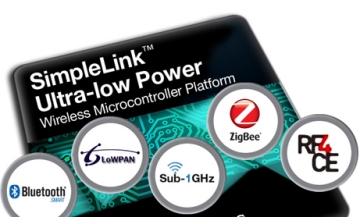
Multi-connectivity chip developers, capture the smart home IoT market
With the smart home market based on IoT (Internet of Things) expected to experience rapid growth, interest in IoT connectivity communication technologies that connect various smart devices is rising again. In particular, major semiconductor companies are actively developing chips that support multi-connectivity in line with the expansion of the IoT market. These companies are offering various multi-connectivity solutions, including supporting Bluetooth in addition to WiFi, adding WiFi to Zigbee, supporting Zigbee and Bluetooth alongside proprietary standards, and multi-chip solutions that additionally support Thread for comprehensive connectivity support.
2016.05.27by 신윤오 기자

Bluetooth 5 Launch Planned: 4x Transmission Distance Extension and 2x Speed Increase
Bluetooth SIG announced today Bluetooth 5, the new version of Bluetooth scheduled for release in the latter half of this year through the first half of 2017. The newly announced Bluetooth 5 offers significantly improved transmission distance, speed, and broadcast messaging capacity compared to previous versions. The range extension provides robust and highly reliable Internet of Things connectivity for use throughout homes, buildings, and outdoors. The speed increase enables faster data transmission and optimizes response performance.
2016.06.17by 박동욱 기자
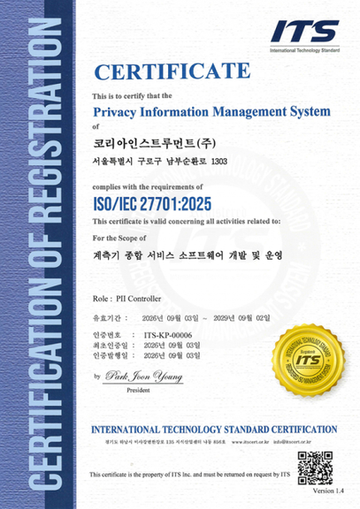
Korea Instrument, KOLAS Accredited Calibration Agency First to Simultaneously Acquire ISO/IEC 27,001·27,701
Korea Instrument has become the first among KOLAS accredited calibration agencies to simultaneously acquire ISO/IEC 27,001 and ISO/IEC 27,701 certifications. Through its proprietary platforms CWIZ Enterprise and CWIZ Partners, the company has embedded information security and personal data protection requirements across all business processes including customer information, equipment data, and calibration reports, with plans to continuously advance its management system through regular audits and security inspections.
2026.10.12by 배종인 기자

TeamViewer One, IT Incident Automation Workflow and Resolution Center Enhanced
TeamViewer has added IT incident automation capabilities and an advanced Resolution Center to its integrated digital workplace management platform 'TeamViewer ONE'. Recurrent service disruptions, configuration errors, and capacity shortages are automatically handled according to preset policies, and device status verification through script deployment can be managed in a unified interface, significantly reducing repetitive tasks for IT teams.
2026.10.12by 배종인 기자











