



Samsung's monopoly on the 3D NAND market is entering a full-fledged nationwide era starting in the second half of the year
 Published2016.08.30 05:43
Samsung's Mercury or Market Split?
Fierce competition is expected as the number of 3D NAND flash companies increases to six in the second half of the year.
According to the industry, with Toshiba, SanDisk, Micron, Intel, and SK Hynix joining the 3D NAND market, which was once dominated by Samsung, fierce competition is inevitable. Furthermore, the competition between these companies is also a competition of different technologies, and it is expected to be an opportunity to determine the future direction of 3D NAND evolution.
3D NAND is a type of flash memory semiconductor that vertically aligns the circuits of planar (2D) NAND. It is a technology developed to overcome the limitations of planar microfabrication technology reaching the 10nm range. To put it simply, think of it as making a single-family house (2D) into an apartment (3D). Stacking it upwards allows for faster speeds and greatly increased capacity, and it is known to have excellent stability and durability.

▲ Samsung Electronics opened the era of 3D memory semiconductors for the first time in the world in 2013 by mass producing 3D V-NAND flash memory.
After 2016, 3D NAND is also expected to grow due to increased demand for SSDs. As SSD demand expands from PCs to enterprise demand, 3D NAND demand is also increasing. In addition, as 3D NAND price competitiveness increases, adoption is expected to expand from PCs/servers to mobile. 3D NAND is expected to approach HDD prices within 3 years due to a cost decline of more than 30% each year, and it is expected to be applied to mobile by 2017 at the latest.
In particular, as EMC, a storage server company, has recently begun to fully adopt SSDs, the demand for enterprise SSDs is expected to increase, and the 3D NAND market is also entering its full-fledged phase. SSDs, which were more than 6 times more expensive than HDDs just 4 years ago, have recently fallen to 2.8 times the price, making them accessible from a TCO perspective. The reason SSD prices are falling like this is because 3D NAND can reduce costs and increase density by utilizing controllers.
3D NAND also grows as SSD demand increases
The current 3D NAND market is facing another transformation period with the increase in stack count from 48 to 64 layers, the adoption of COP (Cell on Peri) technology, and an increase in competitors.
First, 3D NAND technology is expected to increase the number of stacks to 64 in the second half of the year. The technical difficulty of 64 layers is expected to continue to increase, and in 2017, it is expected to expand from 80 layers to 96 layers or use COP technology in parallel. 3D NAND has a cost advantage over 2D NAND 16nm from 48 layers onwards. Therefore, it is inevitable to move to 3D NAND from 16nm and below. However, as it goes up to 64 layers, nitride film etching becomes difficult, so it is necessary to review the dry etching method instead of the existing wet etching method.
Next, 3D NAND is expected to further reduce space through the COP (Cell on Peri) structure. As mentioned earlier, 3D NAND is a method of stacking flat houses like apartments, but COP is a 'commercial-residential complex' where the commercial building is located in a separate apartment building. COP is a structure that forms the existing Peri structure first and then places the Cell on top of it, so the space is reduced compared to before. COP technology was first introduced by Micron and is currently under review, and it is expected to contribute to improving the cost of 3D NAND in the future.
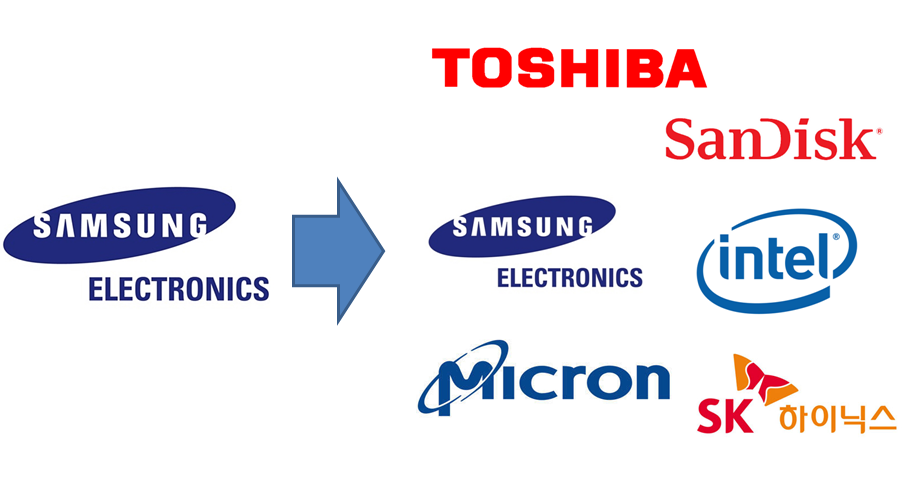
▲ As the 3D NAND market grows, Samsung, which had been leading the market, is now facing formidable competitors.
Lastly, the point to note in the 3D NAND market in the second half of the year is that competition will intensify as the number of players entering the market increases. Samsung Electronics is expected to introduce 64-layer in the second half of the year, while Toshiba and SanDisk are expected to adopt COP for 64-layer without going through 48-layer at the end of this year. SK Hynix will move to 48-layer after 36-layer, while Micro and Intel are expected to introduce COP for 64-layer floating gate method after 48-layer test production.
Samsung Electronics is introducing 64 layers based on its mass production experience with 24, 32, and 48 layers to enhance cost competitiveness. 3D NAND production capacity is expected to increase to 110,000 sheets, approaching 40% of total NAND sales. To this end, Samsung Electronics will establish a manufacturing facility in Pyeongtaek for 3D NAND production in the first half of next year. When this business site is completed, it will be the world's largest, with a total area of 1.2 million pyeong.
Toshiba Introduces CoP Method to Compete with Samsung
Micron etc. will go straight to 64-stage
Toshiba is developing products using the same P-BiCS method (CTF) as Samsung Electronics, and is also introducing COP technology to compete with Samsung Electronics. SanDisk is strengthening its storage-oriented 3D NAND technology after merging with Western Digital (WD). SanDisk is known to be sharing process technology with Toshiba and also promoting 3D ReRAM development.
Unlike Samsung, Toshiba, SanDisk, and SK Hynix, Micron and Intel are using the Floating Gate method and are additionally introducing the CoP method. Micron also initially planned to proceed with 48 layers, but is considering increasing the stack count to 64 layers. SK Hynix, which is adopting the same CTF method as Samsung Electronics, is known to have completed the development of a 36-layer process and is pushing forward with the introduction of the 48-layer.
“Samsung Electronics’ Pyeongtaek line, which it has started construction on, is expected to begin operation in the second half of 2017. Accordingly, Toshiba, SanDisk, Micron, Intel, and SK Hynix are also expected to make full-scale investments,” said Lee Se-cheol, an analyst at NH Investment & Securities, who attended a semiconductor market outlook seminar hosted by the Semiconductor Industry Association. “Starting in the second half of this year, 3D NAND will expand from 48 layers to 64 layers, which will intensify competition among companies.”
Comments
Related news
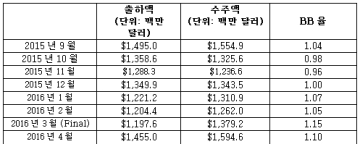
Semiconductor equipment manufacturers' orders increase, reflecting 3D NAND and Chinese investments.
According to the April BB ratio report released by the Semiconductor Equipment and Materials International (SEMI), North American semiconductor equipment manufacturers' bookings (3-month average) for April 2016 were $1.59 billion, with a BB ratio of 1.10. The BB ratio is calculated by dividing bookings by billings, meaning a BB ratio of 1.10 indicates bookings of $110 per $100 of billings. April bookings of $1.59 billion increased 15.6% compared to March bookings of $1.38 billion, and rose 1.3% compared to April bookings of $1.57 billion in the previous year. April semiconductor equipment billings were $1.46 billion, up 21.5% from March billings of $1.20 billion, and down 4% from April billings of $1.52 billion in the previous year.
2016.05.26by 명세환 기자

EMC Korea Launches All-Flash Model Equipped with Latest 3D V-NAND
Korea EMC (CEO Kim Kyung-jin) has introduced all-flash to its hyperconverged infrastructure and launched the all-flash version of 'VxRail'. The all-flash VxRail, equipped with the latest 3D V-NAND, has dramatically reduced the cost per gigabyte by utilizing EMC's advanced data reduction technology. VxRail, which EMC jointly announced with VMware at the beginning of this year, is a hyperconverged appliance that simplifies IT operations and enhances agility through unified management. It provides virtualization software, servers, storage, and data protection capabilities in a single integrated system, enabling the easiest and fastest implementation of a software-defined data center (SDDC) environment optimized for VMware.
2016.06.23by 명세환 기자

[Photo News] 1 Tera NAND Flash to Become a Reality in the Near Future
Samsung Electronics President Kim Ki-nam received a Lifetime Achievement Award at the Flash Memory Summit held at the Santa Clara Convention Center in the United States on the 10th (local time). The Flash Memory Summit is the world's largest flash memory industry conference held annually in the United States (8/8~8/11). President Kim Ki-nam received this award in recognition of Samsung Electronics' leading role in advancing flash memory technology by doubling NAND flash capacity annually, from 2Gb in 2002 to 32Gb in 2006. The FMS Lifetime Achievement Award is presented annually to individuals who have demonstrated outstanding leadership in the development of flash memory-related technologies and market expansion.
2016.08.12by 신윤오 기자
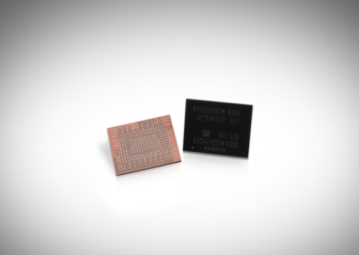
Samsung Electronics Opens Ultra-High Capacity 'Tera Era' with Unveiling Next-Generation V-NAND
Samsung Electronics unveiled its next-generation V-NAND solutions at the Flash Memory Summit 2016, held on the 10th at the Santa Clara Convention Center in the United States, presenting new possibilities for flash memory. At this Flash Memory Summit, Samsung Electronics solidified its leadership in three-dimensional memory technology based on 4th generation (64-layer) V-NAND technology and revealed a mid- to long-term strategy to lead the "tera" era of ultra-high capacity in the age of big data. Samsung Electronics' strategy is to maximize IT investment efficiency for enterprise customers through high-capacity, high-performance, and ultra-compact solutions in line with market demands such as the increase in big data, high-speed processing, and reduced data center management costs.
2016.08.12by 장은성 기자
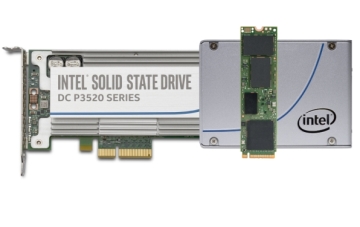
Intel Strengthens 3D NAND-Based SSDs with Expanded PCI Express Capabilities
Intel has launched a new portfolio of Intel® 3D NAND-based SSD products across various categories to meet the requirements of consumer, enterprise, IoT, and data center applications. Bill Leszinske, Vice President of Strategy Planning, Marketing and Business Development at Intel's Non-Volatile Memory Solutions Group (NSG), stated, "The newly launched SSD product family is not only the result of Intel's efforts in the memory field over the past 30 years, but also reflects Intel's long-term strategy to transition to more cost-effective storage products based on innovative and reliable 3D NAND technology."
2016.08.29by 홍보라 기자











