


Success of Wearables: Can We Find Connected Service Industries?
 Published2016.10.04 14:13
127.2 Billion Won Investment Over 5 Years, Full Commitment to Market-Demanded Core Components and Element Technologies
"Find the Wearable Technologies the Market Demands"
The government's wearable technology development support project will be promoted in a direction that identifies and prioritizes technologies demanded by the market.
According to the 2017 wearable-related business promotion status and plans of the Ministry of Trade, Industry and Energy and the Ministry of Science, ICT and Future Planning, the government views technology development that the market requires as the core of the wearable industry and plans to proceed with projects centered on developing precise element technologies and core components.
The development of core components and element technologies for wearable smart devices will receive a total investment of 127.2 billion won over the next 5 years (81.9 billion won in national funds, 8.6 billion won in local government funds, and 36.7 billion won in private funds), and will be promoted through a total of 3 R&D projects—2 strategic areas in materials and components and 1 strategic area in platforms—along with commercialization and performance dissemination projects.
Accordingly, the Ministry of Science, ICT and Future Planning and the Ministry of Trade, Industry and Energy began wearable project work starting in May and July respectively. For example, starting in July, the Ministry of Trade, Industry and Energy is pursuing through June 2019 the "Development of Open-Form Wearable Development Kit Core Technologies Applicable to Diverse Application Services (total 4 billion won)" to develop low-power wearable device development kit technologies and cloud-based wearable application development tools.
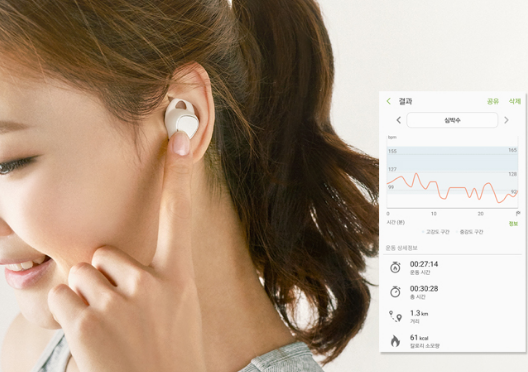
▲What wearable technologies and devices does the market want? This is the biggest concern in the wearable industry. <Photo shows Gear Icon X providing information such as heart rate changes by speed and high-intensity exercise periods>
Additionally, through the "Development of Flexible Power Supply Modules and Devices for Wearable Devices (total 3.5 billion won)," work has begun on wearable hybrid-type self-materials and flexible secondary battery technologies and textile/medical integrated power management hardware and software technology development. The "Development of Body-Attached Biomedical Information Monitoring Integrated Device Module Technology (total 1 billion won)" project, which runs through June 2018, pursues monitoring device module development for biomedical information collection and analysis, and development of multi-biomedical signal processing technology and reliability assurance technology.
Based on this, the Ministry of Trade, Industry and Energy clarified its 2017 business promotion direction. The ministry has decided to secure fundamental technologies for four core wearable smart technologies (input/output/processing/power supply) and secure fundamental technologies in diverse fields such as healthcare (medical), e-learning, entertainment, special operations, transportation, and broadcasting and telecommunications.
First, "input/output" technology refers to materials, components, and devices that input into wearable devices, and is fundamental technology that can sense and analyze user intentions, commands, biomedical signals, and external environmental information to elicit interactive responses and behaviors. The "processing technology" sector involves technology that is integrated into skin-attachable surfaces or textiles, allowing users to operate devices freely without perceiving they are wearing it. The "power supply" sector refers to flexible battery technology based on light and highly flexible materials rather than metal-based batteries with poor deformability, and also refers to power generation and energy storage technology that can continuously secure energy from surrounding environments.
Lee Kwang-ki, PD at the Korea Institute for Advancement of Technology, stated, "The input/output sector will focus on gesture input technology resulting from display and sensor convergence, and the processing sector will concentrate on lightweight learning-based processing technology for wearable devices," and added, "Finally, the power supply sector will focus on power charging technology to extend the usage period of wearable devices."
In other words, input/output technology includes gesture fundamental technology with converged display and touch for user convenience, ultra-miniaturized laser display component technology, and gesture input technology converged with spatial information. The processing sector refers to learning-based lightweight artificial intelligence technology for enhanced usability of wearable platforms. The power supply sector will concentrate on securing long device lifecycles through securing fundamental technologies in wireless power transmission and self-power generation.
Government Must Expand Support to Enable Use in Public Services
The Ministry of Science, ICT and Future Planning, which also views the wearable industry as one of the future growth engines, has been ambitiously promoting wearable projects since May. From May through December 2018, the ministry is conducting the "Development of Multiple Wearable SW Convergence Modules and Flexible SW Application Platform Technologies for Comprehensive Human Activity Management Support (total 3.7 billion won)" project. This task develops multiple wearable hardware-applicable flexible-structure SW device platforms to provide dementia patient and elderly care services, integrated management for group residents such as children and infants, and services for workers in hazardous environments.
Additionally, when the "Development of Multi-Wearable Sensor-Linked Smart Devices and Service Platforms for Effective Personal Exercise (total 2 billion won)" project is completed, it will develop multi-wearable sensing devices for exercise activity monitoring and develop real-time exercise activity monitoring and posture correction smart devices. The "Development of Wearable Devices and Service Platforms for Exhibition/Tourism Services Based on LPWA (total 1.8 billion won)" project will serve to prevent participants from dropping out during group tours.
CP Lee Kyou-bok stated, "In 2017, we plan to focus support on creativity (university-centered) and innovation (small and medium enterprise-centered) projects rather than strategy," and added, "We will support wearable technology linked to smart cars and robots with artificial intelligence applied, wearable technology for socially vulnerable groups, and accordingly develop wearable healthcare open platforms, industry-linked wearable service platforms, personalized service platforms, and other wearable SW and service platform technologies."
Furthermore, CP Lee emphasized, "Wearables must have necessity in daily life to succeed," and stressed, "In the case of medical wearables, there are still many regulations and limitations in utilizing personal information, but the government must expand its support scope to enable use in public services going forward."
Related news
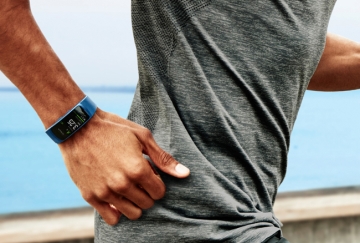
[Reporter's Notebook] Is the Wearable Device Industry Really an Item for SMEs?
We are now in the golden age of wearable devices. The term "wearable" has become quite familiar. Anyone interested in IT devices has at least considered owning a smartwatch. At IT-related exhibitions, visitors are busy putting exhibited smartwatches on their wrists and operating them in various ways. You can also frequently see people wearing smart bands. Wearable smart devices are no longer a matter of future possibilities but have become an active, current trend.
2016.06.14by 신윤오 기자
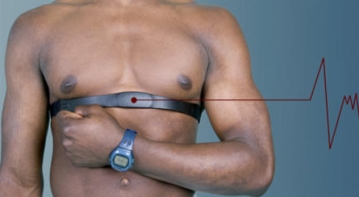
Nordic Launches Ultra-Small Bluetooth SoC for Next-Generation Wearables and IoT
Nordic Semiconductor announced that it supplies WL-CSP (Wafer Level Chip Scale Package) nRF52832 Bluetooth® Low Energy (formerly known as Bluetooth Smart) SoC (System-on-Chip), which occupies only one-quarter of the footprint area of the standard package type nRF52832. This product is designed for next-generation high-performance wearable applications.
2016.07.05by 명세환 기자
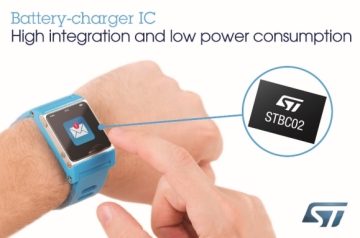
ST Announces New Battery Charger Chip to Lower Costs for Wearable Applications
STMicroelectronics (hereafter ST) has launched the STBC02 battery charge management IC, which significantly improves functional integration without compromising performance and power consumption. This highly integrated IC consolidates the most frequently used functions in power management for wearable and portable products. It features linear battery charging, a 150mA LDO (Low Drop-Out) voltage regulator, two SPDT (Single-Pole/Double-Throw) load switches, smart reset/watchdog functionality, and also includes a PCM (Protection Circuit Module) that protects the battery from damage under fault conditions.
2016.07.11by 김수지 기자
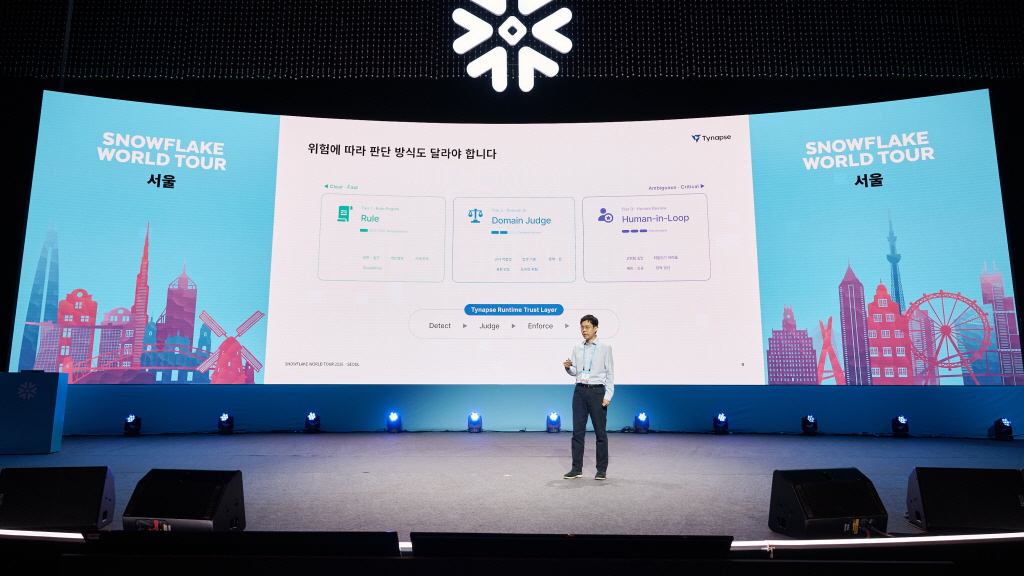
The Problem with AI is Not Performance, but Trust
CEO Kang Min-seung emphasized at Snowflake's World Tour Seoul that generative AI has entered a phase where "trust" rather than accuracy becomes the key competitive advantage. As AI is applied to various tasks including consultation, risk management, and operational automation, incorrect data, erroneous responses, and bias are creating actual business risks. He pointed out that enterprises must build a trust layer above AI. To achieve this, accurate data management, semantic structuring, governance, and prompt security are essential. He explained that AI is not merely an automation tool but a technology that reorganizes the entire organization's workflows and decision-making systems. Snowflake provides a platform that supports this trust-based AI operation, emphasizing that enterprises should build "trustworthy AI" rather than "intelligent AI."
2026.08.28by 배종인 기자
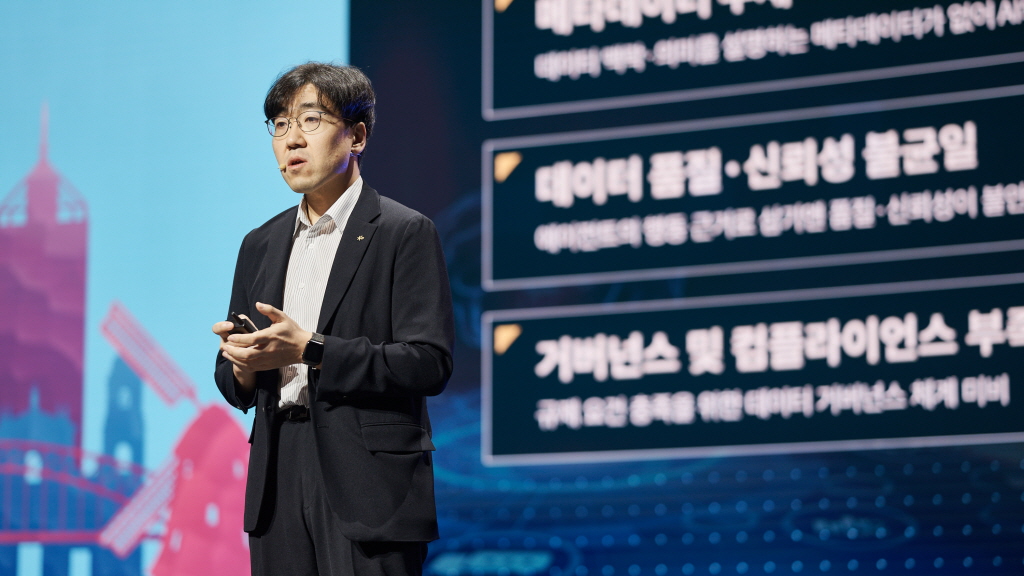
The Decisive Factor for AI Agents in Finance: "Trustworthy Data Infrastructure"
The key to spreading AI agents in the financial sector is establishing a trustworthy data system. KB Kookmin Bank is operating over 100 AI agents by 2025 and is promoting expansion to 300. AI is automating repetitive tasks across various areas such as consultation, risk management, wealth management, and relationship management. However, if data quality, governance, and semantic structuring are insufficient, errors and risks increase. KB is building an AI-Ready organization through a multi-model strategy of GPT, Gemini, and Claude, as well as a Snowflake-based data system. The bank emphasized that AI has entered a phase where it restructures not just simple automation but the entire work process and decision-making system.
2026.08.28by 배종인 기자











