

.png)

KT Establishes 'Stable System' After Acquiring Cloud Computing Security Certification
 Published2016.10.21 10:27
Promoting the expansion of cloud usage by public institutions and strengthening mutually beneficial cooperation with SMEs in the public IT sector
KT announced that its cloud service for public institutions, 'G-Cloud,' has obtained the 'Cloud Computing Service Security Certification' from the Korea Internet & Security Agency (KISA) for the first time in Korea.
The 'Cloud Computing Security Certification' evaluates whether the requirements of the 'Notice on Standards for Information Protection of Cloud Computing Services,' announced by the Ministry of Science, ICT and Future Planning last April, are met. The evaluation is conducted across four areas—administrative protection measures, physical protection measures, technical protection measures, and additional protection measures for public institutions—with a total of 117 items, and stability is additionally assessed based on a check for technical vulnerabilities.
Regarding public sector cloud computing, the Ministry of the Interior and Safety presented criteria allowing the use of private cloud services, excluding Grade 1 critical information resource systems, through the 'Guidelines for Public Institutions' Use of Private Cloud Services' last July. In addition, it promoted measures to revitalize cloud services by reflecting bonus points for cloud usage in the 'Government 3.0 Evaluation Plan for Public Institutions'. With the 'Cloud Computing Security Certification' acquired by KT for the first time, an environment has been established where public institutions can use private cloud services with trust.
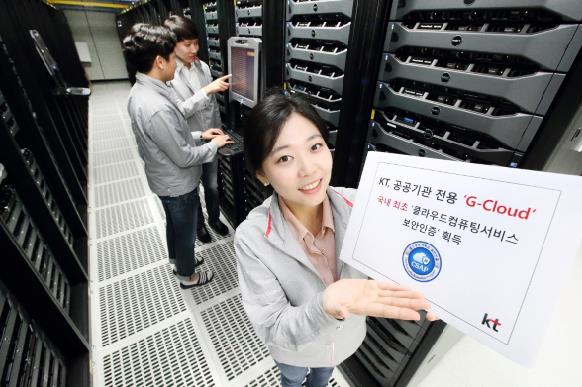
Based on this security certification, KT has solidified its position as a leading provider capable of stably offering public cloud services.
KT is the only cloud provider to have obtained all essential security certifications for providing cloud services to the public sector, including the Information Security Management System (ISMS) certification from the Korea Internet & Security Agency, which evaluates the stability of data centers and cloud services, and the ISO 27001 certification from the international standard certification body DNV-GL.
According to KT, public institutions have traditionally utilized cloud services to configure systems with relatively low informational importance, such as public service systems, project tasks, and websites. However, as evidenced by the recent provision of cloud-based systems for major national events like the PyeongChang Winter Olympics Game Management System (GMS), the scope of public sector use of private cloud services is expected to expand.
Meanwhile, on October 7, KT successfully held the 'Public Cloud Partnership Briefing' for specialized public IT companies involved in system development and maintenance in the public sector. At the event, the company emphasized its plans to expand its cloud services to include solution development, implementation, and maintenance based on the KT Cloud, and to strengthen mutually beneficial cooperation with specialized small and medium-sized enterprises in the public IT field.
관련뉴스

KT Chairman Hwang Chang-kyu: "Aiming to be an intelligent network company, not merely a network infrastructure company"
Chairman Hwang Chang-gyu held a special lecture at Harvard University in the United States, where he explained KT's network innovation initiatives and emphasized the unlimited possibilities that next-generation networks will create. In addition, KT conducted an exhibition event on the Harvard campus where visitors could enjoyably experience technologies related to 5G, GiGA, and convergence, which received strong positive response. KT announced that Chairman Hwang Chang-gyu delivered a special lecture on the theme of "Power of the Network" at Memorial Hall at Harvard University located in Boston, United States on the 20th (hereinafter local time). The company also disclosed that KT's GiGAtopia strategy (KT's Forward Looking Strategy) is in the process of being registered as a case study at Harvard Business School (HBS).
2016.09.21by 신윤오 기자

Oracle offers new SaaS cloud services and additional versions
오라클(www.oracle.com/kr)은 업계를 선도하는 클라우드 애플리케이션 공급업체로서의 지위를 공고히 하기 위해 차세대 SaaS(서비스형 소프트웨어, Software as a Service) 클라우드 서비스를 발표했다. 본 서비스는 외부 데이터에 실시간 분석과 행동 인풋을 결합해 적응 및 학습하는 클라우드 애플리케이션을 생성할 수 있도록 지원한다. 또한 개인화된 필요 조치사항을 자동으로 제안하고, 인사 또는 재무회계 담당자 등 비즈니스 사용자의 업무를 간소화하는 지능형 클라우드 애플리케이션을 개발할 수 있도록 한다.
2016.10.11by 홍보라 기자
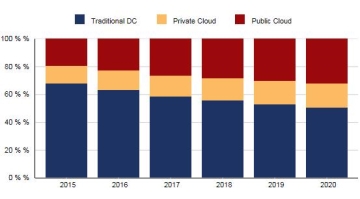
Growth in global cloud IT infrastructure spending, with a large share of public cloud data centers
IDC(www.idc.com)의 최근 전망 보고서에 따르면, 클라우드 환경 구축을 위한 전세계 IT 인프라 제품(서버, 스토리지, 이더넷 스위치) 지출 규모가 2016년 16.2% 증가하며 374억달러 규모에 이를 것으로 예상된다. 퍼블릭 클라우드 데이터센터 부문이 18.6% 성장해 전체 지출에서 62.6%의 비중을 차지할 것으로 보이며, 오프 프레미스(off-premises) 클라우드 환경(퍼블릭 및 프라이빗) 구축을 위한 IT 인프라 지출은 2016년 284억달러에 이를 것으로 전망된다고 보고서(‘Worldwide Quarterly Cloud IT Infrastructure Forecast’)는 밝혔다.
2016.10.20by 김수지 기자
.jpg)
SalePoint Signs Multi-Year Partnership Agreement with AWS… Promoting Identity Security that Integrates Even AI Agents
Sailpoint has entered into a multi-year strategic partnership agreement with AWS and is moving forward with establishing an integrated governance system that manages both human and non-human identities together. The plan is to consistently manage access permissions in an environment where AI agents are increasing as work execution entities, while applying the principle of least privilege and automated policy enforcement. The two companies plan to jointly expand capabilities to manage the identities of various entities, including AI agents, within a single layer in the AWS environment. This collaboration is interpreted as a move to design security and governance together in corporate environments where AI adoption is expanding.
2026.03.26by 배종인 기자
.png)
Databricks Unveils Open AI Security Monitoring 'Lakewatch'
Databricks entered the security market on March 24 by unveiling LakeWatch, an open-source agentic SIEM. The core functionality of this product is to integrate and analyze security, IT, and business data in a single environment to support AI-based threat detection and investigation. The company explained that it reduces the limitations of existing security operations centers, which have had to forgo some data due to high cost structures, and enables large-scale data analysis and automation based on open formats and ecosystems. LakeWatch is currently offered as a private preview, with Adobe and Dropbox mentioned as early customers. Databricks also announced an expanded partnership with Anthropic as well as the acquisition of Antimatter and SiftD.ai.
2026.03.26by 배종인 기자











