



[Interview] “With Samsung ARTIK, there are no problems from easy IoT product development to mass production”
 Published2016.11.07 12:33
Emphasizing the ability to provide turnkey solutions from hardware to the cloud
At the Korea Electronics Show (KES 2016) held at the end of last month, Samsung Electronics’ ARTIK booth appeared and attracted the attention of visitors. ARTIK, an IoT platform first introduced in May of last year, created a sensation as it was an IoT platform released by Samsung, and among developers, it garnered interest for the fact that they could receive development support for both hardware and software at once.
On the 26th of last month, Samsung unveiled new ARTIK products, 'ARTIK 0' and 'ARTIK 7,' and is expanding its partnerships with various companies. In April of this year, it even launched ARTIK Cloud. With products ranging from hardware to cloud services, what is the goal that Samsung ARTIK is pursuing? During the recent Electronics Show, we invited Senior Vice President Kang Myung- gu of the IoT Commercialization Team at the Samsung Center for Strategic Innovation to our on-site studio. Through Senior Vice President Kang, who oversees the development of Samsung ARTIK, we will conduct an in-depth analysis of Samsung ARTIK.
Q. Samsung Artic had a separate booth at this year's electronics show.
For Samsung ARTIK, customers who have created products using ARTIK are important. To allow visitors to view products made using ARTIK, we have set up a separate booth in collaboration with the Korea Electronics & Information & Communication Industry Association (KEA), the organizer of the electronics show.
Q. First, please briefly explain what Samsung's integrated IoT platform, 'ARTIK,' is.
It is said that IoT is the mainstream trend these days. It seems that many people have ideas for creating new products using IoT. To build these, various components and semiconductors are required, as well as software. In particular, cloud computing, which is very popular these days, must also be utilized. Many people have ideas but do not know how to turn them into products. 'ARTIK' is an ultra-compact IoT module composed of a processor (AP), memory, communication, and sensors, serving as an Internet of Things platform that encompasses software/drivers, storage, security solutions, development boards, and cloud capabilities. Simply put, you can think of it as providing infrastructure for IoT products.
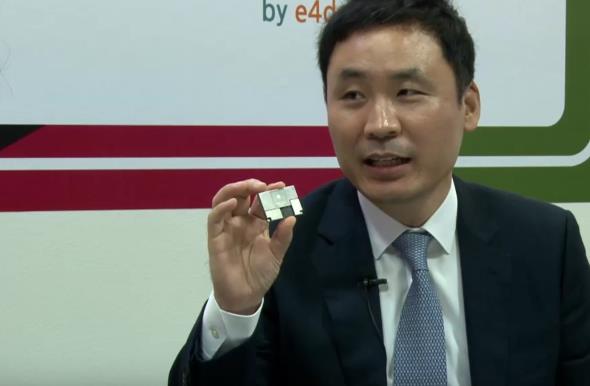
Kang Myung-gu, Senior Vice President of Samsung Electronics, emphasized that Samsung Artik provides infrastructure for IoT products.
Q. The Artic product line was recently added. Please explain the Artic product line.
Samsung Electronics first announced three types of Artik modules in Silicon Valley last May. It showcased hardware products named ARTIK 1, ARTIK 5, and ARTIK 10, and in April of this year, it unveiled 'Artik Cloud,' an open data exchange platform. As mentioned earlier, the company announced both components and a cloud for building IoT products, and this time, it also announced two new Artik modules, ARTIK 0 and ARTIK 7. The reason for adding these modules is to support the countless number of IoT products.
For example, simple products like door locks or lighting can be IoT products, and controlling such products from a TV or refrigerator can also be considered an IoT product. Since each product requires a different "brain"—that is, a CPU—a single piece of hardware cannot cover the entire system. In that regard, we released modules necessary for IoT products tailored to the high-end, middle-end, and low-end segments of ARTIK 10, but after continuing to meet with customers, we found a demand for a product lower than ARTIK 1, so we released ARTIK 0. Additionally, because there was a need for a product line between ARTIK 5 and 10, we released ARTIK 7.
Q. Then, what are the applications for ARTIK 0 and ARTIK 7?
The ARTIK 7 has a built-in application processor (AP) found in smartphones, as well as memory and high-capacity storage. Additionally, it includes built-in connectivity solutions such as Wi-Fi, Bluetooth, and Zigbee, so simply plugging in this small module allows applications similar to those on a smartphone to run. Since the ARTIK 7 also supports multimedia, it is suitable for those with ideas to create IoT products by integrating displays or cameras. However, if you simply want to exchange data and monitor status, you can create more effective IoT products using the low-cost ARTIK 0.
Q. It seems like developers could develop IoT products very easily by utilizing Artik.
That's right. While products like Arduino and Raspberry Pi are available on the market for creating IoT products, the difference between Artik and these is that although development can be easily done with such products, the chips cannot be reused when moving to mass production; therefore, the device must be disassembled or new chips must be added. This presents a disadvantage of separating product development from mass production. However, since Artik is a module that is inherently capable of mass production, we can supply the production volume immediately upon completing development and placing an order. This allows for a one-stop process from development to mass production, and the production period can be shortened to within four months, making it a product that facilitates development and mass production more easily than other existing IoT platforms.
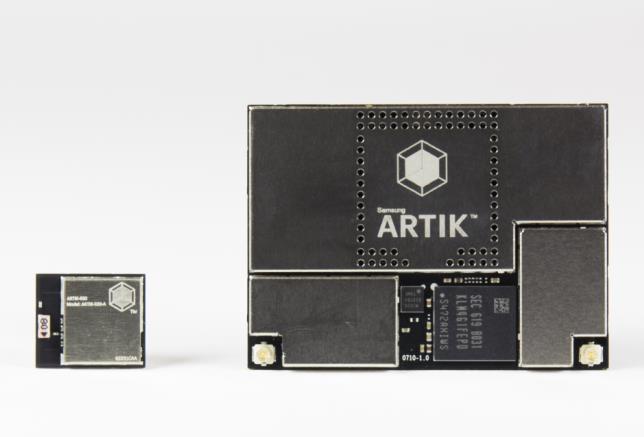
On the 26th of last month, Samsung unveiled additional new ARTIK products, 'ARTIK 0' and 'ARTIK 7', and is expanding cooperative relationships with various partners.
Q. It sounds like Samsung Artik aims to create a single, comprehensive platform for the IoT market that spans from hardware to software. To achieve this, building a related ecosystem seems to be paramount. What efforts is Samsung making in this regard?
We are not saying that we will establish an IoT standard with Artik. The reason that is not easy is that, due to the fundamental nature of IoT, the key factor is how many devices are connected. Since the number of devices my product connects with is crucial, it is difficult to succeed by trying to do well on my own. In this regard, a key objective of Artik is to establish an open ecosystem that connects and facilitates the formation of many partners. For instance, companies providing various solutions running on the Artik platform are connecting as our partners.
Samsung Electronics is inviting companies to become ecosystem partners by providing infrastructure that enables algorithms, such as security and artificial intelligence, to run on Artik and the Artik Cloud. If a company requires such solutions, product development becomes easier because they are already a proven partner. Furthermore, to ensure that IoT-related companies and developers can conveniently purchase Artik, the company supplies it to global electronic component distributors like Digi-key and Arrow, and enables domestic orders and delivery through companies like Mujin. In this way, Samsung Electronics is striving to build the 'Artik ecosystem' by not only launching commercial Artik products but also expanding distribution channels and initiating official partner programs.
Q. Please provide a more detailed explanation of the 'Official Partner Program'.
The Certified ARTIK Partner Program (CAPP) helps companies that have ideas but lack engineers and do not know what to do or how to proceed. In the industry, there are existing companies that create prototypes and handle initial mass production simply by presenting an idea; Samsung is certifying those among these companies that effectively utilize Artik. Through this process, Samsung has secured eight partners who facilitate the easy creation of products based on Artik. In other words, by utilizing the official Artik Partner Program, one can easily develop IoT products with just an idea, enabling the rapid production of a diverse range of IoT products. Even small startups can create opportunities to realize IoT products in collaboration with Samsung and its partners. Samsung Electronics is building the Artik ecosystem through partnerships with various companies in areas such as operating systems (OS), solution tools, cloud services, and security.
Q. Samsung Electronics recently launched 'Samsung Artik Cloud,' an open data exchange platform capable of connecting IoT devices with cloud services. This appears to reflect the importance of the cloud in IoT. What is the significance of Artik Cloud?
As mentioned earlier, simply connecting IoT products wirelessly via hardware lacks impact; they only become meaningful when various products can communicate and be controlled. Connecting hardware directly has limitations. Since the hardware itself uses a wide variety of communication protocols that differ from product to product, it is difficult for them to communicate with each other. The key feature of Artik Cloud is that even if underlying products utilize diverse protocols, they can communicate and interact with one another simply by uploading their data to the Artik Cloud.
By utilizing Artik Cloud, interoperability between devices is possible even when using modules from other vendors instead of the Artik platform, allowing for much greater diversification of applications. Therefore, we announced Artik Cloud as a key component of the Artik platform last April. Currently, it is possible to supply the entire solution as a turnkey package.
It was built with an open programming language so that developers can easily utilize this platform.
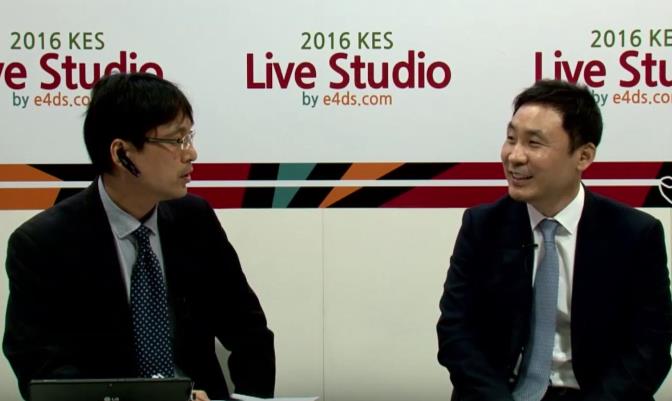
Kang Sang-mu, who appeared at the on-site studio of the e4ds Korea Electronics Show, said that his dream is to enable many companies, including startups, to develop IoT products easily and quickly.
Q. Global competitors are also presenting IoT platforms; what do you think is the unique differentiator of Samsung Artik?
Currently, there are companies releasing simple modules under the guise of IoT platforms, while most talk about the cloud and are launching IoT-oriented cloud products. Samsung’s differentiating factor is that we supply turnkey products, covering everything from hardware to the cloud. Because we supply products that connect hardware components to the cloud, we differ from companies that provide only hardware products. We use the term "End-to-End" to describe this; by providing integrated SDKs and solutions that connect hardware to the cloud, we enable the creation of IoT products more easily and quickly. There are no companies other than Samsung that are widely active in this kind of end-to-end approach.
An integrated SDK connecting from hardware to the cloud
Q. I heard that Samsung Artic is more popular in the U.S.
When it was first launched with this concept last May, it gained explosive popularity in Silicon Valley for providing turnkey solutions. It was evaluated that Samsung had set the right direction. Since the announcement last May, we have been proceeding in stages; with the cloud announced this April and the lineup fully assembled by the end of the year, I expect the ecosystem expansion to accelerate next year as new Artik-based IoT products are released in earnest and mass-produced items become available.
Q. What is Artik's ultimate goal (vision) for the future?
The difficulty of conducting IoT business lies in the fact that connecting and controlling different devices involves a vast scope and diverse industrial fields. Since the technologies within these areas also vary, it is difficult for the IoT industry to thrive without the support of platforms like Artik. While everyone predicts that the IoT industry will grow, platforms like these must provide the necessary foundation. In this regard, our vision is for Samsung to take the lead and establish that foundation. Our dream is to rapidly revitalize the IoT industry and enable many startups to develop IoT products. I think it would be a true success if, later when the IoT industry is active, people immediately think of 'Let's ARTIK' when searching for IoT product development.
관련뉴스
Can Samsung's IoT platform, 'ARTIK,' succeed?
삼성전자의 ARTIK은 프로세서(AP), 메모리, 통신, 센서 등으로 구성된 초소형 IoT 모듈이다. 소프트웨어/드라이버, 스토리지, 보안솔루션, 개발보드, 클라우드 기능이 하나의 모듈에 집적된 플랫폼이라고 강조한데서 알 수 있듯 개발자들이 ARTIK을 활용하여 빠르고 손쉽게 IoT 기기를 제품화할 수 있다고 자신했다.
2016.03.07by 신윤오 기자
Ecolab and K-water Discuss Innovation Collaboration in Advanced Industry Water Management
Ecolab and the Korea Water Resources Corporation jointly discussed cooperation directions for maximizing water use efficiency in advanced industries such as semiconductors and data centers and establishing sustainable water circulation. The two companies agreed to gradually develop a long-term cooperation model that combines water resource infrastructure and water management technology to promote water efficiency optimization, water reuse, and carbon reduction.
2026.08.28by 명세환 기자
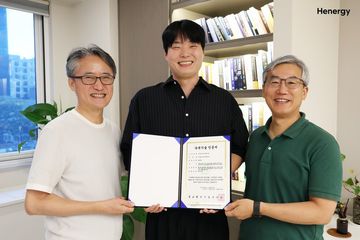
에이치에너지, 녹색기술인증 획득…솔라온케어 가동률 99.82%
에이지에너지가 태양광 발전예측 및 I-V커브 이상진단 기술로 중소벤처기업부 녹색기술인증을 획득했다. AI 기반 자산관리 플랫폼 솔라온케어는 전국 3,000개 이상 발전소에 적용되어 99.82%의 시스템 가동률과 3.7% 발전성능 개선을 달성했다. 실시간 데이터 분석을 통해 모듈 노화와 부분 음영 등 미세한 손실을 조기에 감지하고 관리함으로써 발전 수익을 보호한다.
2026.08.25by 명세환 기자
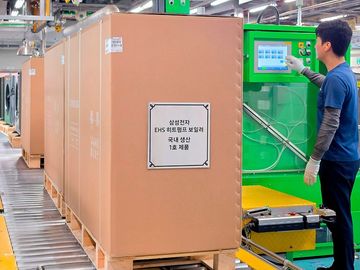
삼성전자, EHS 히트펌프 보일러 광주서 국내 생산…연 10만 대 규모
삼성전자가 난방 전기화 추진에 맞춰 광주사업장에서 EHS 히트펌프 보일러 국내 생산 체제를 구축한다. 2,132㎡ 규모 전용라인에서 이달 시험생산을 시작해 9월 말 본격 양산에 돌입할 예정이며, 연간 10만 대 이상 생산 능력을 갖춘다. 투입 전력 대비 약 5배 열을 생성하는 이 제품은 계절성능계수 4.9를 기록하며 화석연료 기반 보일러 대비 에너지 효율이 높고 탄소 배출을 줄인다.
2026.08.24by 명세환 기자
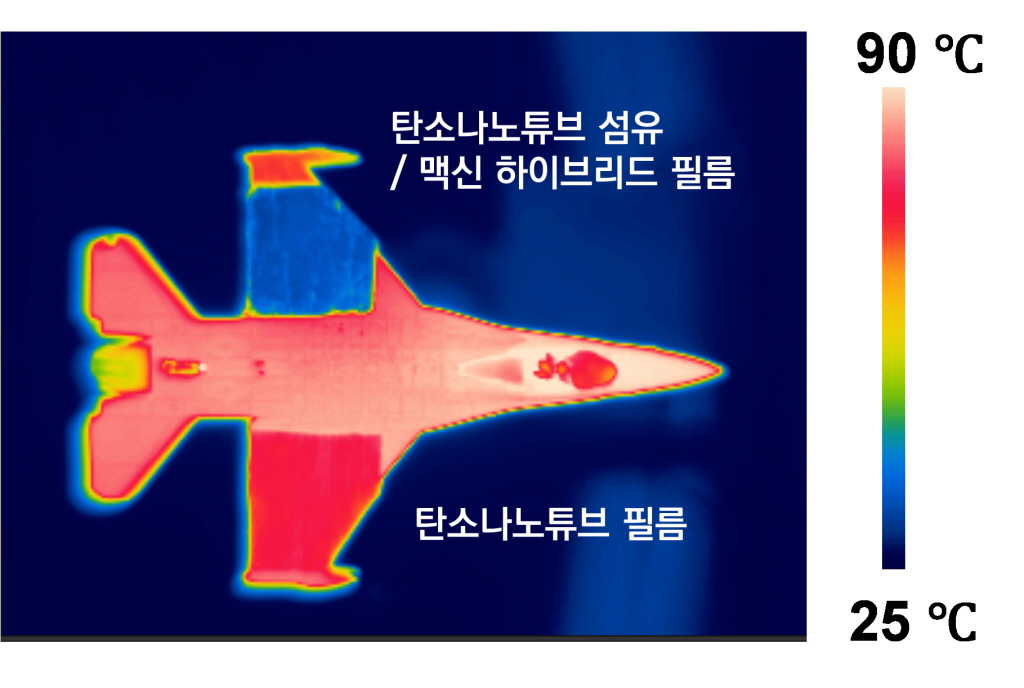
재료연구원, 전자파 차폐·적외선 스텔스 동시 구현 탄소나노튜브 필름 개발
한국재료연구원이 전자파 차폐와 적외선 스텔스 기능을 동시에 구현하는 탄소나노튜브 하이브리드 필름을 개발했다. 머리카락 굵기의 1/5 수준의 초박막으로 전자파를 99.9999999% 이상 차단하면서 강철 수준의 강도를 갖춘 이 복합소재는 미래 무기체계, 항공우주, 5G·6G 통신기기 등에 광범위하게 적용될 것으로 기대된다.
2026.08.19by 배종인 기자











