


5 Reasons Why the PyeongChang Olympics Can Be Called the ICT Olympics
 Published2016.11.21 11:10
There are just over 450 days left until the 2018 PyeongChang Winter Olympics. While the Olympics, a global festival, usually focuses attention on how many medals are won in which events, there is a separate reason to pay attention to this PyeongChang Winter Olympics.
The fact is that the PyeongChang Olympics is the ICT Olympics. Recently, the Olympics has become a showcase for the cutting-edge ICT technology industry and a venue of significant opportunity for national prestige and industrial aspects.
The 2008 Beijing Olympics was a science and technology Olympics broadcast live on the internet, and the 2010 Vancouver Olympics was a Twitter Olympics of sharing and participation. The 2012 London Olympics was a social Olympics of social media interaction, and the preceding 2014 Sochi Olympics became a BYOD (Bring Your Own Device) Olympics providing personalized service information.
Accordingly, the 2018 PyeongChang Olympics is expected to become a K-ICT Olympics, utilizing the best ICT products and services. This world-leading, cutting-edge K-ICT Olympics is projected to become a festival for humanity where advanced technologies such as 5G, IoT, UHD, VR, and AI are demonstrated or commercialized for the first time. We will explain, one by one, the five reasons why the PyeongChang Olympics will imprint the image of Korea as an IT powerhouse on the world.
1. It is the world's first 5G Olympics.
At the 2018 PyeongChang Olympics, you can experience ultra-high-speed wireless communication as well as immersive media services such as holograms, ultra-multi-viewpoints, and virtual reality through the world's first 5G.
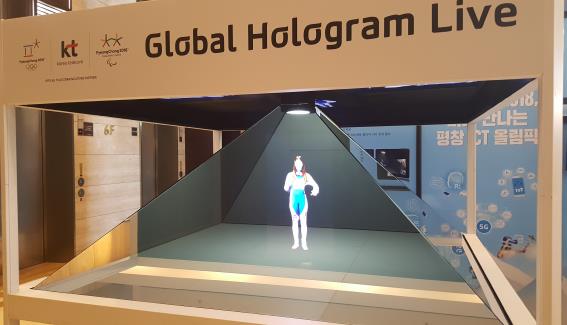
5G pilot networks will be established in high-profile areas such as Olympic venues, Incheon Airport, and Gwanghwamun, and commercial-grade 5G terminals will be developed and provided. For example, immersive media services such as holograms, multi-viewpoints, and virtual reality (VR) will be provided as 5G services, and real-time control services such as autonomous driving and drones will be piloted based on 5G.
In particular, the 2018 PyeongChang Olympics can be considered the start of full-scale 5G services as it marks the third consecutive Olympics in Northeast Asia, following the 2020 Tokyo Olympics and the 2022 Beijing Olympics. Japan plans to launch commercial 5G services through the Olympics, while China plans to provide 5G advanced services.
Kim Hyung-joon, Head of KT’s PyeongChang Winter Olympics Promotion Team, said, “We will provide new services including holograms, 360-degree VR, OmniView, and IoT through 5G technology, which possesses three major attributes: ultra-high speed, ultra-low latency, and ultra-connectivity. As the PyeongChang Olympics is an event that implements the world’s first 5G services, we will be able to bring forward the commercialization of services to 2019.”
Giga Wi-Fi zones will also be established during the Olympics. The wireless communication environment will be improved by setting up Giga Wi-Fi zones centered on areas with high user density. Private Wi-Fi will be provided for competition officials, while Public Wi-Fi will be provided for general spectators. After demonstrating a test event in March of next year, a second facility will be constructed in the second half of the year.
Development of the 5G pilot network and terminals will be implemented during the Olympics after the 5G pilot network test event demonstration in March 2017 and the integration of 5G pilot network terminals and services in September. Immersive media and real-time control services will undergo OmniView (bobsleigh, figure skating) and 5G bus test events in March 2017, followed by the optimization of OmniView service equipment in September.
2. It is a convenient IoT Olympics.
At the PyeongChang Olympics, you can experience convenient, personalized IoT services covering transportation, competitions, accommodation, sightseeing, and shopping from arrival to departure.
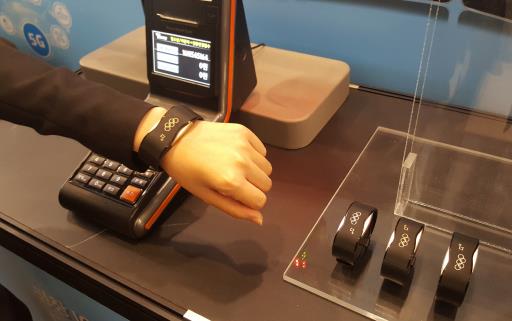
First, the navigation service utilizes AR and precise positioning technology to provide personalized location-based indoor and outdoor navigation based on the travel route. Upon receiving an AR navigation request, users can access AR indoor navigation as well as outdoor walking directions. For interactive viewing guidance, visitors can experience two-way digital signage services at the stadium and Athletes' Village, including cheering videos, welcome greetings, and the creation of AR experience videos.
In addition, it provides visitors with movement routes and danger zones through congestion information, and offers real-time parking information as well as smart tourism and smart shopping services. In particular, it supports entry to tourist attractions using wearable bands (prepaid) and integrated payment services for transportation, accommodation, etc. The One Pass band service is also planned to be utilized in conjunction with Gangwon-do tourism points.
To provide IoT services for enhancing athletes' performance, it manages athlete health based on stress information measured by pulse wave and brainwave sensors, and constructs an ice chamber for ice rink equipment to conduct scientific equipment experiments and verify performance. It challenges the scientific advancement of sports by monitoring luge athlete training data (speed, motion, time) and conducting image training, and supports precise measurements such as ski gate passage times and speeds using laser sensors.
3. Enjoy the Olympics in UHD quality that is four times sharper.
It appears that the PyeongChang Olympics will allow viewers to experience the excitement of the event exactly as it happened on-site through UHD live broadcasting services that are four times clearer than current terrestrial video.
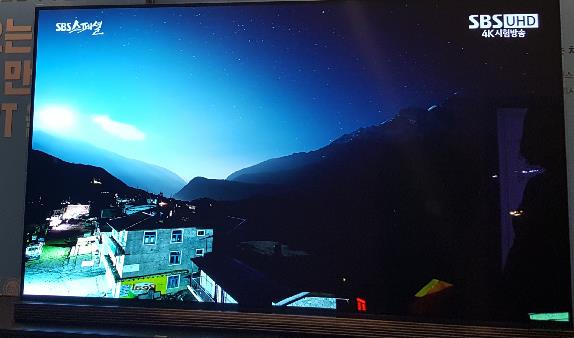
UHD Olympic broadcasting will become possible through terrestrial 4K UHD broadcasting. Major events, including the opening and closing ceremonies and short track speed skating, will be broadcast live on terrestrial 4K UHD. We intend to set up a purely domestic UHD broadcasting system, provide opportunities for broadcast production experience, and promote the excellence of domestic broadcasting equipment both domestically and internationally.
While further consultations on production details with OBS (Olympic Broadcasting Service) are required for UHD Olympic broadcasting, we plan to begin terrestrial UHD main broadcasting early next year and establish a UHD experience studio by the end of next year.
Kim Do-sik, head of the SBS UHD Promotion Team, said, “We are preparing to broadcast a minimum of 180 minutes a day and a total of 45 hours during the Olympics,” adding, “We are pursuing innovative services that combine interactive services with various data such as athlete information, game information, and real-time records specialized for the Olympics, and we are discussing the launch of antenna-equipped UHD TVs with home appliance manufacturers to expand viewer reception convenience.”
4. It is a smart Olympics realized by artificial intelligence (AI).
The PyeongChang Olympics will be smarter than ever through automatic translation apps, AI call centers, unmanned monitoring, and autonomous driving experiences.
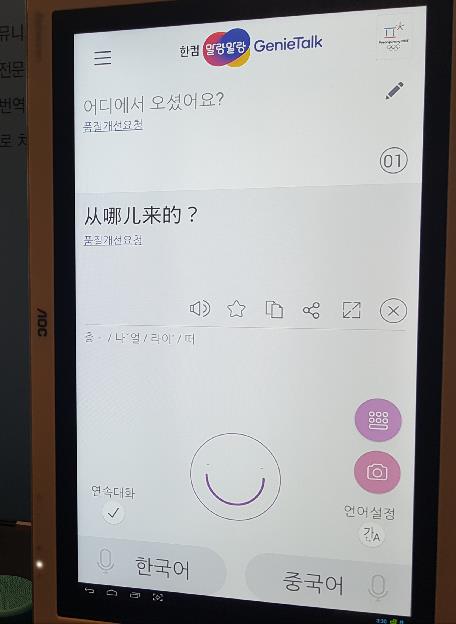
It provides app-based automatic translation services for Korean and eight other languages through an automatic translation app, and operates an AI call center that handles phone inquiries related to the Olympics, such as game and tourism information, using speech recognition and dialogue processing technologies.
In addition, there are plans to utilize drone image recognition technology to detect, analyze, and respond to crimes and emergencies in real time, and visitors can experience test drives of AI-based autonomous vehicles, including smartphone ride-hailing, automatic parking, and road driving.
5. It is a VR Olympics to enjoy.
Through virtual course experiences, VR drone racing competitions, K-Pop hologram competitions, and virtual traditional culture experiences, the Olympics becomes an Olympics to be enjoyed rather than just watched.
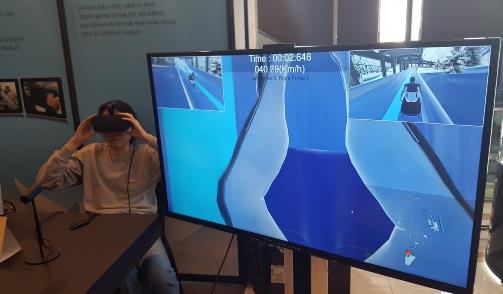
VR simulation games such as ski jumping, bobsleigh, and snowboarding VR, as well as VR Hallyu tourism services, are also provided. For VR broadcasting services, broadcasters film game footage and other content using high-definition VR cameras and transmit it in real time. A VR drone racing competition will also be held, where pilots compete by viewing video captured by drone-mounted cameras directly through their VR devices.
관련뉴스

KT, 세계최초 5G 올림픽 실현하고 선도한다.
KT는 2018년 평창동계올림픽을 세계최초 5G 올림픽으로 실현하고, 글로벌 5G 시대를 선도한다고 선언했다. KT는 15일 오전 서울 세종로 KT광화문빌딩 West에서 평창동계올림픽 조직위원회 관계자 및 평창동계올림픽 기술고문 등이 참석한 가운데 대회통신망 및 5G 올림픽 준비현황을 발표하고 ‘홀로그램 라이브’, ‘싱크뷰(Sync View)’ 등 실시간 5G 서비스를 선보였다.
2016.02.15by
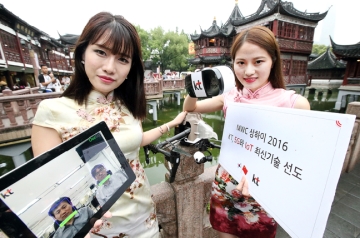
KT Introduces Latest 5G Technology to be Applied to PyeongChang Olympics at Shanghai MWC
KT(회장 황창규)는 6월 29일부터 7월 1일까지 3일간 중국 상하이에서 열리는 아시아 최대 이동통신 박람회 ‘모바일 월드 콩그레스 상하이 2016(Mobile World Congress Shanghai, 이하 MWC 상하이 2016)’에 참가한다고 밝혔다. 세계이동통신사업자연합회인 GSMA에서 주관하는 MWC 상하이는 상하이에서 2012년 처음 시작돼 올해로 5년째 열리고 있으며, 작년에는 550여개 기업이 참여해서 101개국, 약 4만명이 넘는 관람객이 방문하는 등 아시아 최대 규모의 모바일 전시회로 자리잡고 있다.
2016.06.30by 명세환 기자
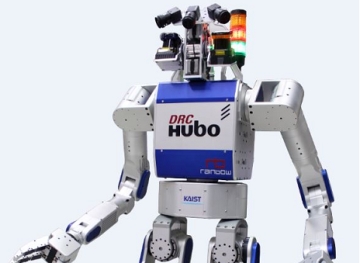
평창동계올림픽 로봇 적극 활용한다 ' 오준호 교수' 총감독 맡아
산업통상자원부(장관 주형환)는 7월 11일 정부세종청사에서 평창동계올림픽 로봇지원단의 총감독으로 위촉한 카이스트(KAIST) 오준호 교수에게 위촉장을 수여했다. 지원단은 2018 평창동계올림픽의 성공적인 개최를 위한 범정부 차원의 지원이 본격화되는 상황에서, 평창동계올림픽과 관련된 다양한 분야에 로봇을 효과적으로 활용해 올림픽의 성공적인 개최를 지원하기 위해 발족했다.
2016.07.12by 신윤오 기자
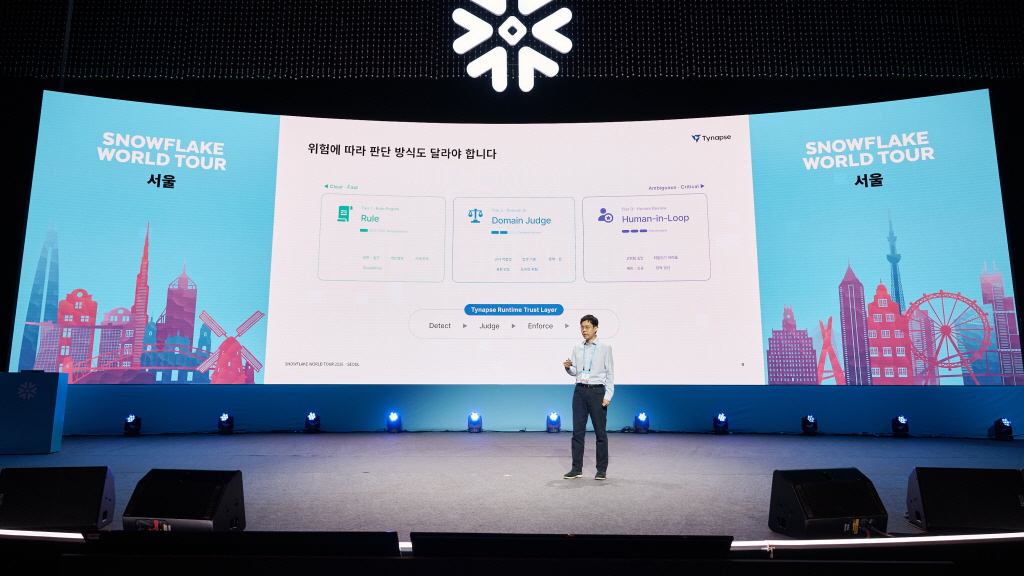
The Problem with AI is Not Performance, but Trust
CEO Kang Min-seung emphasized at Snowflake's World Tour Seoul that generative AI has entered a phase where "trust" rather than accuracy becomes the key competitive advantage. As AI is applied to various tasks including consultation, risk management, and operational automation, incorrect data, erroneous responses, and bias are creating actual business risks. He pointed out that enterprises must build a trust layer above AI. To achieve this, accurate data management, semantic structuring, governance, and prompt security are essential. He explained that AI is not merely an automation tool but a technology that reorganizes the entire organization's workflows and decision-making systems. Snowflake provides a platform that supports this trust-based AI operation, emphasizing that enterprises should build "trustworthy AI" rather than "intelligent AI."
2026.08.28by 배종인 기자
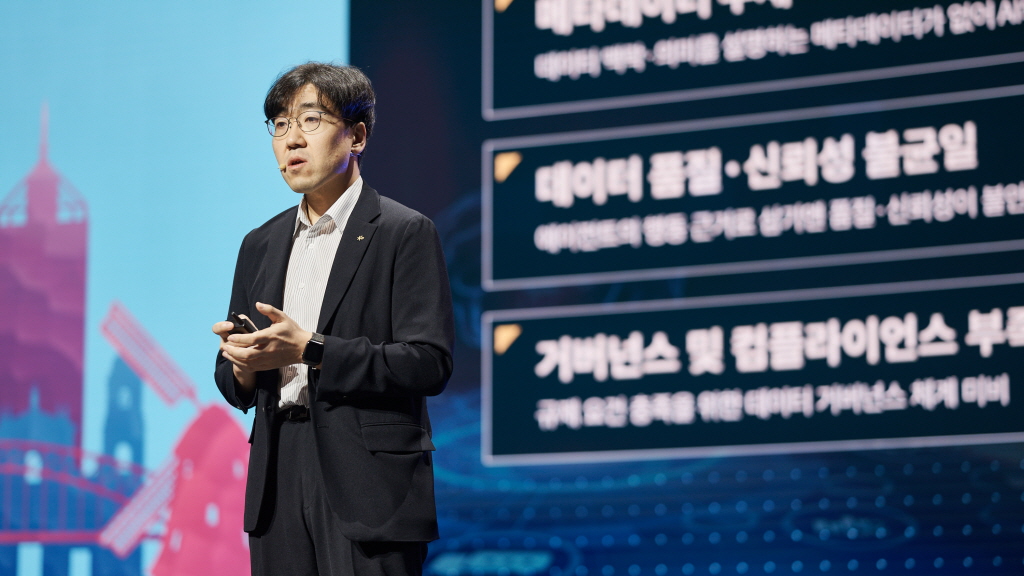
The Decisive Factor for AI Agents in Finance: "Trustworthy Data Infrastructure"
The key to spreading AI agents in the financial sector is establishing a trustworthy data system. KB Kookmin Bank is operating over 100 AI agents by 2025 and is promoting expansion to 300. AI is automating repetitive tasks across various areas such as consultation, risk management, wealth management, and relationship management. However, if data quality, governance, and semantic structuring are insufficient, errors and risks increase. KB is building an AI-Ready organization through a multi-model strategy of GPT, Gemini, and Claude, as well as a Snowflake-based data system. The bank emphasized that AI has entered a phase where it restructures not just simple automation but the entire work process and decision-making system.
2026.08.28by 배종인 기자











