

.png)

U.S. Display Research Institute: "Quantum Dots Will Lead Next-Generation Displays"
 Published2016.11.22 16:57
Technology competition in expressing a wide range of colors closer to nature more precisely
"Quantum Dot Technology Leads Next-Generation Displays"
Insight Media, a U.S. display-focused market research firm, issued a white paper analyzing the latest TV technology and made this assessment.
Insight Media evaluated quantum dot technology as superior to other display technologies in rich color expression, screen brightness, afterimage and lifespan, and power consumption. The firm also highlighted the advantages of quantum dot technology, noting that it can express more accurate colors than existing TVs while simultaneously providing brighter screens with lower power consumption.
Insight Media explained that recent TV picture quality competition has shifted from pixel count to WCG (Wide Color Gamut) and HDR (High Dynamic Range), resulting in technology competition focused on expressing a wide range of colors closer to nature more precisely. With the combination of WCG and HDR technologies, TVs can now express colors and screen brightness that were previously impossible to achieve.
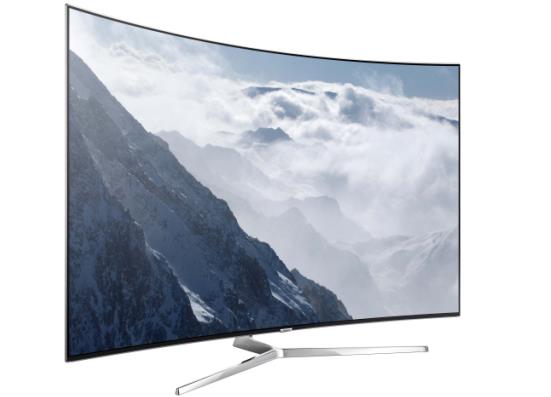
<Samsung Electronics Quantum Dot SUHD TV>
Quantum dots are nano-sized semiconductor particles capable of producing light with precision. With energy efficiency approaching 100%, groundbreaking picture quality improvements are possible without requiring additional power consumption.
The color of emitted light varies depending on the size of the quantum dots. Smaller quantum dots emit blue light, while relatively larger ones emit red light. Because quantum dots can control color to nano-level precision, they can produce colors that are more than 5 times more accurate and pure compared to conventional TVs. Light produced by materials typically used in TVs has a wavelength of around 100–150nm (nanometers) with mixed colors, whereas quantum dots have a wavelength of approximately 25–50nm, expressing purer colors.
Insight Media explained that as industry investment in quantum dots expands, the technology has been applied primarily to flagship models so far, but its application scope is gradually widening. Chris Chinnoc, CEO of Insight Media, stated, "Quantum dots are a remarkable material with tremendous potential," and explained, "TVs equipped with quantum dot technology can express more colors than any other TV and deliver the highest picture quality."
Insight Media forecasts that various methods of applying quantum dot technology are being researched and developed, and the technology will continue to advance in the future.
Related news
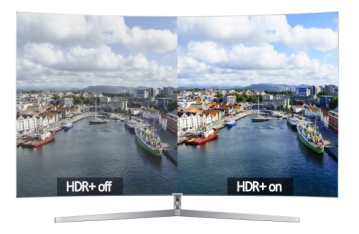
Samsung Electronics Adds 'HDR Plus' to Quantum Dot SUHD TVs to Restore HDR Picture Quality
Samsung Electronics is taking the lead in HDR (High Dynamic Range) technology by adding an 'HDR+ (HDR Plus)' function to its 2016 Quantum Dot SUHD TV lineup. HDR is a core technology for next-generation UHD that significantly enhances contrast ratio by rendering bright areas brighter and dark areas darker, thereby displaying light and color on screen that could not be seen on conventional TVs. The newly added 'HDR+ (HDR Plus)' is a function that finds optimal HDR picture quality for any video content, allowing users to properly enjoy TV images with richer colors and deeper contrast ratio.
2016.07.28by 김수지 기자
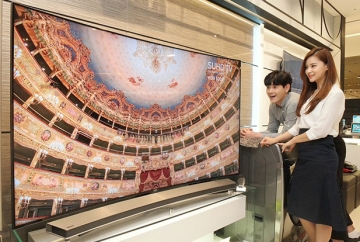
Patent applications for improving LCD color reproducibility using quantum dots are actively being filed.
LCD showed relatively lower color reproduction compared to OLED, but patent applications aimed at improving LCD's color reproduction using quantum dots have been increasingly active recently. According to the Korean Intellectual Property Office (Commissioner Choi Dong-gyu), domestic patent applications (based on filing date) applying quantum dots to LCD are being analyzed as steadily increasing. Quantum dot-related patent applications (based on filing date) totaled 268 cases over the past 10 years (2006-2015), with filing volumes surging in 2014 (63 cases) and 2015 (84 cases), accounting for 54.8% (147 cases) of the total filings over the past 10 years.
2016.09.26by 홍보라 기자

Launch of Quantum Dot Curved Gaming Monitor with Fast Response Speed
Samsung Electronics launched two curved gaming monitors CFG70 series (C24FG70, C27FG70) adopting quantum dot technology on the 17th. The quantum dot curved gaming monitors released this time apply Samsung SUHD TV's quantum dot display technology directly. They express colors in the sRGB 125% color gamut (based on CIE1931 standard) to support rich colors, and display dark scenes on screen in detail with a 3000:1 contrast ratio.
2016.10.18by 홍보라 기자

Intel Unveils Next-Generation 'Core Ultra Series 3' and vPro Platform for Enterprise PCs
Intel has officially unveiled the "Intel Core Ultra Series 3" for next-generation enterprise PCs and the latest vPro platform, addressing a wide range of demands from enterprise notebooks to high-performance workstations.
2026.03.26by 배종인 기자

ROHM Launches ESD Protection Diode Compatible with High-Speed Interfaces of 10Gbps or Higher
Semiconductor specialist ROHM has developed the 'RESDxVx series' of ESD (electrostatic discharge) protection diodes capable of responding to next-generation high-speed data communication environments exceeding 10Gbps, simultaneously enhancing both signal quality maintenance required in high-speed interfaces and IC protection performance.
2026.03.26by 배종인 기자











