


[Reporter's Notebook] Will 2017 Be the Year of Multi-Platform and Artificial Intelligence Competition?
 Published2016.12.19 19:43
Artificial intelligence is divided into before and after the match between Lee Sedol and AlphaGo
It has truly been an eventful year. While it may not compare to the current political situation, the IT industry has been equally turbulent.
There is a reason I say this. We often divide events and circumstances into before and after based on certain pivotal moments, or use them to demarcate eras. For example, we might divide popular culture into before and after "Seo Taiji," or divide film into movies featuring actor Lee Kyung-young (or Oh Dal-su?) and those without. I believe such reference points hold value not in terms of historical evaluation or objective statistics, but in the level of consensus that many people recognize.
So I dare to say this: At least 2016, or in recent years, technological progress is divided into before and after the "Go match between Lee Sedol and AlphaGo" (March 2016), I believe. In fact, before that there was the 1997 chess match between IBM's Deep Blue supercomputer and a human, and in 2013 there was the quiz match between IBM's Watson and humans, but the match between computer and human over the high-level game of Go is, in my view, the "event" that best fits the phrase "match of the century."
As evidence of this, 2016 was particularly marked by numerous issues surrounding artificial intelligence (AI). While AI as a technology became an issue more than 30 years ago, this year saw many mergers and acquisitions in the AI field. From the beginning of the year (January 2016), Google signaled its intention to implement "machine intelligence" within mobile devices through a partnership with GPU chip company Movidius, and Microsoft acquired SwiftKey, an AI-based keyboard app service company.
▲Microsoft announced at the beginning of this year that it would acquire SwiftKey, an AI-based keyboard app service company.
(SwiftKey YouTube screen capture)
In February, Yahoo open-sourced the deep learning software CaffeOnSpark, and Facebook open-sourced AI hardware Big Sur and the deep learning module Torch. Microsoft open-sourced the AI assistant Cortana, Skype translation speech recognition technology, and deep learning toolkit, while Google open-sourced AI software TensorFlow. Samsung also open-sourced software Veles, with each company accelerating the AI ecosystem and focusing on expanding market influence.
April saw a surge in interest in chatbot services. Telegram launched an online store offering various bot services, Microsoft launched chatbot Tay, and Facebook released a chatbot platform and development tools needed to create one. Google announced plans to integrate AI chatbot technology that answers user questions into mobile messenger apps, while Naver, through its Japanese subsidiary LINE, announced plans to launch an AI bot-based smartphone call center in the second half of the year.
May was a period when Facebook saw surging revenue from advertising growth, and June saw expanded investment in quantum computing technology in Silicon Valley. This is because as quantum computing, which can process vast data at high speed, advances, the AI industry can develop accordingly. In July, Uber announced it would invest $500 million in building its own maps, surprising the industry. Uber, which had shown moves to internally recruit related personnel and invest in technology companies to move into the autonomous vehicle market, is now even trying to build its own maps externally to compete with rivals like Google, Apple, Audi, BMW, and Daimler.
In August, Intel announced an official partnership with ARM. In essence, Intel, which had missed the mobile market, officially declared it would strengthen foundry services by joining hands with ARM. The same month, Delphi and Mobileye announced they would cooperate to mass-produce autonomous driving system CSLP by 2019. CSLP is an autonomous driving system at level 4 of autonomous driving technology. In September, Google launched 'Google Home', a smart home device, to compete with Amazon Echo and SK Telecom's 'Nugu'.
In October, VR devices evolved further. Microsoft, Oculus, and HTC each announced the launch of VR devices that transmit tactile sensation beyond sight. In November, Airbnb launched 'Trip', expanding from accommodation to tourism business, and Tesla announced future solar business through the official merger with SolarCity. Simply enumerating the major events that occurred each month thus far leaves us breathless. Beyond this, countless events reflecting fierce global competition are too numerous to mention one by one.
The match between Lee Sedol and AlphaGo mentioned at the beginning impressed the word "artificial intelligence" on the minds of Koreans of all ages and made people think of all industries in connection with AI. The fact that the term "Fourth Industrial Revolution," still lacking clear definition and substance, is becoming concrete is likely not unrelated to this. In any case, 2016, the year of artificial intelligence, is coming to an end, and a new 2017 will dawn. 2017 is unlikely to deviate greatly from this trajectory, but what will unfold is unpredictable.
In the remarks of Kim Jin-young, CEO of Roa Consulting, who announced the top IT issues to watch in 2017, we can sketch the outline of next year's picture. "2017 will be a year where the platform leadership competition centered on Amazon vs. Google is the key point to watch. Ahead, AI will distinguish itself through machine learning in smart factories, and will influence the advancement of chatbots and accelerated integration with messengers, while the potential for application in commercial products will expand through home speakers as a medium. Additionally, next year will mark the entry into an era of video-centric content or media commerce, and industrial drones will also expand."
Comments
Related news
[2017 Outlook] Leading the Way as a Smart Company by Leading IoT and Artificial Intelligence
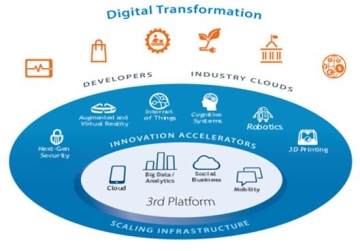
Korea IDC (CEO Hong Yoo-suk) introduced "Korea IDC's Top 10 Predictions for 2017," highlighting major issues and trends expected in the domestic IT market for 2017. Jang Soon-yul, Senior Managing Director overseeing the research group at Korea IDC, stated, "While the low-growth trend in the IT market continues, the traditional IT market faces difficulties in growth. However, the third-platform-based technology market driving digital transformation—including cloud, mobility, big data analytics, and social—is leading IT investments." He added that digital transformation (DX) is exerting significant impact on the macroeconomy through the digital economy (DX Economy).
2016.12.05by 김수지 기자
[2017 Outlook] Artificial Intelligence Begins Realizing the 'AI First' Era with Voice Assistant Services at the Forefront
KT Economic and Management Research Institute announced the 10 major ICT issues to watch in 2017. In outlook on the 10 major ICT issues for 2017, it stated, "Artificial intelligence is expected to be applied to our daily lives and industries through advanced algorithms, implementing an 'AI First' era, and 5G, which is drawing attention as a next-generation network, will appear before us as concrete services along with standard establishment." It also noted that MR (mixed reality) will provide entirely different experiences and enjoyment compared to VR and AR, autonomous vehicles are expected to fundamentally overturn the automotive industry paradigm of 130 years of history, and biometric authentication will become a new alternative to increasingly growing personal information threats.
2016.12.05by 홍보라 기자

[Decisive IT Scene] The increasingly smart AI is 'Who'
SK Telecom announced that its voice recognition-based artificial intelligence service "NUGU" will provide differentiated new services to customers through a major upgrade on the 14th. With this NUGU upgrade, new services have been added including ▲T map traffic information ▲Wikipedia voice search ▲radio ▲children-specialized content, and existing functions such as ▲pizza and chicken delivery ▲weather guidance ▲dedicated app have become more convenient.
2016.12.15by 김수지 기자

[Technical Contribution] Mouser: "AI Agents Help Accelerate and Standardize Industrial Field Maintenance Operations"
Abhishek Jadhav from Mouser Electronics discusses how to leverage agentic AI for predictive maintenance in industrial automation.
2026.10.23by 편집부
Professor Jeong Gu-min from Kookmin University, "QNX RTOS will become an important foundational technology in the physical AI era"
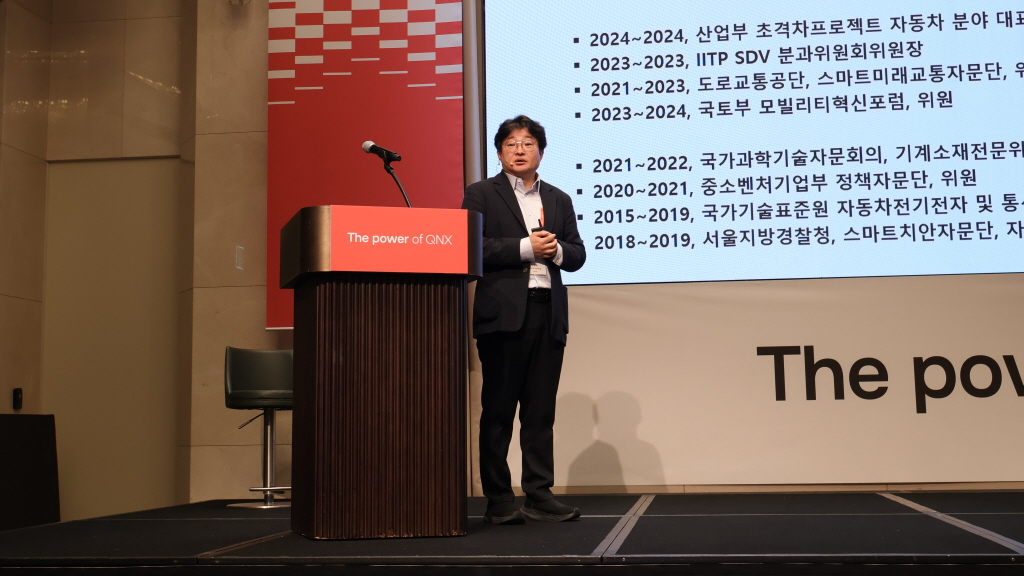
As software-defined vehicles (SDV) establish themselves as a new standard in the automotive industry, forecasts indicate that future competitiveness will be determined not by vehicle hardware but by software platforms and AI utilization capabilities. With the automotive industry rapidly transitioning to centralized architecture and AI-based development systems, an analysis suggests that how effectively vehicle platforms can be simplified and operated cost-efficiently will become core competitiveness for next-generation SDV and AI-defined vehicles. Professor Jeong Gu-min from Kookmin University emphasized at QNX TechForum Korea 2026 that "the automotive industry is now shifting from hardware competition to software ecosystem competition," highlighting that API-centric platforms and AI utilization will determine success or failure in the future automotive industry.
2026.10.23by 배종인 기자











