



Intel to Test Approximately 40 Autonomous Vehicles on Real Roads in Second Half of This Year
 Published2017.01.06 14:35
Intel, BMW, and Mobileye announced that approximately 40 autonomous vehicles will appear on actual roads by the second half of 2017, thereby revealing the achievements the three companies have accomplished toward fully autonomous driving.
During a panel discussion held at a joint press conference at CES, the three companies explained in detail the cutting-edge technologies from Intel and Mobileye incorporated in the BMW 7 Series through a global pilot period starting in the United States and Europe.
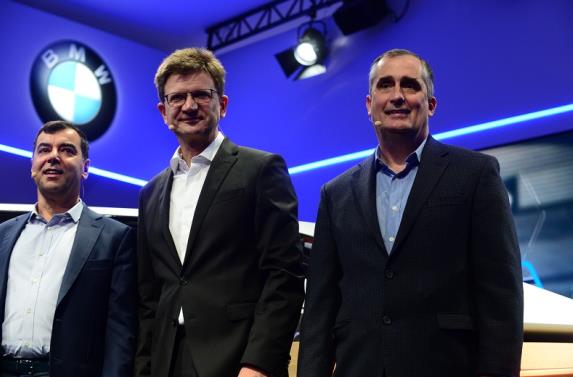
▲Intel, BMW, and Mobileye Executives
The three companies—Intel, BMW, and Mobileye—which disclosed their partnership in July of last year, have developed a scalable architecture that other automotive developers and manufacturers can apply to design cutting-edge designs and create differentiated brands. They provide a wide range of differentiated consumer experiences from individual key integrated modules to complete end-to-end solutions.
Klaus Fröhlich, a member of the management board at BMW AG's Development Division, stated: "The vehicles we develop this year will be tested globally in real traffic conditions. This will be an important stepping stone toward the launch of BMW iNEXT, BMW Group's first fully autonomous vehicle in 2021."
Intel CEO Brian Krzanich said: "Connectivity from vehicles to cloud systems enables automobiles to perform consistent and predictable behavior and to enjoy the highest level of safety. This is why this partnership opens new horizons. We have established a dedicated team with clear, shared goals and a culture of innovation, agility, and responsibility."
Amnon Shashua, Mobileye co-founder, chairman, and CTO, stated: "As part of the collaboration, BMW Group is responsible for drive control and vehicle dynamics. Additionally, through its suppliers, BMW will expand this platform, thereby installing high-performance simulation engines and performing component integration, manufacturing, and prototyping across the entire vehicle."
Intel Provides Innovative High-Performance Computing Elements from Vehicles to Data Centers
Through the partnership, Intel provides innovative high-performance computing elements from vehicles to data centers. The newly launched Intel GO™ solution for autonomous driving includes world-class processors and FPGA technology, meeting the stringent thermal and safety requirements of the automotive industry while balancing vehicle power with the most efficient power consumption.
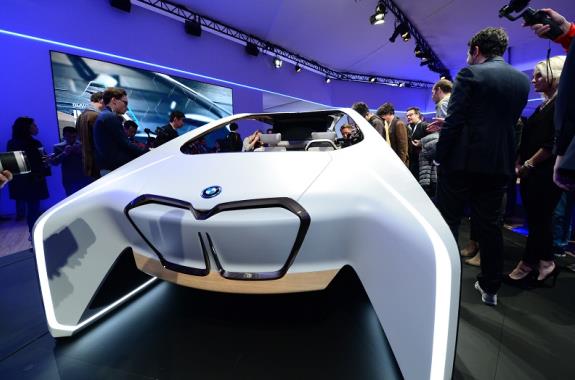
▲Intel, BMW, and Mobileye Autonomous Vehicle Design.
Within the vehicle, the Intel GO solution serves as a scalable development and computing platform, providing key functions such as sensor fusion, driving policy, environmental modeling, path planning, and decision-making. In the data center, Intel GO provides artificial intelligence capabilities based on powerful machine learning and deep learning simulation infrastructure required by the autonomous driving industry on high-performance Intel Xeon processors, Intel Arria 10 FPGA, Intel solid-state drives, and the Intel Nervana™ platform.
The BMW iNEXT Model to be Introduced in 2021 Will Serve as the Foundation of BMW Group's Autonomous Driving Strategy
Meanwhile, Mobileye supported the proprietary EyeQ 5 high-performance computer vision processor that provides automotive-grade functional safety and low-power performance. The EyeQ5 processes and interprets data input from 360-degree surround-view vision sensors while supporting localization. The EyeQ®5, together with Intel CPU and FPGA technology, forms a central computing platform that integrates each autonomous vehicle.
In collaboration with BMW Group, Mobileye develops a sensor fusion solution and constructs a complete environmental model around the vehicle based on information obtained through vision, radar, and LiDAR (Light Detection and Ranging) sensors. Mobileye's reinforced learning algorithm empowers the vehicle system with artificial intelligence, enabling it to establish driving policies tailored to complex driving situations.
To further accelerate the development of the autonomous vehicle platform, BMW and Mobileye plan to release hardware samples and software updates. The BMW iNEXT model to be introduced in 2021 will serve as the foundation of BMW Group's autonomous driving strategy, and BMW Group plans to showcase its highly automated model lineup following this model.
Comments
Related news
Intel CEO: "Data is the new fuel for future cars and self-driving cars"
In future vehicles and autonomous cars, data has literally become the new oil. Data has the potential to radically transform the way we think about the automotive driving experience as consumers, as automotive manufacturers, as technology experts, and as citizens.
2016.11.16by 김수지 기자
Decision to invest 17 trillion won in 12 new industries, including autonomous vehicles and IoT home appliances
The Ministry of Trade, Industry and Energy (Minister Joo Hyung-hwan) announced measures for export recovery and new industry creation in its 2017 New Year's business report. In the report, the ministry presented 9 key promotion tasks across 4 core areas: ▲export conversion to positive growth, ▲acceleration of structural adjustment and response to the 4th Industrial Revolution, ▲establishment of growth ladder for small and medium-sized enterprises and vitalization of small business owners, and ▲construction of energy security and eco-friendly supply base.
2017.01.05by 신윤오 기자
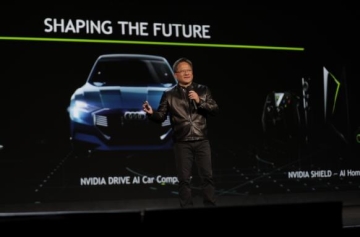
NVIDIA CEO Jensen Huang to transform the vehicle into a single artificial intelligence
Nvidia CEO Jensen Huang delivered the opening keynote address at CES, highlighting Nvidia's leading capabilities in artificial intelligence, deep learning, gaming, and automotive sectors while presenting a vision for new innovations in gaming, TV, and automotive divisions. Jensen Huang, Nvidia's CEO who delivered the keynote speech, unveiled Nvidia's vision for AI-powered vehicles based on active collaboration with major automotive manufacturers. Additionally, he announced the expansion of Nvidia's GeForce NOW service to millions of PCs and Mac computers, and officially announced the launch of a new version of SHIELD, a state-of-the-art streaming device.
2017.01.06by 신윤오 기자

[Technical Contribution] Caltera: "Evolution of Precision Sensing, UWB Infrastructure Enhances Parking Safety"
Discussing new possibilities in parking assistance and precision sensing with UWB, Lee Sang-min, Korea Branch Manager at Caltera.
2026.10.23by 편집부
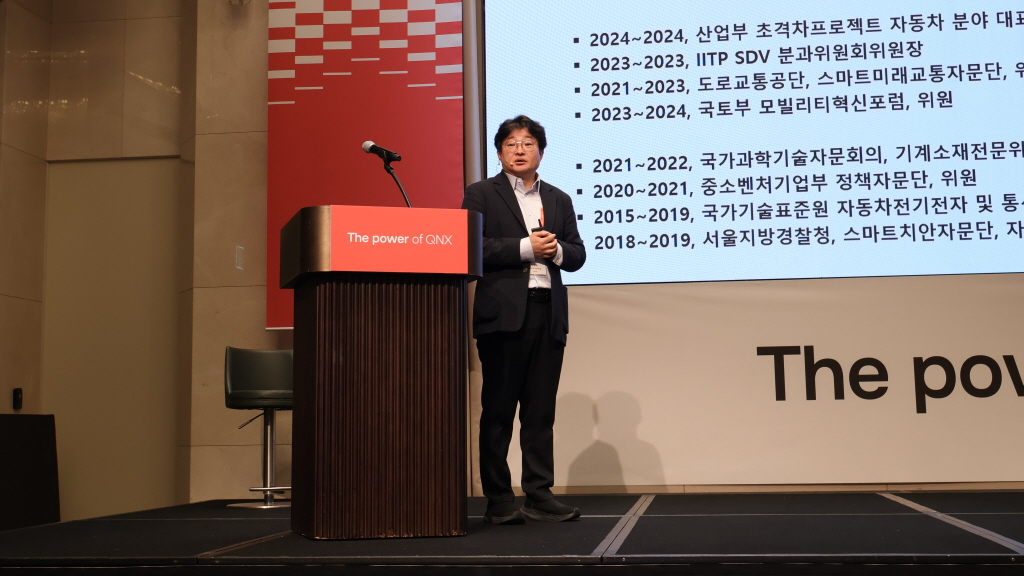
Professor Jeong Gu-min from Kookmin University, "QNX RTOS will become an important foundational technology in the physical AI era"
As software-defined vehicles (SDV) establish themselves as a new standard in the automotive industry, forecasts indicate that future competitiveness will be determined not by vehicle hardware but by software platforms and AI utilization capabilities. With the automotive industry rapidly transitioning to centralized architecture and AI-based development systems, an analysis suggests that how effectively vehicle platforms can be simplified and operated cost-efficiently will become core competitiveness for next-generation SDV and AI-defined vehicles. Professor Jeong Gu-min from Kookmin University emphasized at QNX TechForum Korea 2026 that "the automotive industry is now shifting from hardware competition to software ecosystem competition," highlighting that API-centric platforms and AI utilization will determine success or failure in the future automotive industry.
2026.10.23by 배종인 기자











