



[Promising Future Technologies ②] Smart Content: Information Tailored to You Gets You Automatically
 Published2017.01.09 06:13
Mr. K was working frantically when an alarm sounded from his smartphone, accompanied by a strong rose scent. This was because he had set his smartphone to emit a rose fragrance for emails from a specific client. When he asked his smartphone, "What is this about?", the email content was displayed on the PC screen he was looking at. It was the details of a business meeting in the UK scheduled for the next day. Upon arriving at the airport the following day, Mr. K uses his smart glasses to view advertisements for multi-sensory content tailored to his schedule and experiences realistic visuals in SUHD quality within AR/VR videos. Upon arriving at his hotel, Mr. K searches for accommodation information using his smart glasses, while the smart TV, pre-loaded with his personal data, prioritizes displaying weather information for Korea and the UK, major news headlines, and his favorite sports programs. As he watches the program, advertisements for sports equipment appear, and upon touching the ad, organized information on social media and social commerce is presented. When he leaves the hotel, he uses his smartwatch to analyze his activity records and exercise volume.
How convenient would it be if the smart devices around me provided the information I wanted at the right time?
Smart Contents Service refers to user-convenience-oriented content provided on smart devices such as smartphones and smart TVs. It features mobility, interactivity, user-friendliness, user customization, and immersive experience screens. Overseas, it is a collective term for data services provided over mobile communication networks, such as mobile data, wireless data, and cellular data.
Recently, the smart content service industry is facing a period of significant change driven by the growth of mobile technology, the revitalization of web platforms, and the expansion of business areas through M&A by global companies.
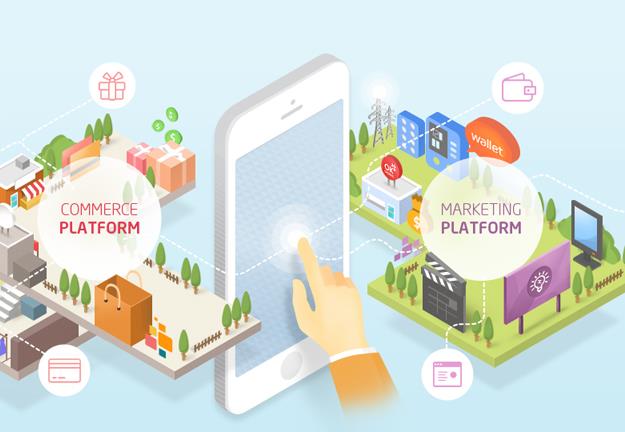
SK Planet provides information relevant to topics searched by users. In the future, it plans to commercialize technology that detects users' brainwave signals to recommend suitable music, or infers their mental state through facial expressions and gaze to recommend appropriate information and media.
The market for future smart content is on a continuous upward trend. The VR/AR and hologram markets are expected to surge after 2020, when interaction technologies are applied. The VR/AR market is projected to reach $150 billion in 2020, a 30-fold increase compared to the previous year. The hologram market is set to reach $94.1 billion by 2025, an increase of more than five times compared to 2013.
In the music industry market, the streaming market increased 1.7-fold from 2013 to 2015, while the download market is declining. The Netflix social media market has been growing recently ($17.4 million).
In the streaming service sector, the characteristics of video streaming companies and music streaming companies can be distinguished. Companies like Netflix and Amazon provide original content, while YouTube offers a diverse range of content. IT firms such as Apple, Google, and Samsung are entering the service sector and expanding their reach through mergers and acquisitions. Furthermore, personalized curation services that predict users' interests and provide recommendations are on the rise. Recently, users are receiving various materials recommended through integration with social media platforms and even sharing those recommendations.
Patents related to smart content services have been actively filed recently, primarily in the United States. Related patent applications have been increasing since the early 2000s, a trend that coincides with the increase in patent applications for smart TVs. The quantitative growth of patents is largely driven by applications filed at the U.S. Patent and Trademark Office, which accounts for 66.8% of the total, while the Korean Intellectual Property Office accounts for 20.4%.
Korea has the most active patent applications regarding smart broadcasting.
The proportion of patents at the Korean Intellectual Property Office (KIPO) is on an upward trend, with patent applications related to smart broadcasting being the most active. The share of patent applications at KIPO has been continuously increasing from Section 1 (1995–1998) to Section 5 (11–14). It rose from 7.0% in Section 1 to 24.1% in Section 5; during the same period, the figures were 72.6% to 65.9% for the U.S., 13.4% to 5.4% for Japan, and 7.0% to 4.7% for Europe. Across all technology fields, patent applications were most active at the U.S. Patent Office, while the smart broadcasting sector showed the smallest gap between the number of patents filed by the U.S. Patent Office and the Korean Intellectual Property Office.
Among smart content service sectors, cloud technology for content services showed the highest growth rate in patent applications. For cloud services for content services, the average annual growth rate was 47.5%, with most technologies seeing an increase in applications since the late 2000s. In the case of smart broadcasting, the average annual growth rate was 21.3%, with a particularly sharp increase in applications for broadcasting smart platform technologies.
Looking at the recent trends in patent litigation, related lawsuits are on the rise, with disputes regarding content management technology accounting for the majority. Patents filed since the mid-1990s have been utilized in numerous lawsuits since the mid-2000s, with the content management sector being the most frequent. NPEs hold the most patents related to content management technology, and cloud services for content services accounted for the largest share of patents acquired through assignment. In terms of patent transaction trends, patent transactions for content analysis and recommendation technologies were the most frequent.
Recently, Google and Qualcomm's patents have increased significantly, and ETRI is also actively filing.
In the analysis of patent applicants, IBM and MS showed a tendency to continue filing patent applications, but their share of applications is on a downward trend. It was found that the number of patents filed by Google and Qualcomm has increased significantly recently, and it is also notable that the number of patents filed by the Electronics and Telecommunications Research Institute (ETRI) is increasing.
Promising keywords in the smart content service sector are social media, cloud, and video content. Moving away from traditional one-way broadcasting systems and services, keywords such as situational awareness, cloud environments, and contextual data—which are highly associated with interactive and personalized services—have frequently emerged. Keywords related to artificial intelligence are appearing as a means for personalized services, and keywords related to cloud-based services, such as IaaS and PaaS, have also recently appeared. It is expected to evolve into next-generation media content (content and services applicable to next-generation displays) and personalized, customized, and context-recommended content services. <This article is based on the Future Promising Product and Service Analysis Report by the Korea Institute of Intellectual Property Strategy (KISTA).>
관련뉴스

[ICT R&D Overview] ① Digital content, VR/AR realistic content development is vital
Can we lead in immersive content technology, the core of virtual reality and augmented reality? As immersive and emotional intelligence-based content emerges as a future trend in the digital content industry, attention is concentrating on related industries. Digital content refers to the software and hardware technologies necessary for planning, producing/manufacturing, and utilizing databases of materials, information, knowledge, and data expressed in electronic form through the combination of codes, text, voice, sound, audio, images, video, and other elements with ICT technology in the form of services or products. This includes ▲immersive content ▲interactive content ▲emotional content ▲content distribution and services.
2016.08.01by 신윤오 기자

[Reporter's Notebook] South Korea and China's Perspectives on the Virtual Reality (VR) Industry
In 2014, when Facebook acquired Oculus for $2 billion, virtual reality, or VR, rapidly emerged as a leading player in future industries. Major global IT companies are now stepping forward to actively foster VR businesses. It appears that companies searching for business opportunities in the post-smartphone era are bustling as if virtual reality has materialized as "genuine reality" before their eyes.
2016.10.17by 신윤오 기자
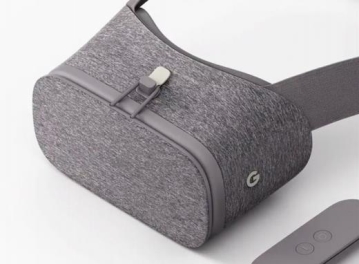
The 5 challenges that determine the competitiveness and popularization of VR technology are
The VR platform market is expected to develop into a three-way competition between "the Facebook/Oculus alliance, the Google/Android alliance, and the Chinese alliance," and hardware advancement must follow not only content ecosystem development. Professor Park Min-woo from Chungkang University of Cultural Industries (Smart Media Major) highlighted this in a recent contribution to Digieco's Issues & Trends titled "Evolution and Prospects of Mobile VR Platforms," and drew attention by presenting five key tasks that determine VR technology competitiveness and mass market adoption.
2016.11.08by 홍보라 기자
.jpg)
SalePoint Signs Multi-Year Partnership Agreement with AWS… Promoting Identity Security that Integrates Even AI Agents
Sailpoint has entered into a multi-year strategic partnership agreement with AWS and is moving forward with establishing an integrated governance system that manages both human and non-human identities together. The plan is to consistently manage access permissions in an environment where AI agents are increasing as work execution entities, while applying the principle of least privilege and automated policy enforcement. The two companies plan to jointly expand capabilities to manage the identities of various entities, including AI agents, within a single layer in the AWS environment. This collaboration is interpreted as a move to design security and governance together in corporate environments where AI adoption is expanding.
2026.03.26by 배종인 기자
.png)
Databricks Unveils Open AI Security Monitoring 'Lakewatch'
Databricks entered the security market on March 24 by unveiling LakeWatch, an open-source agentic SIEM. The core functionality of this product is to integrate and analyze security, IT, and business data in a single environment to support AI-based threat detection and investigation. The company explained that it reduces the limitations of existing security operations centers, which have had to forgo some data due to high cost structures, and enables large-scale data analysis and automation based on open formats and ecosystems. LakeWatch is currently offered as a private preview, with Adobe and Dropbox mentioned as early customers. Databricks also announced an expanded partnership with Anthropic as well as the acquisition of Antimatter and SiftD.ai.
2026.03.26by 배종인 기자











