

.png)

[Future Promising Technology ⑤] Smart Devices Now Serve as Personal Physicians
 Published2017.01.30 06:06
Provides Services for Individual Disease Monitoring, Treatment, and Rehabilitation
# Smart Healthcare Mr. K, a resident of a smart healthcare apartment, has relieved his health concerns. The smart medical service diagnoses Mr. K's biometric information in real-time and monitors his health status. Based on the collected biometric information, the lighting in the home is adjusted, and the displays on all living room windows show landscapes or aquariums that help improve mood. Relaxing music flows from the audio. When Mr. K shows signs of a cold, the home monitoring his biometric information operates the boiler and humidifier. Of course, his smartphone, which has acquired body temperature change information, immediately notifies his primary physician of this fact. The physician sends a mobile prescription, and if the high fever continues, recommends a hospital visit through the smartphone. As soon as Mr. K enters the hospital, the nurse, already aware of the patient's symptoms, responds quickly. Mr. K receives various medical information such as medical history data and treatment details through his smartphone from the medical information system. When treatment is completed, the treatment details are saved again in the medical information system.
Smart Healthcare is currently the field utilizing IoT most actively, representing a typical ICT convergence project combining Internet of Things and healthcare technology.
From health management to remote treatment, it is a field with very high potential for growth, based on sensor technology, wearable devices, and mobile terminals. The reason major ICT companies such as Google, Apple, and Microsoft have recently actively entered the smart healthcare field lies here.
The convergence of medicine and ICT is evolving through services such as e-health and u-healthcare, improving hospital and clinical environments through ICT technology to enable medical services to be provided anytime, anywhere. The smart healthcare currently gaining prominence refers to a stage where medicine, welfare, and safety are further complexified and made intelligent. With the spread of smart devices, an environment has been created where individuals can manage their own exercise volume, calorie intake, sports activity records, and so on, and the scope of services, providers, and users is expanding.
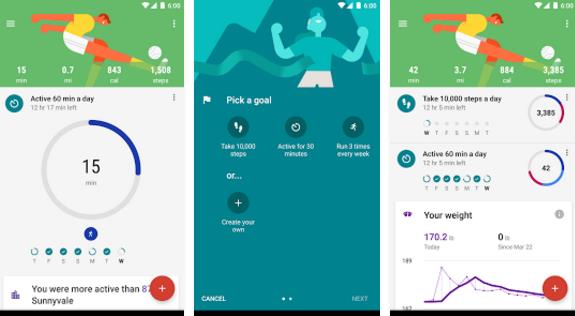
▲'Google Fit' collecting health information generated from health-related mobile applications
The challenge in the smart healthcare field is collaboration with healthcare companies. To expand the smart healthcare market, price reduction, development of miniaturization/low-power technology, development of high-precision vital sensors, creation of services, and partnerships with other companies are important. From a comprehensive perspective, product development and business development must be conducted in parallel, and enriching the lineup of vital sensors is also a challenge.
The fierce competition for smart healthcare platform leadership among Samsung, Apple, and Google is also interesting. Following Samsung Electronics' disclosure of 'SAMI,' an open-data analysis platform that can collect and analyze various biometric signals in real-time in 2014, the company strengthened its capabilities in system semiconductors such as image sensors and biosensors in line with the smartphone market trend last year.
Apple launched 'ResearchKit' for doctors, scientists, and researchers in early last year, and in June released 'CareKit,' a health management app development platform, thereby beginning full-scale healthcare services. Google disclosed 'Google Fit,' which collects health information generated from health-related mobile applications, and also invested in '23andMe,' which decodes individual genomes for $99 to analyze health information. Beyond this, Qualcomm is attempting to build a new healthcare ecosystem based on a health biometric information platform, and Cisco has formed partnerships with insurance companies to provide remote medical services.
Korea's Patent Application Share Higher in Treatment/Rehabilitation Field Compared to Leading Countries
Then what about patent applications these companies are making behind the scenes? Overall, patent application numbers have been increasing in all countries except Europe from 1996 to the present. According to US Patent Office data, 47,097 applications, accounting for 69% of total patent applications in the technology field, were filed with the US Patent Office, followed by Japan at 11.7%, Europe at 9%, and Korea at 9%. According to the Korean Patent Office, until 2008, annual application numbers were fewer than those of the US, Japan, and Europe, but since 2009 to the present, applications have been made similarly to Japan.
Based on applications filed with the Korean Patent Office, patents were being applied for in the order of ①diagnosis/prevention ②treatment/rehabilitation ③management/research. Looking at this in more detail, the monitoring and security fields in the management/research sector have been actively filing applications from the 2000s to the present (816 applications in 2014). The ICT diagnosis field in the diagnosis/prevention sector has had the most active patent applications from 1995 to the present, followed by diagnosis markers, imaging devices, and vaccines. The bioartificial organ field in the treatment/rehabilitation sector has shown steady increases in applications since 1995 and had the most patents in the treatment/rehabilitation field. The IT convergence device field has shown increased applications since 2007.
Analyzing patent share, applicants of US nationality lead in all diagnosis/prevention, treatment/rehabilitation, and management/research fields, and Korea's patent application share compared to leading countries was highest in the treatment/rehabilitation field at 8.6%. In the analysis of major market acquisition rates, applicants of US nationality were numerous across all three technologies, and Korea had the highest rate compared to leading countries in the diagnosis/prevention field (2.1%). Looking at patent litigation movements, there was above-average litigation activity in the diagnosis/prevention and treatment/rehabilitation fields. In cases where the current rights holder is an NPE, the treatment/rehabilitation field was highest. Patent transaction numbers, averaging approximately 296 cases annually, show active trading, with the diagnosis/prevention field trading above average.
The smart healthcare field is currently primarily composed of services based on smartphones or standalone devices. As examined through recent patents, development is proceeding in the direction of exchanging information secured from various wireless devices utilizing ICT technology and enabling real-time disease diagnosis and necessary prescriptions through high-performance processing. Accordingly, in the future, through industry convergence, it is expected to evolve in the direction of providing services for real-time diagnosis of individual diseases, monitoring of health status, treatment, and rehabilitation from various types of devices such as wearable devices. <This article refers to the future promising products and services analysis report from the Korean Intellectual Property Strategy Institute (KISTA)>
Related news
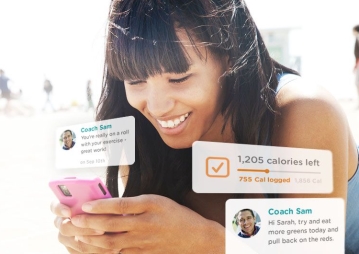
Smart healthcare, do you have a 'medical assistant' just for you?
The wellness industry is a sector supported as part of the 19th Future Growth Engine customized investment strategy, encompassing mobile-based healthcare including wearable devices and health-related applications. The wellness investment strategy supports the development of wellness IT programs and platforms linking hospitals and companies, cultivates specialized personnel for wellness device services, and supports the acquisition of international standards for devices. Additionally, it promotes the development of testing and certification methods and service guidelines. This includes pilot projects for mobile healthcare at public health centers.
2016.04.04by 신윤오 기자
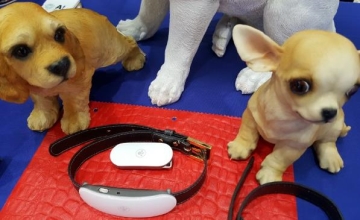
[Venture Startup Competition] Olpin, a pet healthcare service available anywhere in the world
The pet total healthcare service from Allfin Inc. is a differentiated device from the repeater-based services launched by domestic telecommunications carriers. For people who want to always be with their pets, regardless of which country they travel to, they only need GPS and an app with no roaming charges—completely free.
2016.12.02by 김수지 기자

Personalized healthcare service, protect my body
Personalized healthcare services utilizing individualized data and the smart healthcare industry are expected to expand significantly from next year onwards. The smart healthcare industry is anticipated to enter a complementary and competitive relationship with traditional medical information platforms as data generation from increasingly diversified devices grows. Additionally, personalized solutions leveraging big data and artificial intelligence technology, along with standardization and reliability assurance, are expected to emerge as key issues.
2016.12.19by 신윤오 기자
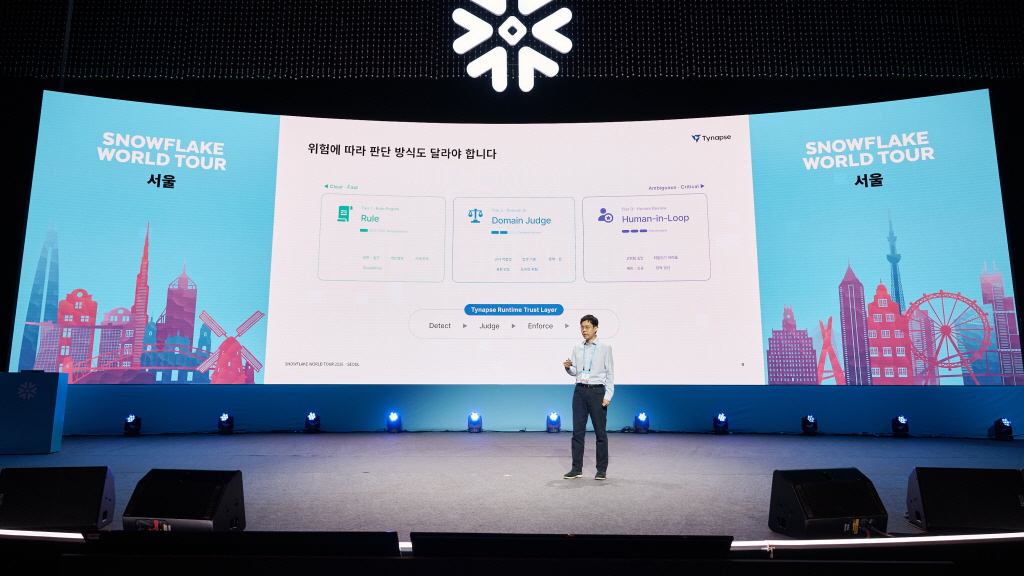
The Problem with AI is Not Performance, but Trust
CEO Kang Min-seung emphasized at Snowflake's World Tour Seoul that generative AI has entered a phase where "trust" rather than accuracy becomes the key competitive advantage. As AI is applied to various tasks including consultation, risk management, and operational automation, incorrect data, erroneous responses, and bias are creating actual business risks. He pointed out that enterprises must build a trust layer above AI. To achieve this, accurate data management, semantic structuring, governance, and prompt security are essential. He explained that AI is not merely an automation tool but a technology that reorganizes the entire organization's workflows and decision-making systems. Snowflake provides a platform that supports this trust-based AI operation, emphasizing that enterprises should build "trustworthy AI" rather than "intelligent AI."
2026.08.28by 배종인 기자
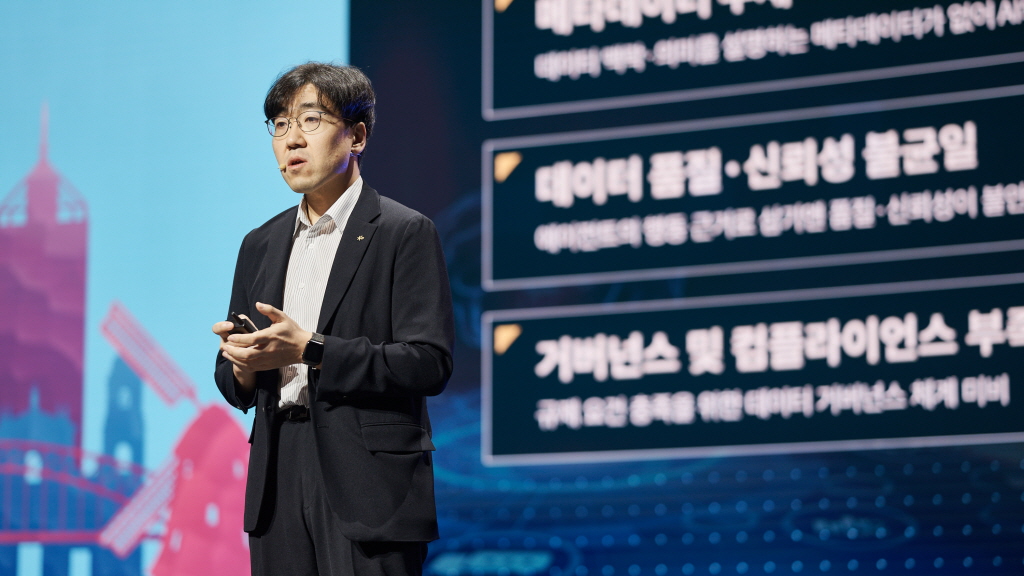
The Decisive Factor for AI Agents in Finance: "Trustworthy Data Infrastructure"
The key to spreading AI agents in the financial sector is establishing a trustworthy data system. KB Kookmin Bank is operating over 100 AI agents by 2025 and is promoting expansion to 300. AI is automating repetitive tasks across various areas such as consultation, risk management, wealth management, and relationship management. However, if data quality, governance, and semantic structuring are insufficient, errors and risks increase. KB is building an AI-Ready organization through a multi-model strategy of GPT, Gemini, and Claude, as well as a Snowflake-based data system. The bank emphasized that AI has entered a phase where it restructures not just simple automation but the entire work process and decision-making system.
2026.08.28by 배종인 기자











