


[Planning-Autonomous Vehicles ⑦] ISO 26262: Now a Necessity, Not an Option—Is Korea Ready?
 Published2017.06.26 12:21
Domestic Fabless Companies Lack Information on Automotive Semiconductor AEC Q100 Certification
If there is a technology for which the phrase "dreams have become reality" fits best, it would be autonomous vehicles. You call the car and it comes running on its own, driving itself to your destination. Autonomous vehicles recognize obstacles during operation and avoid them, providing owners with various conveniences and information. While full autonomous vehicle commercialization will take some time, so-called "semi-autonomous vehicle" technology is becoming increasingly sophisticated. Now we can easily see advertisements for vehicles with autonomous driving capabilities, indicating that the technology has come deep into our daily lives. This publication will run an 11-part series on autonomous vehicles. Starting with autonomous vehicle industry trends, we will cover semiconductor components such as radar, lidar, and camera sensors, communications, precision mapping, software platforms, artificial intelligence, security, and K-City services. We appreciate your support. <Editor's Note>
"When autonomous vehicles become widespread, traffic accident rates can drop close to 0%."
This is the assertion of Chen Liu, former Policy and Strategy Planning Director at the U.S. National Highway Traffic Safety Administration (NHTSA). According to U.S. traffic accident statistics, 94% of traffic accidents result from driver error. He viewed autonomous vehicles as a solution to accidents caused by human factors such as drunk driving, speeding, and drowsy driving.
While there are positive assessments that autonomous vehicles reduce traffic accident risk, there are also negative perspectives. According to a survey by Sungkyunkwan University's SSK Risk Communication Research Group, when anxiety about autonomous vehicles was rated on a scale of 100, it scored 48.5 points—the closer to 0, the "very anxious." The factors causing anxiety ranked highest for malfunction concerns, followed by response to emergencies, external hacking, pedestrian accidents, personal information leaks, and rear-end collisions, with most concerns related to safety and security.
As autonomous vehicle technology reaches certain levels and commercialization becomes feasible, the question arises: can autonomous vehicles truly be considered safe?
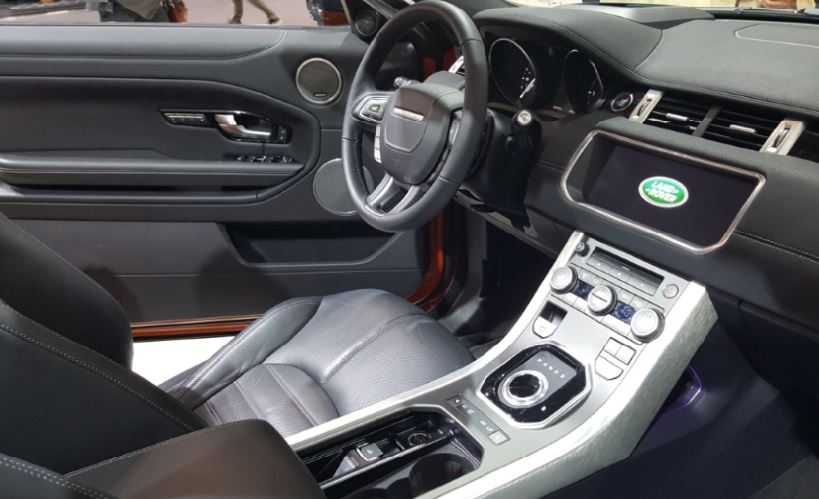
Professor Kim Byung-chul from the Future Automotive Engineering Department at Hanyang University stated, "When autonomous vehicles progress beyond levels 3 to 4, safety and security become critical issues. By 2020, the proportion of electrical and electronic components in vehicles will exceed 50%. Controllers are composed of semiconductors and software, and ISO 26262 emerged as a key question of how to ensure safety."
The 2nd Edition will apply not only to passenger cars but also to trucks, buses, and motorcycles with fewer than four wheels. Additionally, the scope of application is expected to expand to the semiconductor field, requiring responses from the automotive industry. Since semiconductors have more complex design and production stages than general components, they are included in the standard as guidelines rather than mandatory requirements. Key points to note regarding semiconductors in the revised sections are: △how the designed semiconductor will fail and by how much must be predictable; △fault rates must be minimized; and △special design blocks must be incorporated to enable immediate detection in case of malfunction.
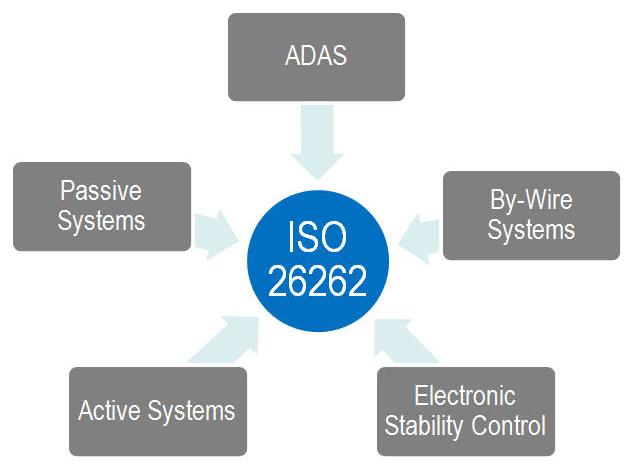
Professor Kim stated, "Currently we say cars are driven by software, but in 30 years there will be an era where software is embedded in semiconductors and they program themselves. Automotive semiconductors must also be designed to reflect safety standards. Since each company has different characteristics, interpretations can be subjective. The 2nd Edition comes out to clarify such issues, as the standards for meeting ISO 26262 differ."
Semiconductors currently fall under Part 8 Clause 13 Hardware Qualification Approval of ISO 26262, based on which certification is obtained for meeting integration and testing requirements of Part 4 and Part 5. Automotive semiconductor reliability test standards also require AEC Q100 certification. AEC Q100 is also scheduled to be revised considering ISO 26262.
Domestic Companies Lagging Behind on ISO 26262 Must Pay Attention
Japanese Renesas has released microcontrollers (MCUs) for engine control that demonstrate reliability through ASIL rating to meet ISO 26262 requirements, and Germany's Infineon is also releasing MCUs aligned with the 2nd Edition recommendations. In contrast, most domestic semiconductor companies lack information and show little interest.
Professor Kim stated, "Semiconductor companies are developing SEooC (Safety Element out of Context), considering safety without requirements. ASICs reflecting requirements account for less than 10%." He emphasized, "Ultimately, the decision rests with the complete vehicle manufacturer. Semiconductor companies must clarify requirements from complete vehicle manufacturers and Tier 1 suppliers and develop SEooC. The role of Tier 1, which bridges semiconductor companies and complete vehicle manufacturers, is crucial," stressing that semiconductor companies, Tier 1 suppliers, and complete vehicle manufacturers must cooperate.
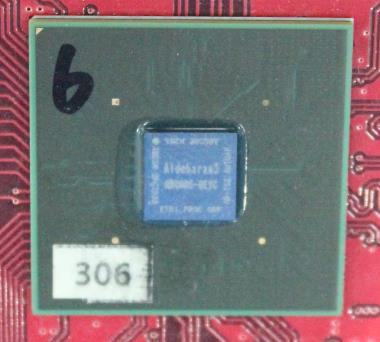
There is a CPU core developed domestically in compliance with ISO 26262. It is Aldebaran, independently developed by the Electronics and Telecommunications Research Institute (ETRI). ETRI introduced Aldebaran3 last year and newly presented Aldebaran5 targeting the autonomous vehicle market. Group Leader Kwon Young-soo stated, "From the perspective of designing automotive semiconductors, one must acknowledge that semiconductors fail. You must approach ISO 26262 with the mechanism of how failures occur."
One concern for domestic fabless companies is the high cost of obtaining AEC-Q100 certification. Professor Kim introduced domestic companies where certification can be obtained. QRT Semiconductor (www.qrtkr.com) is a specialized company testing semiconductor devices and power module reliability and has obtained certification as a nationally recognized testing organization for AEC-Q100. It can reduce time and costs compared to obtaining certification overseas. Automotive semiconductors must withstand harsh temperature conditions and severe external impacts, making conditions demanding. The company possesses special equipment capable of testing under such conditions and issues certification documents.
Comments
Related news
[Planning-Autonomous Vehicles④] Free WAVE Communications, Together with Cellular, Takes Responsibility for Vehicle Communications
Even if autonomous vehicles are equipped with the most advanced sensor capabilities, ambient environmental information is necessary to handle unexpected situations for complete autonomous driving. Sensors and cameras have limitations when going over hills or crossing bridges with dense fog. This is why vehicle-to-vehicle communication (V2V) as well as vehicle-to-everything communication (V2X) are necessary. Vehicle communication typically uses DSRC, WAVE (802.11p), WLAN (802.11a), and similar standards. DSRC (Dedicated Short Range Communication) is a bidirectional communication method for exchanging various services and information between roadside base stations and vehicle terminals, making it the most suitable communication method for ITS (Intelligent Transport System). WAVE (Wireless Access in Vehicular Environment), known as vehicular wireless communication (IEEE 802.11p), is medium- to short-range wireless data communication that supports public safety and private communication through roadside and inter-vehicle communication. This high-speed vehicular wireless communication technology supports V2V and V2I (vehicle-to-infrastructure) in high-speed driving situations, enabling emergency transmission of hazard information on roads and vehicles ahead, safety services that prevent rear-end collisions, and can be utilized in building various next-generation intelligent transportation systems such as multi-lane non-stop tolling services through vehicle network technology. In February this year, the U.S. National Highway Traffic Safety Administration (NHTSA) made vehicle-to-vehicle communication technology (V2V) mandatory on newly released vehicles. By 2022, all new vehicles in the United States are expected to be equipped with V2V technology. Hyundai Motor announced plans to equip WAVE terminals on three vehicle models by the end of 2019, and the Ministry of Land, Infrastructure and Transport is operating testbeds following the Seoul-Sejong Smart Highway project with a C-ITS (Cooperative Intelligent Transport Systems) project between Daejeon and Sejong.
2017.05.08by 김자영 기자
[Planning-Autonomous Vehicles⑤] 'Running SW' Artificial Intelligence Cars, Software Dominates
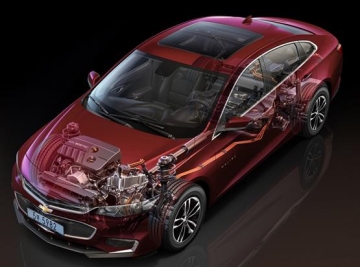
Vehicles with electrified systems are commonly referred to as "running semiconductors." However, as the importance of software that drives these electronic devices grows, it may now be appropriate to call automobiles "running software." Whereas the previous trend was to install various functions for vehicle stability and convenience, with accompanying software (SW) to operate them, automobiles are increasingly becoming software-centric. Vehicle software can be divided into electronic component SW platforms and infotainment platforms. In the electronic component SW platform, AUTOSAR (automotive open system architecture), an open-standard automotive software, is at the center. AUTOSAR comprises 9 core partners with approximately 50 member companies, including BMW, Bosch, Continental, Daimler, Ford, GM, Peugeot Citroën, Toyota, and Volkswagen as core partners, consisting of 7 OEM companies and 2 Tier 1 suppliers. The purpose of AUTOSAR is to address the growing complexity of software as electronic devices increase, and to reduce costs by enhancing software reusability.
2017.05.22by 김지혜 기자
[Planning - Autonomous Vehicles⑥] Precision Road Maps, the Last Puzzle Piece for the Autonomous Vehicle Era
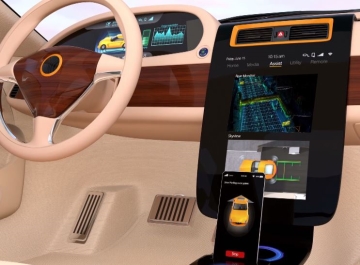
Germany's three premium automakers—BMW, Mercedes-Benz (Daimler), and Audi—joined forces to acquire a company called HERE. At the 2017 CES, Hyundai Motor showcased an autonomous vehicle and evaluated that "this" played the largest role in autonomous driving technology. There is also commentary that Tesla, which caused a fatality with an autonomous vehicle last year, could have prevented the accident if it had "this." What is the common point in the actions taken by these companies representing the current automotive industry? It is "maps." HERE is a representative digital map specialist company, the best technology that Hyundai Motor praised itself for is maps, and Tesla also pointed out the limitations of 3D maps. Recently, cutting-edge "sensor" technologies such as lidar and radar are rapidly advancing, so why is the necessity of "high-precision maps" for autonomous driving being raised? The industry refers to maps as "another sensor" that can serve as a lifeline when cameras, communications, and sensors all fail simultaneously.
2017.06.05by 김자영 기자
Signal-level HIL Solution for EV Power Conversion Controllers, NI ITS
EV power conversion circuits are becoming faster and more complex with SiC and GaN application and X-in-1 functional integration, and ECU verification requires the capability to simulate circuit behavior at nanosecond-level resolution in real time. This white paper organizes the position of signal-level HIL (sHIL) in the development flow and describes the hardware and software architecture, model implementation workflow, and application boundaries of NI ITS (Inverter Test System), which responds to this requirement through FPGA-based real-time simulation, based on webinar materials.
2026.10.16by 편집부
Microchip and Elektrobit Join Hands on AUTOSAR Solution
Microchip Technology and Elektrobit have unveiled a collaborative solution with pre-integrated automotive hardware and AUTOSAR software. With MCAL software based on EB tresos, the solution can reduce development effort for OEMs and Tier 1 suppliers and accelerate time-to-market. The two companies will employ an "Integration-as-Code" automation method to lower integration risk while beginning support in the Asian two-wheeler market.
2026.10.16by 배종인 기자











