


When self-driving cars become commercially available, "the concept of autonomous driving will be adopted for everything on the road."
 Published2017.07.05 16:53
Automotive Innovation Day 2017, Korea's largest automotive conference
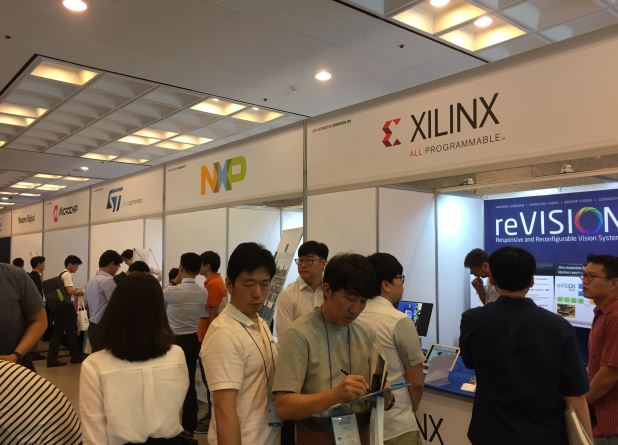
On Wednesday the 5th, the largest automobile conference in Korea, Automotive Innovation Day, was held at The K Hotel.
Hosted by Automotive Electronics and sponsored by 19 companies, the event, like last year, featured demonstrations ranging from communications to infotainment and security. The conference, divided into three sessions, discussed ▲ADAS & autonomous vehicles, ▲connected cars & interior electrical components, and ▲autonomous driving testing & development.
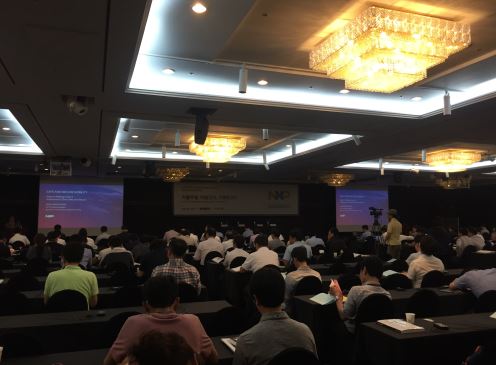
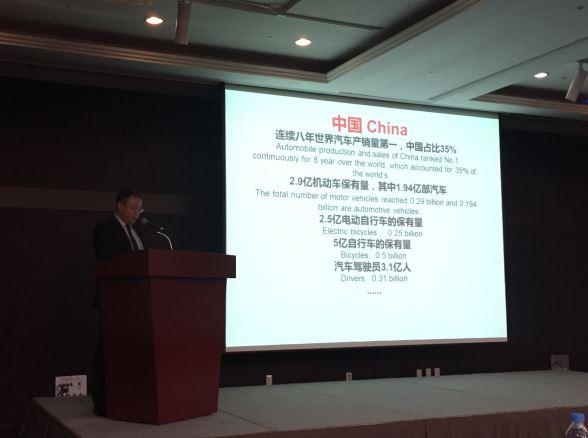
Pang Chun Lin, Secretary General of the Telematics Industry Application Alliance (TIAA), delivered a keynote address at the ADAS session. Citing the recent widespread use of smart bicycles in China, he stated, "When autonomous vehicles become commercially viable, the concept of autonomous driving will be adopted not only for cars but for everything on the road."
He explained the commercialization stages as points, lines, and surfaces. If the current stage is the "point" stage, where hardware like cameras, lidar, and maps are being built, then the lines connecting these will be realized with the commercialization of 5G communications in 2020, and by 2030, artificial intelligence will be powering the connection, forming surfaces.
He said that 5G, which plays a 'line' role like this, "has been delayed in its construction due to the high cost of installing base stations. However, there is hope as the price of hardware such as sensors has recently been decreasing." He added that development of smart roads is slow because there are no internationally established standards and the business model is unclear.
Jens Hinrichsen, Senior Vice President of NXP Semiconductors, emphasized safety, citing the ISO 26262 safety standard and ASIL D level, which are required to achieve Level 3 autonomous driving. In his presentation, Jens stated, "Safety and security will be of paramount importance in autonomous vehicles," adding, "These must be integrated into the design phase of the vehicle's electronic architecture."
The final session featured a panel discussion on the topic, "Autonomous Driving: Threat or Opportunity?" Moderated by Professor Jeong Gu-min of Kookmin University, the panel included Jens Hinrikschen, Senior Vice President of NXP Semiconductors; Shin Jae-gon, Director of the Autonomous Driving Research Center at the Korea Automotive Technology Institute; and Yoo Si-bok, Director of the Korea Automotive Technology Institute.
Comments
Related news
[Planning-Autonomous Vehicles⑤] 'Running SW' Artificial Intelligence Cars, Software Dominates
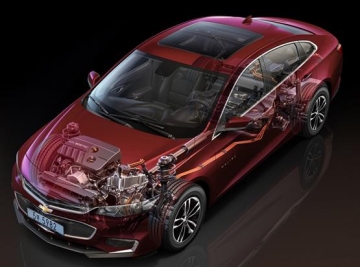
Vehicles with electrified systems are commonly referred to as "running semiconductors." However, as the importance of software that drives these electronic devices grows, it may now be appropriate to call automobiles "running software." Whereas the previous trend was to install various functions for vehicle stability and convenience, with accompanying software (SW) to operate them, automobiles are increasingly becoming software-centric. Vehicle software can be divided into electronic component SW platforms and infotainment platforms. In the electronic component SW platform, AUTOSAR (automotive open system architecture), an open-standard automotive software, is at the center. AUTOSAR comprises 9 core partners with approximately 50 member companies, including BMW, Bosch, Continental, Daimler, Ford, GM, Peugeot Citroën, Toyota, and Volkswagen as core partners, consisting of 7 OEM companies and 2 Tier 1 suppliers. The purpose of AUTOSAR is to address the growing complexity of software as electronic devices increase, and to reduce costs by enhancing software reusability.
2017.05.22by 김지혜 기자
[Planning - Autonomous Vehicles⑥] Precision Road Maps, the Last Puzzle Piece for the Autonomous Vehicle Era
Germany's three premium automakers—BMW, Mercedes-Benz (Daimler), and Audi—joined forces to acquire a company called HERE. At the 2017 CES, Hyundai Motor showcased an autonomous vehicle and evaluated that "this" played the largest role in autonomous driving technology. There is also commentary that Tesla, which caused a fatality with an autonomous vehicle last year, could have prevented the accident if it had "this." What is the common point in the actions taken by these companies representing the current automotive industry? It is "maps." HERE is a representative digital map specialist company, the best technology that Hyundai Motor praised itself for is maps, and Tesla also pointed out the limitations of 3D maps. Recently, cutting-edge "sensor" technologies such as lidar and radar are rapidly advancing, so why is the necessity of "high-precision maps" for autonomous driving being raised? The industry refers to maps as "another sensor" that can serve as a lifeline when cameras, communications, and sensors all fail simultaneously.
2017.06.05by 김자영 기자
[Planning-Autonomous Vehicles ⑦] ISO 26262: Now a Necessity, Not an Option—Is Korea Ready?
"When autonomous vehicles become widespread, traffic accident rates can drop close to 0%." This is the assertion of Chen Liu, former Policy and Strategy Planning Director at the U.S. National Highway Traffic Safety Administration (NHTSA). According to U.S. traffic accident statistics, 94% of traffic accidents result from driver error. He viewed autonomous vehicles as a solution to accidents caused by human factors such as drunk driving, speeding, and drowsy driving. While there are positive assessments that autonomous vehicles reduce traffic accident risk, there are also negative perspectives. According to a survey by Sungkyunkwan University's SSK Risk Communication Research Group, when anxiety about autonomous vehicles was rated on a scale of 100, it scored 48.5 points—the closer to 0, the "very anxious." The factors causing anxiety ranked highest for malfunction concerns, followed by response to emergencies, external hacking, pedestrian accidents, personal information leaks, and rear-end collisions, with most concerns related to safety and security.
2017.06.26by 김지혜 기자

Signal-level HIL Solution for EV Power Conversion Controllers, NI ITS
EV power conversion circuits are becoming faster and more complex with SiC and GaN application and X-in-1 functional integration, and ECU verification requires the capability to simulate circuit behavior at nanosecond-level resolution in real time. This white paper organizes the position of signal-level HIL (sHIL) in the development flow and describes the hardware and software architecture, model implementation workflow, and application boundaries of NI ITS (Inverter Test System), which responds to this requirement through FPGA-based real-time simulation, based on webinar materials.
2026.10.16by 편집부
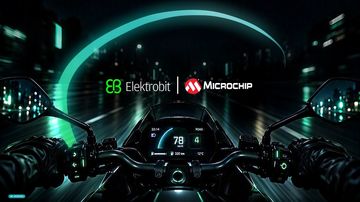
Microchip and Elektrobit Join Hands on AUTOSAR Solution
Microchip Technology and Elektrobit have unveiled a collaborative solution with pre-integrated automotive hardware and AUTOSAR software. With MCAL software based on EB tresos, the solution can reduce development effort for OEMs and Tier 1 suppliers and accelerate time-to-market. The two companies will employ an "Integration-as-Code" automation method to lower integration risk while beginning support in the Asian two-wheeler market.
2026.10.16by 배종인 기자











