


Micro LED, found a way to produce it quickly
 Published2017.07.27 10:25
Reduce production time and process costs
A transfer process has been developed that increases the luminous efficiency of Micro LEDs, known as the 'dream display,' while reducing power consumption by half.
The Korea Institute of Machinery and Materials has developed the world's first micro LED display manufacturing technology using roll transfer. By utilizing this technology, micro LED displays, which are attracting attention as next-generation displays such as transparent displays that offer high mechanical reliability and can change shape freely, can be produced an average of 10,000 times faster than conventional LED displays.
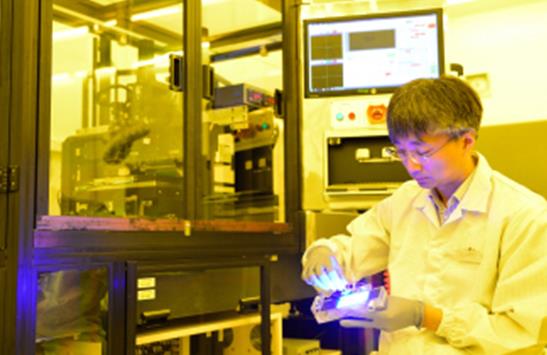
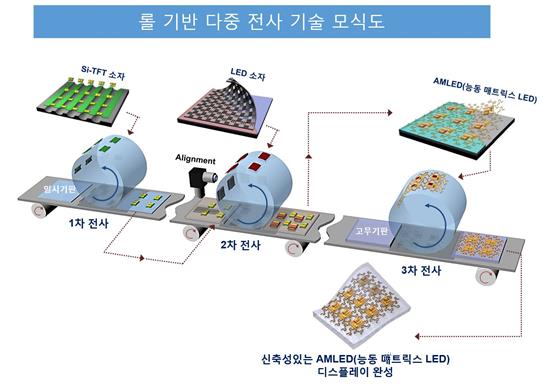
The roll transfer process is a technology for which the Korea Institute of Machinery and Materials (KIMM) holds the original patent. By lifting TFT elements and placing them onto a desired substrate, much like applying ink to a roll, and then lifting LED elements and placing them onto the substrate where the TFT elements are positioned, an active matrix display with a combined structure of the two elements is completed.
While conventional die bonder equipment used to produce LED displays can attach 1 to 10 LEDs to a substrate per second, roll transfer technology can transfer over 10,000 LEDs per second. This makes it possible to produce a 100-inch Full HD digital signage display with 2 million pixels, which previously took more than 20 days to manufacture, within one hour.
The Korea Institute of Machinery and Materials (KIMM) transferred digital signage manufacturing equipment and manufacturing process technology utilizing LED roll transfer technology to Lumens, a mid-sized company in the display sector. An MOU for technology cooperation was also signed.
Bae Jae-woong, Director General of Research Performance Policy at the Ministry of Science, ICT and Future Planning, stated, “With the advancement of cutting-edge technologies such as artificial intelligence and the Internet of Things, new technologies are continuously being demanded in the display market,” adding, “This research achievement will serve as a signal to pioneer the market for nanotechnology in advanced industrial sectors, moving beyond the confines of laboratories.”
Comments
Related news
Korea's Largest LED Exhibition Held to Reclaim Market with MicroLED
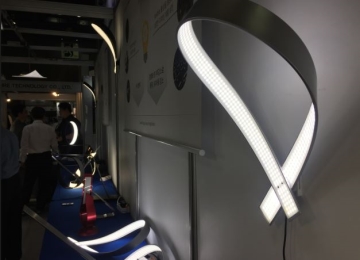
An LED Expo showcasing LED, OLED, and Micro LED all in one place has been held. The 15th LED & OLED Expo, held at KINTEX for three days from the 27th to the 29th, was composed of an exhibition, industry forum, and optical convergence industry development forum, serving as a venue to discuss industrial competitiveness and related technologies befitting the industrial revolution. The exhibition introduced OLED desk lamps, quantum dot reflective lighting, BLU channel lenses, and LED security light fixtures as innovative technology leaders. Additionally, 350 companies participated, displaying LED lighting, plant growth LED lighting utilized in smart farms, flexible LED and OLED, museum curator services utilizing Li-Fi, and LED signage.
2017.06.27by 김자영 기자
Commercialization of Li-fi with lighting equipped with dedicated modules
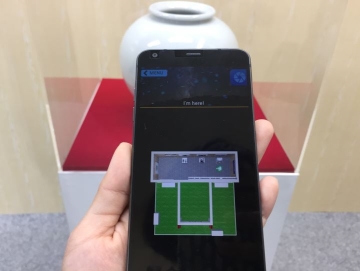
An app utilizing Li-Fi has been launched. Uyang D&U introduced a Li-Fi app called Lion, which displays relevant data when visitors stand in front of exhibits in museums. It leverages OCC (Optical Camera Communications) technology that receives data when LED light enters the screen. The company also collaborated with Purple Ocean, a game development specialist, to showcase an AR game called "Starlight Tree" that reflects LED. Similar to PokéStops and gyms in Pokémon Go, plants in the game grow rapidly wherever there is LED. Currently, data load speed varies depending on the smartphone's performance. In the on-site demonstration, it took approximately 3 seconds for the camera to recognize the light, load the data, and navigate to the page on the mobile device tested.
2017.07.03by 김자영 기자
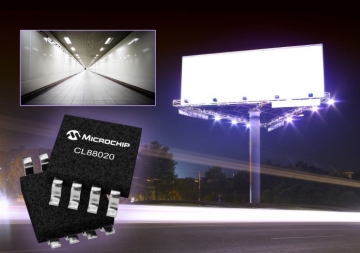
Microchip Launches Driver Enabling Robust, High-Performance LED Lighting Design
Microchip Technology (North Asia General Manager and Korea Representative: Han Byung-don) has announced the launch of a next-generation sequential linear LED driver for offline lighting applications. This driver IC is an addition to Microchip's widely-used CL88XX product family and is designed to directly drive long strings of cost-effective LEDs with 120VAC line input. Since this product delivers high power factor (PF) without requiring switch-mode power conversion typically used in LED lighting designs, it enables the implementation of reliable and cost-effective compact LED lighting applications.
2017.07.11by 신윤오 기자

Intel Unveils Next-Generation 'Core Ultra Series 3' and vPro Platform for Enterprise PCs
Intel has officially unveiled the "Intel Core Ultra Series 3" for next-generation enterprise PCs and the latest vPro platform, addressing a wide range of demands from enterprise notebooks to high-performance workstations.
2026.03.26by 배종인 기자

ROHM Launches ESD Protection Diode Compatible with High-Speed Interfaces of 10Gbps or Higher
Semiconductor specialist ROHM has developed the 'RESDxVx series' of ESD (electrostatic discharge) protection diodes capable of responding to next-generation high-speed data communication environments exceeding 10Gbps, simultaneously enhancing both signal quality maintenance required in high-speed interfaces and IC protection performance.
2026.03.26by 배종인 기자











