


Fourth Industrial Revolution, Standards as the Core of Technology Convergence
 Published2017.11.29 07:37
Sharing Global Standardization Trends and Achievements, Promoting Importance
As the era of the Fourth Industrial Revolution unfolds, various technologies including 5G, IoT, AI, and big data are being recognized as key drivers. Rather than single products or services, there is a trend of convergence between systems and industries, such as 'autonomous vehicles' and 'smart factories'.
The most critical element in technology convergence is standards. In response, the Ministry of Science and ICT held the 'Global ICT Standards Conference 2017' at The K Hotel in Yangjae from the 28th over two days.
This event was organized for domestic standardization experts to gather and share global standardization trends and achievements, and to promote the importance of standards. In particular, a 'standardization tutorial' program was prepared to enhance public understanding of standards, and presentations on ICT standards R&D project status and standardization case studies were arranged for corporate participants.
On the first day, awards were presented to commendable standardization contributors. Willrus Standards Technology Research Institute received a commendation from the Minister of Science and ICT as a good example of a standards-focused small and medium enterprise, having succeeded in technology transfer and investment attraction through 'wireless LAN standards patents'.
Kim Hyung-joon, Director of the Standards Research Division at ETRI and an international standards expert, introduced the promotion system for the Ministry of Science and ICT's ICT R&D strategy formulation and the purpose and progress of standards subcommittee composition. For the vision of mid to long-term ICT standardization strategy and key standardization promotion directions, he proposed strategies including △preemptive standardization in response to the Fourth Industrial Revolution, △expanding industry participation in standardization for small and medium enterprises, and △strengthening standardization infrastructure in response to new industries.
The conference will be conducted over two days with various topics. Case presentations on how standards are applied for public convenience, such as learning material production guidelines for teaching students with disabilities and disaster victim location analysis systems, were followed by presentations on strategies for how small and medium enterprises can best approach international standardization.
Additionally, there were introductions on standardization status and strategies for technologies including life security, blockchain, smart society, smart health 5G, and next-generation networks.
On the second day, the 29th, information and communications specialist committee workshops and Korean ITU research committee workshops will be held. This will be followed by a presentation on 'open source and patent strategy'. Presentations on standardization cases and trends for 3D printing, immersive content, high-quality media, artificial intelligence, big data, autonomous mobile robots, radio applications, IoT applications, and autonomous driving technologies will also continue.
Vice Minister Kim Yong-soo of the Ministry of Science and ICT stated, "I hope this conference, which covers global ICT, becomes an opportunity to promote awareness of the importance of standards in the Fourth Industrial Revolution era," and "We will ensure that the Fourth Industrial Revolution is promoted through ICT standardization."
Related news
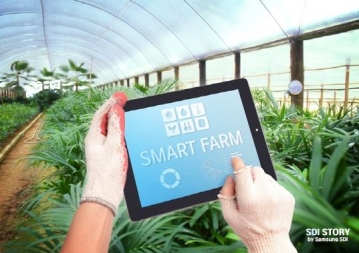
[Smart Farm] "We will make farming a happy experience for those returning to the countryside" through agricultural standardization.
There is a joke that goes, "If there are 4.5 million farmers, there are 4.5 million farming methods." This speaks to how different each individual farmer's approach is. This is also why urban farmers dreaming of returning to agricultural life often face 'discrimination' when settling in rural areas. Park Heun-dong, director of research at FarmCloud, stated, "Through standardization of farming methods, we will enable those returning to farming to establish themselves without difficulty." This was at a conference held on the 19th by the Ministry of Science and ICT regarding the IoT open platform-based development verification support infrastructure construction project. The ICT convergence Korean-style smart farm development strategy currently presented by the Rural Development Administration consists of three generations. ▲The first generation links sensors and smartphones to allow viewing of greenhouses from outside. It displays sensors and controllers through video. ▲The second generation adds big data analysis to first-generation farm technology to provide intelligent prescriptions. It applies complex environmental control to measure the atmospheric environment inside and outside the greenhouse and applies intelligent control algorithms, supporting decision-making through cloud services. ▲The third stage involves standardizing components through complex energy management and robot introduction, reaching a level where the platform can enter the global market.
2017.09.20by 김자영 기자
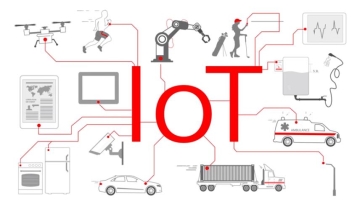
Standard patents must be prepared to meet IoT standardization.
By placing a smart hub in the home, we have entered an era where home appliances such as TVs, robot vacuum cleaners, washing machines, rice cookers, humidifiers, and air purifiers can be used in IoT interoperability. However, currently devices can only be interconnected with products from the same manufacturer. The reason why products from multiple manufacturers cannot be interconnected is the absence of a unified IoT standard. Associations and companies are taking the initiative to establish a single unified standard. The Open Connectivity Foundation (OCF), a global IoT standardization body, announced the OCF 1.0 specification at the end of June, which unified the technical specifications of each company to enable interoperability between devices. Additionally, another IoT standard, oneM2M, will have its Release-3 specification disclosed in June 2018. As domestic companies such as Samsung Electronics and LG Electronics have obtained OCF standard certifications, interest in IoT standard essential patents is also growing.
2017.11.06by 김지혜 기자

“We will make Pangyo Zero City an international standard platform”
A venue has been set up to take a comprehensive look at how far domestic autonomous driving technology has advanced. The "2017 Pangyo Autonomous Driving Motor Show," the world's first motor show dedicated to autonomous vehicles, opened on the 16th at the Enterprise Support Hub in Pangyo Zero City, Gyeonggi Province. In the autonomous driving demonstration complex being developed in Pangyo Zero City, a future-oriented innovative city free from carbon emissions, environmental pollution, accidents, and hazards, autonomous driving traffic infrastructure including an autonomous driving control center, integrated control platform, IoT system, and big data system will be established by the end of 2019. The "Zero Shuttle," a symbol of Pangyo Zero City, was unveiled on the first day of the event. The Zero Shuttle is an autonomous vehicle developed under the leadership of Gyeonggi Province's Next-Generation Convergence Technology Research Institute and operates through V2X communication technology to exchange information with the control center and road conditions in real-world road environments where regular vehicles run. Beginning in December, it will operate in a pilot program on regular roads spanning 5.5 km between Pangyo Zero City and Pangyo Station.
2017.11.16by 김지혜 기자
Nvidia invests $5 billion in Intel
NVIDIA and Intel, leaders in global AI computing technology, are now forging ahead in providing cutting-edge solutions through NVLink-based architecture integration. NVIDIA and Intel have officially announced a strategic partnership and stated that they will jointly develop customized data center and personal computing products to accelerate diverse applications and workloads ranging from hyperscale to enterprise and consumer markets, thereby laying the foundation for the next generation computing era.
2025.09.22by 배종인 기자
.jpg)
Applied Materials Launches Environmental Protection Campaign to Mark World Cleanup Day
Applied Materials Korea (CEO Park Kwang-seon) is carrying out environmental cleanup activities with employees and their families around the Dongtan Sinricheon area on the occasion of World Cleanup Day, evolving into a company that engages with the local community beyond technological innovation.
2025.09.22by 명세환 기자











