



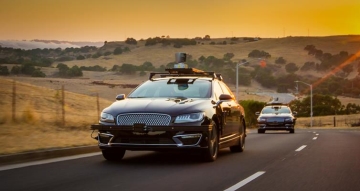
Self-driving cars have driven 190,000 kilometers in Korea.
 Published2018.01.19 11:49
A data sharing center is scheduled to be built by the end of this year.
The Ministry of Land, Infrastructure and Transport announced the driving performance of autonomous vehicles that received temporary operating permits for research purposes in 2017.
The temporary operating permit system for autonomous vehicles was introduced in February 2016, and by the end of last year, a total of 30 autonomous vehicles from 17 organizations had received permits.
The licensed institutions are Korea Transportation Safety Authority (2), Kia Motors (2), Naver Labs (1), Mando (1), Samsung Electronics (2), Seoul National University (4), Ssangyong Motors (1), SK Telecom (1), LG Electronics (1), Korea Automotive Technology Institute (1), KT (1), Korea Institute of Advanced Convergence Technology (1), Korea Advanced Institute of Science and Technology (1), Electronics and Telecommunications Research Institute (2), Hanyang University (2), Hyundai Mobis (1), and Hyundai Motors (6). The total driving distance of the 30 vehicles is approximately 190,000 km.
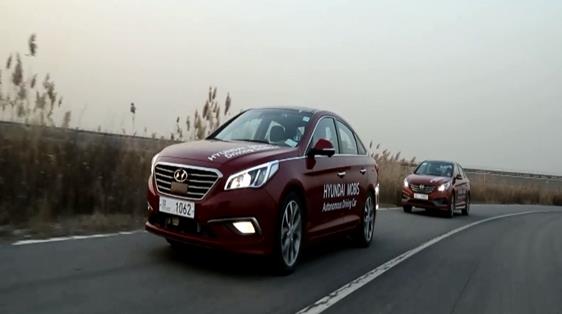
The main driving areas for autonomous vehicles were the Gyeongbu and Yeongdong Expressways and the Seoul/Gyeonggi area, including Yeouido, Hwaseong, and Uiwang. This is mainly because the production company and research institute are located in Hwaseong and Uiwang, and it is analyzed that they drove on a highway section to test a Level 3 autonomous vehicle.
Meanwhile, the Ministry of Land, Infrastructure and Transport is supporting the establishment of a dedicated testing facility, K-City, and the construction of a high-precision road map so that autonomous vehicle development organizations can practice autonomous driving technology.
Last October, the K-City highway section was completed and opened to the public first. Furthermore, a high-precision road map required for autonomous driving was also developed and provided to the public free of charge.
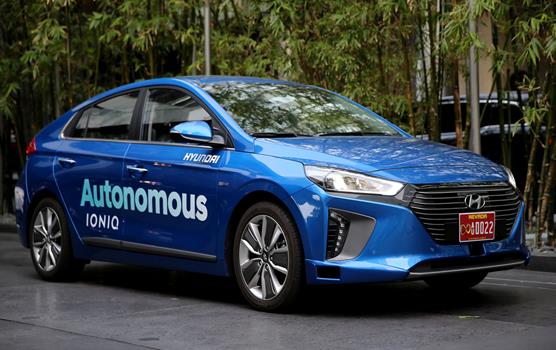
In particular, for some road sections requested by institutions, such as Pyeongchang and Yeouido, we have been supporting the construction of high-precision road maps first so that the private sector can freely conduct research.
Kim Chae-gyu, director of the Ministry of Land, Infrastructure and Transport's Automobile Management Bureau, said, "The Ministry of Land, Infrastructure and Transport plans to establish a data sharing center by the end of this year to enable research institutes to collaborate by sharing driving data accumulated by autonomous vehicles."
Comments
Related news
LG Electronics to jointly develop core autonomous vehicle technology with HERE
LG Electronics is jointly developing autonomous vehicle core technology with HERE. LG Electronics has signed a "next-generation connected car solution co-development partnership agreement" with HERE. The two companies plan to develop a next-generation connected car solution by next year by combining LG Electronics' telematics with HERE's high-precision map information capable of identifying all terrain features at centimeter-level accuracy. Telematics is an automotive communication component that supports all communication standards from GPS to DMB networks, Bluetooth, Wi-Fi, and mobile communications, and provides various services including vehicle safety such as navigation and location identification/emergency dispatch, as well as entertainment.
2017.12.27by 김지혜 기자
Experience the future of autonomous vehicles at CES 2018
SK Telecom announced that it will showcase 5G autonomous driving technology with Kia Motors at 'CES 2018' being held in Las Vegas, USA. Through technological collaboration, SK Telecom and Kia Motors will exhibit ▲autonomous vehicle experience scenarios ▲real-time video transmission demonstration utilizing 5G networks between Korea and the USA ▲5G-based Vehicle-to-Everything (V2X) communication technology, and others. First, the two companies installed a 5G autonomous driving vehicle concept cockpit to allow visitors to experience the future autonomous driving environment where occupants can work or enjoy entertainment inside the vehicle. Visitors can also sit in the driver's seat and experience the interface and contents of autonomous vehicles.
2018.01.09by 김지혜 기자
NVIDIA: "Xavier, the culmination of complex technology for future autonomous vehicles, will be the starting point"
Nvidia CEO Jensen Huang affirmed at the CES 2018 press briefing that the company will solidify its leadership position in the competition to develop autonomous driving safety solutions. The Nvidia Xavier autonomous driving machine processor, which plays a key role in autonomous driving sector collaboration, is the most complex system-on-chip (SoC) developed to date. Jensen Huang stated that more than a year has passed since the Xavier launch, and the company will deliver samples to several customers in the first quarter. CEO Jensen Huang remarked to an audience of media, partners, and stakeholders from the global automotive and consumer electronics industries: "Future automobiles are the embodiment of highly complex and sophisticated technology. Xavier, which processes deep learning, computer vision, and high-performance computing with advanced efficiency, stands at the starting point of this."
2018.01.12by 김지혜 기자
Signal-level HIL Solution for EV Power Conversion Controllers, NI ITS
EV power conversion circuits are becoming faster and more complex with SiC and GaN application and X-in-1 functional integration, and ECU verification requires the capability to simulate circuit behavior at nanosecond-level resolution in real time. This white paper organizes the position of signal-level HIL (sHIL) in the development flow and describes the hardware and software architecture, model implementation workflow, and application boundaries of NI ITS (Inverter Test System), which responds to this requirement through FPGA-based real-time simulation, based on webinar materials.
2026.10.16by 편집부
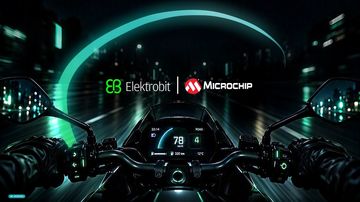
Microchip and Elektrobit Join Hands on AUTOSAR Solution
Microchip Technology and Elektrobit have unveiled a collaborative solution with pre-integrated automotive hardware and AUTOSAR software. With MCAL software based on EB tresos, the solution can reduce development effort for OEMs and Tier 1 suppliers and accelerate time-to-market. The two companies will employ an "Integration-as-Code" automation method to lower integration risk while beginning support in the Asian two-wheeler market.
2026.10.16by 배종인 기자











