


ZTE Enters Final Preparations for 5G Commercialization in China
 Published2018.02.09 09:35
ZTE 중국내 5G 상용화 전 업계 리더십 구축
독점 기술 MUSA 테스트 ITU기준 충족
모바일 인터넷용 통신, 기업 및 소비자 기술 솔루션을 공급하는 세계 굴지의 기업 ZTE Corporation이 5세대 및 5세대 전략 개발로 인한 새로운 기회, 즉 '5G'로 알려진 5세대 모바일 네트워크의 본격적으로 시장진입에 들어간다.
5G 엔드 투 엔드 솔루션에 중점을 두고있는 ZTE는, 5G 기술에 대한 표준 재정, 기술 개발 및 인증 등에 중점을 두고 5G핵심 기술 상업화 및 차세대 모바일 네트워크를 위한 규모의 경제면에서 업계 선두를 타겟으로 하고 있다.
2018년 5G에 큰 기대를 걸고 있는 ZTE는 , 연간 30억 위안을 투자해 5G 연구를 위한 4,500명 이상의 첨단 기술 전문가팀을 구축하였으며, 대량 다중입력-다중출력(MMO) 기술 확보를 통해 스펙트럼 효율 및 5G 네트워크 용량 및 적용 범위 확장을 이루었다.

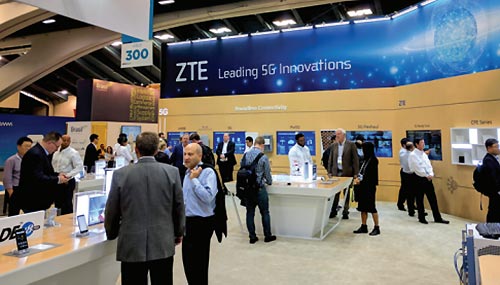
ZTE 5G 관련 담당자는 "5G 네트워크를 통한 대규모 네트워크 접속 요구사항을 충족시키기 위해 산업 전반의 비직교 다중 접속(NOMA)과 ZTE의 MUSA(Multi User Shared Access) 솔루션이 선택돼 관련 기관에 제안되었다"며 해당 솔루션을 통해 시스템은 동일한 시간-주파수 자원을 사용해 사용자 접속을 3~6번 지원할 수 있으므로, 충돌 없는 스케줄링이 가능하고, 터미널 전력 소모를 크게 줄일 수 있다고 밝혔다.
중국에서의 5G 2단계 MUSA 기술 테스트는 ITU(International Telecommunication Union)에서 정의한 기준을 훨씬 초과하는 접속 기준 9천만 번/MHz/시간의 성능을 달성했다.
최초 MUSA 기술의 첫 제안사인 ZTE는 3GPP RAN Working Group 1에 의해 NOMA가 채택되도록 하여 산업표준 개발을 주도하고 있으며, Working Group은 5G New Radio(NR)을 위한 무선 인터페이스(무선 레이어 1)의 물리적 레이어를 지정하는 연구를 진행한다
이와 동시에, 칩 설계 및 개발에 있어, ZTE는 자체 개발한 독점적인 고성능 벡터 프로세싱 베이스 밴드 칩을 기반으로 업계 최고의 통합 차세대 베이스 밴드 유닛(Next Generation Baseband Unit NG BBU)을 출시했으며, 이후 고도로 집적된 디지털 IF 칩을 기반으로 하는 업계에서 가장 작고 가벼운 5G 액티브 안테나 장치(Active Antenna Unit, AAU)를 출시했다.
ZTE의 5G 기지국은 중국의 5G 테스트의 1단계와 2단계에서 기본적인 요구사항을 충족시켰을 뿐만 아니라, 뛰어난 보이드 성능 결과로 26GHz 고주파 현장 테스트를 완료했다. 오늘, ZTE는 5G 제품 범위 전체에 대해 중국의 5G 테스트 3단계를 시작했으며, 상용 솔루션의 시장 출시 및 엔드 투 엔드 디버깅을 완료했다.

Comments
Related news

ZTE Wins 4 Awards at CES 2016
ZTE Mobile Devices announced today that it has received 4 awards from IDG (International Data Group), a globally recognized technology, media, events and research company. ZTE Mobile Devices won 4 categories at the Global Top Brands Awards ceremony held at CES 2016 (2016 International Consumer Electronics Show) in Las Vegas: "Global Top 10 Smart Connected Devices," "Global Top 10 Smartphones," "Global Top 50 CE Brands," and "Top 10 Brands From China."
2016.01.10by 명세환 기자

ZTE Enters European 5G Market in Earnest
ZTE, a supplier of communications, enterprise and consumer technology solutions for mobile internet, announced today that it has entered into a partnership with Wind Tre, Italy's largest mobile operator, and Open Fiber, Italy's wholesale fiber network operator, to build a pre-commercial 5G network in Europe.
2017.10.27by 명세환 기자
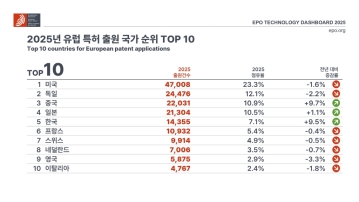
European Patent Applications Surpass 200,000 for the First Time… South Korea Maintains 5th Place, Led by Batteries and Telecommunications
According to the European Patent Office (EPO)'s 'Technology Dashboard 2025', European patent applications last year reached 201,974, surpassing 200,000 for the first time. Korean companies and inventors filed 14,355 applications, representing a 9.5% increase from the previous year and maintaining 5th place by country. Battery, digital communication, and semiconductor technologies led the growth, with Samsung ranking as the top EPO applicant for the second consecutive year and LG reaching 3rd place. The presence of major domestic cities such as Seoul, Suwon, and Yongin was also confirmed. It was also revealed that Korea's European patent strategy is expanding beyond individual technologies to span the entire industry.
2026.03.24by 명세환 기자

SK Telecom First Applies AI-Based Network Operations at Gwanghwamun K-Pop Concert
SK Telecom announced that it applied an AI-based network operation system for the first time at a large-scale K-pop concert held in the Gwanghwamun area of Seoul on March 21st, managing communication quality throughout the event. Mobile data usage during the three hours before and after the concert reached 12.15TB, approximately doubling compared to the same time slot the previous weekend. SK Telecom monitored traffic using the AI system 'A-One' in five-minute and 50-meter units to respond to potential overload situations, while also operating temporary communication facilities and on-site personnel in parallel. This case is interpreted as confirmation of the practical applicability of AI-based autonomous network operation in an environment where demand from dense events and foreign users increases simultaneously.
2026.03.23by 명세환 기자
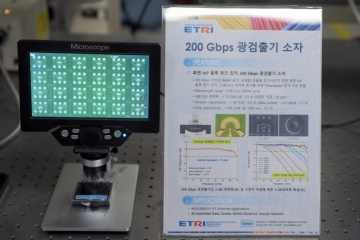
ETRI Develops 200Gbps Photodetector… Initiates Localization of Optical Receivers for AI Data Centers
The Electronics and Telecommunications Research Institute (ETRI) has developed a photodetector device that processes optical signals of approximately 200Gbps per channel for the first time in Korea. This device is a component that converts optical signals into electrical signals and determines the reception performance of AI data centers and 5G/6G communication networks. ETRI achieved bandwidth of 70GHz or higher and optical responsivity of 0.75A/W or higher, and integrated an indium phosphide lens on the rear of the chip to enhance optical reception efficiency and alignment convenience. The technology was presented at OECC 2025 and was recently published in the international academic journal 'Optics Express'.
2026.03.19by 명세환 기자











