


Smartphone sales decline for the first time since 2004.
 Published2018.02.27 07:49
.JPG)
As MWC 2018, the world's largest mobile exhibition, is being held, smartphone sales in the fourth quarter of 2017 were found to have decreased by 5.6%.
According to global IT consulting firm Gartner, global smartphone sales to end users in the fourth quarter of 2017 amounted to 408 million units, a 5.6% decrease from the same period last year, marking the first decline since 2004.
Anshul Gupta, research director at Gartner, explained, "The decline in smartphone sales in the fourth quarter of 2017 was due to a decline in replacement demand from feature phones and a shortage of high-quality, ultra-low-cost smartphones. Consumers are increasingly opting for high-quality feature phones and holding onto them longer, lengthening their smartphone replacement cycles. While demand for high-quality, 4G connectivity, and high-performance cameras persisted, the benefits of these devices fell short of expectations, leading to a slowdown in smartphone sales."
Samsung Maintains Top Smartphone Sales in Q4 2017
In the fourth quarter of 2017, Samsung's sales fell by 3.6%, while Apple's fell by 5%. Samsung took first place in overall smartphone sales, ahead of Apple by 0.3%. Samsung is expected to drive Q1 sales by unveiling the next S9 model during the MWC exhibition, while Apple's Q4 sales are expected to start in December due to the delayed launch of the iPhone X due to component and manufacturing shortages, which will lead to belated iPhone X sales.
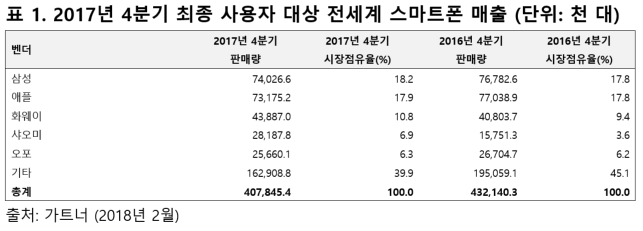
Huawei records growth in new smartphones in Q4 2017
Huawei and Xiaomi were the only vendors to see sales growth and increased quarterly market share compared to the same period last year. In the fourth quarter of 2017, Huawei expanded its product line with the launch of new smartphones, including the Mate 10 Lite, Honor 6C Pro, and Enjoy 7S.
Xiaomi drove growth in emerging Asia-Pacific markets with its Mi and RedMi smartphone models, which helped it regain market share in China.
“Huawei’s future growth potential depends on its market share in emerging Asia-Pacific markets and the U.S.,” said Gupta, research director at Gartner. “India is Xiaomi’s largest market outside of China and will continue to show high growth going forward.”
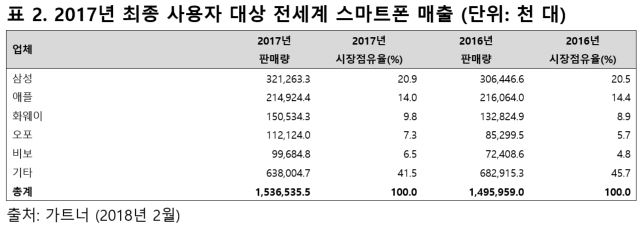
In 2017, smartphone sales to end users increased by 2.7% year-on-year, reaching a total of 1.5 billion units. Huawei, which ranked third, is closely following Apple with a 4.2% sales difference in 2017 market share.
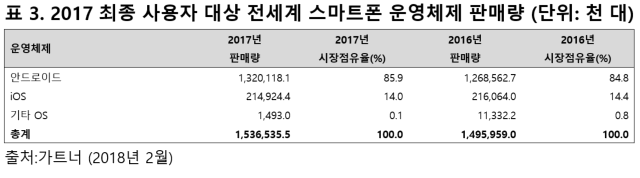
In the smartphone operating system (OS) market in 2017, Google Android maintained its lead with 86% of the total market, ending the year at 85.9%, up 1.1% from the previous year.

관련뉴스
Gartner forecasts 2.4% rise in smartphone shipments next year
가트너는 2018년 전세계 PC, 태블릿과 스마트폰 출하량이 전년 대비 2% 상승한 23억 5,000만 대를 기록할 것으로 내다봤다. 가트너 책임연구원 란짓 아트왈(Ranjit Atwal)은 “최근 진행한 최종 사용자 조사에 따르면, 스마트폰을 사용하는 만큼 PC나 태블릿 사용도 또한 높은 것으로 나타났다”며, “응답자의 40%가 이메일 수신과 발신, 영상 시청 등 특정 작업 시 PC나 태블릿을 활용한다고 응답했고, 34%는 이동 중 간편히 사용할 수 있어 스마트폰을 사용한다고 답했다”고 설명했다. 또한 아트왈은 “PC 시장의 경우 제품 교체 주기가 길어서 고전하는 한편, 스마트폰 교체 주기는 비교적 빠른 편”이라고 덧붙였다. 이에 일반 PC 출하량은 2018년 4.4% 하락할 것으로 전망되는 한편, 휴대전화 출하량은 2.4% 상승할 것으로 예측된다.
2017.10.23by 김지혜 기자
Samsung and Apple ranked first and second in global semiconductor purchases in 2017.
According to Gartner, Samsung Electronics and Apple held the top two positions in global semiconductor purchasing share in 2017. The combined semiconductor procurement scale of the two companies in 2017 was 81.8 billion dollars, up 2 billion dollars from the previous year, accounting for 19.5% of the total market. Masatsune Yamaji, senior research analyst at Gartner, stated: "Samsung Electronics and Apple have maintained the number one and two positions in the semiconductor purchasing index since 2011, and in 2017 their share of semiconductor purchases increased significantly. These two companies exert considerable influence over technology and pricing trends across the semiconductor industry."
2018.01.26by 김학준 기자
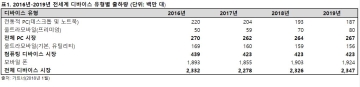
Gartner predicts 2.1% growth in global device shipments this year.
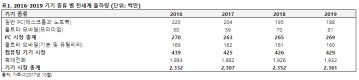
Gartner forecasts that global device shipments, including PCs, tablets, and mobile phones, will rise 2.1% from $2.28 billion in 2017 to reach $2.32 billion this year. The mobile phone market, led by high-end smartphones, and the premium ultramobile market, driven by thin and lightweight devices from Apple and those equipped with Microsoft Windows 10, are expected to drive device shipment growth in 2018. Ransit Atwal, principal research analyst at Gartner, stated, "The abundance of technology choices available to consumers presents manufacturers with two major challenges. First, they must compete for wallet share by considering the number of devices consumers own, and second, they must offer appropriate devices by taking into account value and consumer interest." He added, "As more consumers place greater emphasis on value rather than simply price, the number of consumers considering purchases of higher-priced devices will increase."
2018.02.02by 김학준 기자
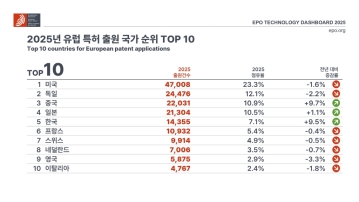
European Patent Applications Surpass 200,000 for the First Time… South Korea Maintains 5th Place, Led by Batteries and Telecommunications
According to the European Patent Office (EPO)'s 'Technology Dashboard 2025', European patent applications last year reached 201,974, surpassing 200,000 for the first time. Korean companies and inventors filed 14,355 applications, representing a 9.5% increase from the previous year and maintaining 5th place by country. Battery, digital communication, and semiconductor technologies led the growth, with Samsung ranking as the top EPO applicant for the second consecutive year and LG reaching 3rd place. The presence of major domestic cities such as Seoul, Suwon, and Yongin was also confirmed. It was also revealed that Korea's European patent strategy is expanding beyond individual technologies to span the entire industry.
2026.03.24by 명세환 기자
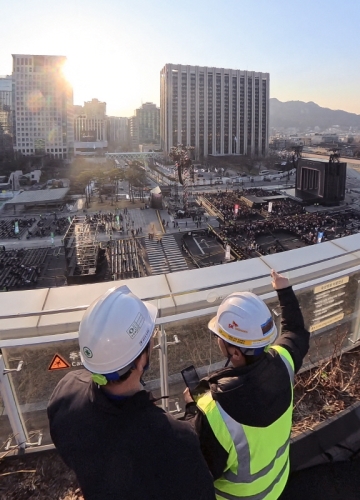
SK Telecom First Applies AI-Based Network Operations at Gwanghwamun K-Pop Concert
SK텔레콤이 3월 21일 서울 광화문 일대에서 열린 대형 K-팝 공연에 AI 기반 네트워크 운영 시스템을 처음 적용해 통신 품질을 관리했다고 밝혔다. 공연 전후 3시간 동안 모바일 데이터 사용량은 12.15TB로 직전 주말 같은 시간대보다 약 2배 늘었다. SK텔레콤은 AI 시스템 ‘A-One’을 활용해 5분 단위, 50m 단위로 트래픽을 감시하며 과부하 가능성에 대응했고, 임시 통신 시설과 현장 인력 운영도 병행했다. 밀집 행사와 외국인 이용 수요가 동시에 늘어나는 환경에서 AI 기반 자율 네트워크 운영의 현장 적용 가능성을 확인한 사례로 해석된다.
2026.03.23by 명세환 기자











