


LG Electronics Leads Premium Market by Adding Artificial Intelligence to TVs
 Published2018.03.08 17:44
Alpha9 Picture Quality Engine Removes Noise in 4 Stages
"2018 will be the year smart TVs transition to AI TVs"
LG Electronics unveiled its artificial intelligence brand 'DeepThinQ' at CES 2018 this year and announced plans to apply it to various home appliances including refrigerators and washing machines. At the '2018 LG TV New Product Launch Event' held at the Seocho R&D Campus in Yangjae-dong, LG introduced the 'LG OLED TV AI ThinQ' and 'LG Super Ultra HD TV AI ThinQ' equipped with DeepThinQ.
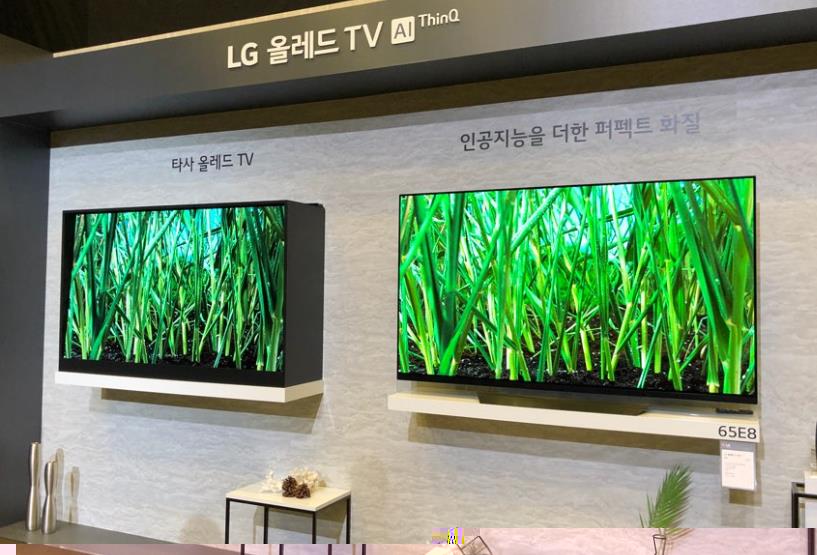
The main OLED TV models unveiled that day were equipped with 'Alpha9,' an artificial intelligence picture quality engine independently developed by LG Electronics, and Google Assistant. Alpha9 analyzes video content and removes noise in four stages. In stages 1 and 2, it removes broken portions and artifacts from the image, and in stages 3 and 4, it alleviates banding noise that creates lines in the image and color crushing.

Additionally, it separates objects from the background and adjusts contrast and saturation for each, adding depth and clarity. As the color correction algorithm becomes more sophisticated, it automatically performs color expression seven times more accurate compared to regular TVs.
With Google Assistant embedded, control using voice recognition is also possible. After pressing the microphone button marked on the Magic Remote, it searches for answers to questions such as "Tell me the LG Twins game schedule" and "Play a yoga class." Beyond this, it also enables control of volume/channel changes, broadcast viewing scheduling, power-off scheduling, and connectivity with other devices such as soundbars, Blu-ray players, and gaming consoles.
Previously, TV voice control was possible through 'AI speakers.' Regarding the reason for embedding the voice control function in TVs, Kwon Bong-seok, head of LG Electronics' HE Business Division, stated, "Going forward, it will become a natural trend for AI to be built into TVs," adding "When AI spreads throughout the home, the TV in the living room is more suitable for the role of a family device than an AI speaker."
He added, "In the short term, AI speakers must exist to control existing products that do not have AI built in, but from a long-term perspective, TVs with built-in AI will replace that role."
LG Electronics enabled control of various IoT devices through webOS, the TV's operating system, and content search. In addition, it plans to continuously expand partnerships with external companies as an open platform. In the United States, services with a full AI package are expected to be provided from March onwards. Domestically, various AI services are planned to be applied in the second half of the year through collaboration with external companies.
Director Kwon explained, "AI speakers cannot perform commands like 'connect a game console to the TV.' However, webOS can operate with a single command."
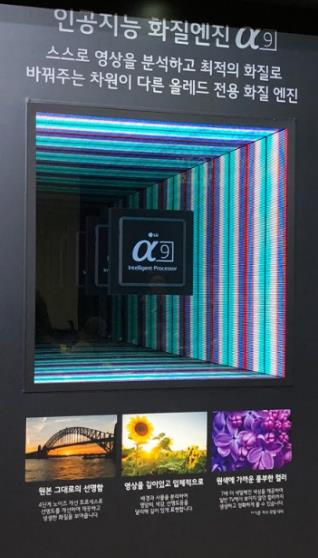
LG Electronics also applied 'Alpha7' to Super Ultra HD TVs utilizing nanocell technology, enabling AI functionality. Additionally, it expanded the application of 'Dolby Atmos' and 'Gallery Mode.'
'Dolby Atmos' is a three-dimensional audio system that makes sound appear to come from in front, behind, or above the user depending on the movement or position of objects on screen. 'Gallery Mode' is a technology that allows users to use the TV like a picture frame when not watching it.
Director Kwon stated, "The TV market is slightly over 200 million units annually. We estimate that about 5% of the entire market can be covered by OLED. However, the premium market currently accounts for 2-3% of the overall TV market," adding "We have maintained growth in the premium market centered on OLED TVs, and we are confident that we will achieve more than double growth this year with OLED TV AI."
The prices of Super Ultra HD TVs are 2.1-2.6 million won for 55-inch and 3.5-3.9 million won for 65-inch models, while OLED TV AI ThinQ is priced at 3.0-3.6 million won for 55-inch, 5.2-11 million won for 65-inch, and 17-24 million won for 77-inch models.
Comments
Related news
LG Electronics: "Integrating AI Technology Without Spatial Boundaries"
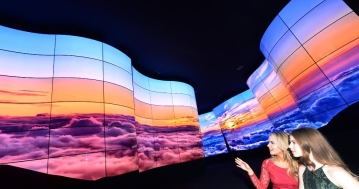
LG Electronics will participate in 'CES 2018' held in Las Vegas, United States, and showcase artificial intelligence ThinQ, a 55-inch curved OLED canyon made of curved OLED, smart kitchen solutions, and more. LG Electronics has prepared a space measuring 16m in length, 16m in width, and 6m in height at the exhibition entrance. A winding path was created in the center, and OLED walls were erected on both sides of the path in a convex and concave shape resembling a canyon. Visitors can experience spectacular imagery created by a total of 2 billion self-emissive OLED pixels while walking along a 28m-long path. To express the feeling of a winding canyon, LG Electronics used 156 curved signage panels in a convex shape and 90 signage panels in a concave form. Unlike LCD, OLED has no backlight, making it thin and easy to bend. Various presentations are possible while preserving aesthetic appeal.
2018.01.09by 김지혜 기자
LG SIGNATURE to be unveiled on the streets of Milan
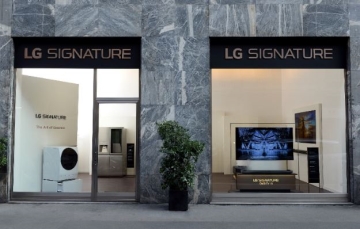
LG Electronics has been strengthening premium marketing by operating an 'LG Signature Gallery' at Durini in Milan, Italy, where luxury furniture retailers are located, since last year. The 'LG Signature Gallery' presents 'LG Signature' products including OLED TVs, washing machines, refrigerators, and humidifying air purifiers as artworks combined with 'black and white' interior design. Additionally, the gallery's exterior is made of transparent glass, allowing people to view LG products. LG Electronics invites local architects and opinion leaders to the 'LG Signature Gallery' to introduce 'LG Signature' products featuring ▲overwhelming performance achieved through technological innovation ▲refined design faithful to fundamentals ▲intuitive usability never experienced before to customers.
2018.02.27by 김학준 기자
.jpg)
LG Electronics Launches 'TV Monitor' for Single-Person Households
LG Electronics has launched a TV-compatible monitor with an emphasis on design. The 27-inch "Room& TV (model: 27TK600D)" is designed with the meaning of "a TV monitor that matches my room," and is characterized by its clean design. LG Electronics released this product by focusing on the trend of increasing single-person households and consumers placing importance on design. According to Statistics Korea, the proportion of single-person households in Korea rose from 15.5% in 2000 to approximately 28% in 2016, reaching 5.4 million in total household count.
2018.02.28by 김지혜 기자
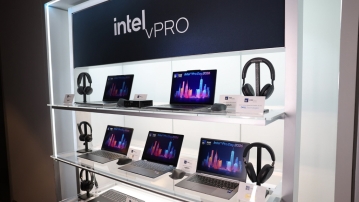
Intel Unveils Next-Generation 'Core Ultra Series 3' and vPro Platform for Enterprise PCs
Intel has officially unveiled the "Intel Core Ultra Series 3" for next-generation enterprise PCs and the latest vPro platform, addressing a wide range of demands from enterprise notebooks to high-performance workstations.
2026.03.26by 배종인 기자
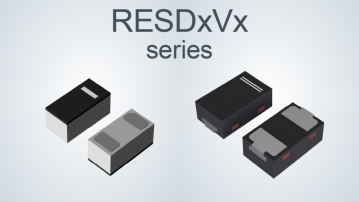
ROHM Launches ESD Protection Diode Compatible with High-Speed Interfaces of 10Gbps or Higher
Semiconductor specialist ROHM has developed the 'RESDxVx series' of ESD (electrostatic discharge) protection diodes capable of responding to next-generation high-speed data communication environments exceeding 10Gbps, simultaneously enhancing both signal quality maintenance required in high-speed interfaces and IC protection performance.
2026.03.26by 배종인 기자











