

.png)

TI, Expanding Millimeter Wave Sensor Market from Vehicles to Factories
 Published2018.05.31 00:26
TI announced that it is beginning mass production of the highly integrated ultra-wideband AWR1642 and IWR1642 mmWave sensor products.
Supporting a frequency range of 76~81GHz, this product delivers three times more accurate sensing with significantly less power consumption than competing sensor technologies and a minimal footprint.
TI's millimeter wave sensors are currently used in automotive and industrial applications including vehicle occupancy detection, building occupancy counting, and human-machine interaction.
Automotive Millimeter Wave Sensors
Vehicles equipped with this sensor in ADAS applications are expected to make their first appearance in the second half of 2018. This ADAS application includes long-range, short-range, and mid-range radar, making vehicles smarter and safer.
In addition to ADAS, automotive-grade AWR1642 sensors are used to implement functions such as empty parking space detection, obstacle detection near doors or trunks, in-cabin occupancy detection, intrusion alerts, and smart automated parking.
Together with the industry's only officially mass-produced single-chip CMOS sensor, common software development kits (SDK) and design resources are provided to reduce development time.
For example, the in-cabin occupancy detection reference design includes system-level overview and software samples for detecting people inside vehicles using the AWR1642 sensor.
Industrial Millimeter Wave Sensors
Engineers are advancing rapidly not only in the automotive sector but also in industrial applications.
As new applications using TI's millimeter wave technology emerge, customers use these sensor products to create smarter and more efficient cities, buildings, and machines.
By using the IWR1642 sensor that combines a compact form factor with high resolution, a smarter world can be realized. Since this product is also supported with design resources, engineers can bring smart systems to market more quickly.
For enhanced building automation, developers can utilize the "reference design for occupancy counting and tracking using millimeter wave radar sensors."
By collecting distance, velocity, and angle data to monitor both large and small movements of people, building systems such as HVAC (heating, ventilation, and air conditioning), lighting, and elevators can be operated more intelligently.
The "reference design for traffic monitoring, object detection, and tracking using millimeter wave radar sensors" for smart cities uses intelligent monitoring systems with applied sensors to track the movement of vehicles and objects on roads, in factories, farms, and other locations.
Therefore, everything from parking meters and traffic signals to agricultural equipment, construction equipment, and accident management can be simplified.
By using millimeter wave sensors on machines in production lines, distance, velocity, and angle data can be collected to detect and avoid obstacles or detect and recognize hand gestures. This revolutionarily improves human-machine interaction.

Related news
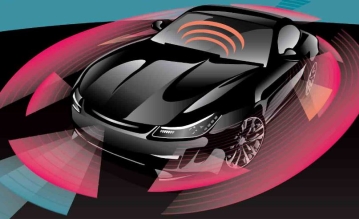
[Contribution] How to design a flexible ADAS radar sensor
TI's AWR1x millimeter wave (mmWave) sensor portfolio enables developers to drive more safely and conveniently. Based on a mmWave sensing architecture (Figure 2), the AWR1x sensor integrates radio frequency (RF) and analog functions along with digital control functions into a single chip.
2017.07.20by 명세환 기자
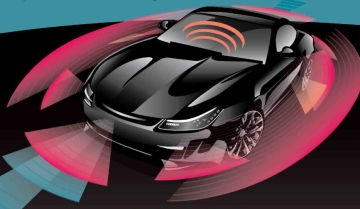
[Contribution] Understanding the Difficult Millimeter-Wave System Design (Part 1)
A complete mmWave radar system includes transmission (TX) and reception (RX) radio frequency (RF) components, analog components such as clocking, digital components such as ADC (analog-to-digital converter), MCU (microcontroller), and DSP (digital signal processor). Traditionally, these systems were implemented with discrete components, which increased power consumption and overall system cost. Due to complexity and high frequency, system design was also challenging. Texas Instruments (TI) addressed these challenges and designed CMOS (complementary metal-oxide-semiconductor) based mmWave radar devices that integrate TX-RF and RX-RF analog components such as clocking and digital components such as ADC, MCU, and hardware accelerators. Some product families in the TI mmWave sensor portfolio have integrated DSP for additional signal processing capabilities.
2017.08.18by 명세환 기자
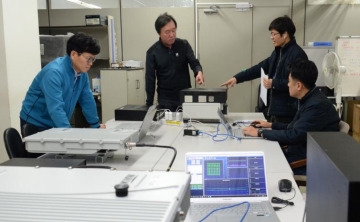
Giga Wi-Fi now works on the Seoul subway.
The Electronics and Telecommunications Research Institute (ETRI) has developed Mobile Hotspot Network (MHN) technology that enables 1Gbps-class data transmission in subway systems. This technology is a next-generation mobile communication technology that provides ultra-high-speed mobile internet service in moving subway tunnels, utilizing the broadband frequency of millimeter-wave. Through the technology development, up to approximately 550 people can simultaneously watch video content. A consortium promoting commercialization of MHN technology to provide gigabit Wi-Fi service in Seoul Metro completed final technology verification successfully, which was conducted in five subway stations on Seoul Metro Line 8 at the end of last year.
2018.01.05by 김지혜 기자
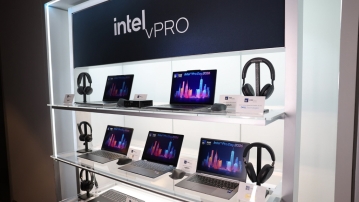
Intel Unveils Next-Generation 'Core Ultra Series 3' and vPro Platform for Enterprise PCs
Intel has officially unveiled the "Intel Core Ultra Series 3" for next-generation enterprise PCs and the latest vPro platform, addressing a wide range of demands from enterprise notebooks to high-performance workstations.
2026.03.26by 배종인 기자
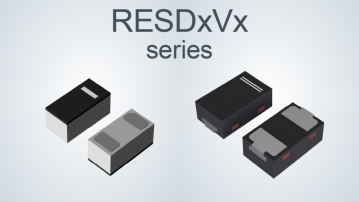
ROHM Launches ESD Protection Diode Compatible with High-Speed Interfaces of 10Gbps or Higher
Semiconductor specialist ROHM has developed the 'RESDxVx series' of ESD (electrostatic discharge) protection diodes capable of responding to next-generation high-speed data communication environments exceeding 10Gbps, simultaneously enhancing both signal quality maintenance required in high-speed interfaces and IC protection performance.
2026.03.26by 배종인 기자











