



Stable power supply to SSDs and performance enhancement
 Published2018.12.15 09:01
Inductive boost converter, low ripple
High competitiveness in high-power applications
SSD storage is widely used in PCs, data centers, and telecommunications applications. SSDs have the advantage of being faster and smaller than HDDs. SSDs with the new PCIe NVMe host controller interface specification are three times faster in write speeds and six times faster in read speeds than existing SATA (Serial Advanced Technology Attachment) SSDs.
However, SSDs face the critical challenge of increasing NAND (Not-AND) flash write and erase speeds and solving heat dissipation issues. As shown in Figure 1, a power supply is required to support the write/erase of NAND chips.
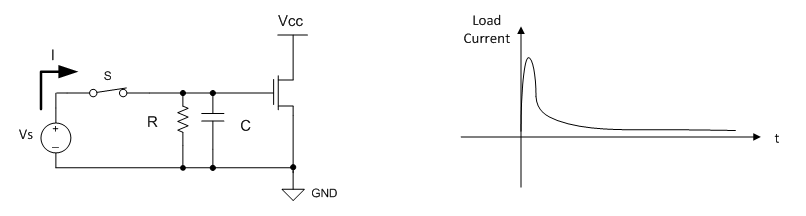
Figure 1: Writing/erasing a NAND flash cell
You can calculate the current during writing/erasing using the formula below.
For example, if C is 100pF and R is 1M, and write/erase is completed in 100ns, this current is about 12mA. Applications such as enterprise storage require higher current because they require higher capacitance (increase in C) and faster speed (decrease in t).
Write/erase speeds depend on power supply and heat dissipation capabilities. If power performance fails to provide the necessary current due to current capacity limitations, write/erase speeds will drop, affecting the storage system's response time.
Charge Pump Converter vs. Inductive Boost Converter
There are two types of step-up converters: charge pump converters and inductive boost converters. Since charge pump converters do not use inductors, the solution size is relatively smaller, and they can be placed inside a NAND cell as shown in Figure 2.
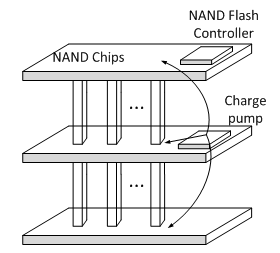
Figure 2: NAND flash chip using an in-cell charge pump converter
Charge pump solutions for applications requiring high output power necessitate higher capacitance for charging and discharging under high loads. Additionally, efficiency at high loads is relatively low due to power loss in the charge/discharge capacitors. Output ripple and noise remain high even under high load conditions.
Due to low current capacity limits, charge pump converters are suitable for relatively low-power applications. Since it does not use an inductor, the design is easy and the solution size is small, so the efficiency is moderate.
On the other hand, inductive boost converters can provide higher current than charge pump converters and are a more competitive solution for high-power applications because they have low ripple. Since the inductor current can supply the load current, the output voltage of the boost converter is flatter across the entire load range. As shown in Figure 3, a single boost converter outside the NAND chip can power multiple chips.
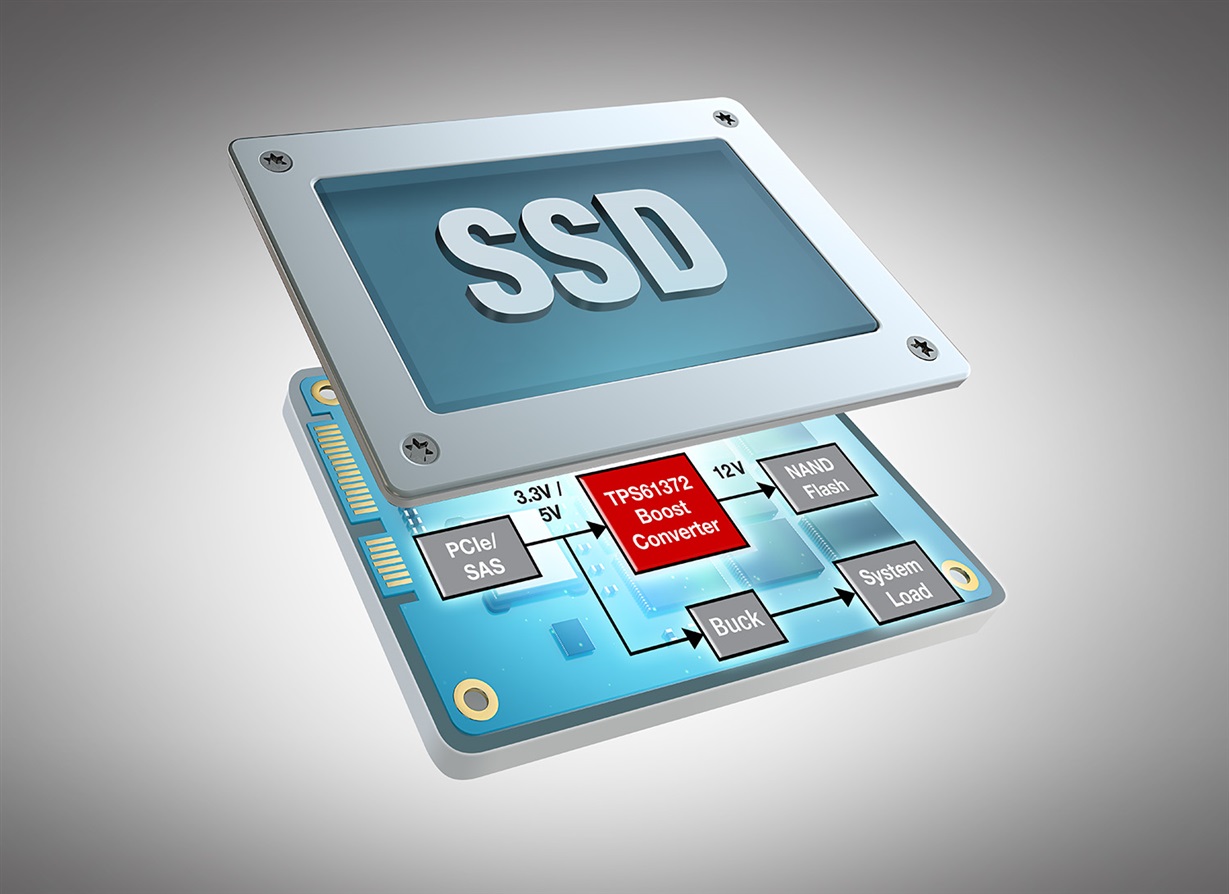
Figure 3: NAND flash chip using an inductive boost converter
The TPS61372 synchronous boost converter is a suitable solution for supplying the power required for SSD NAND chip writing and erasing, featuring reduced size and minimized external components. Compared to conventional charge pump converters, the TPS61372 is capable of providing high-quality power for NAND chip writing and erasing.
This article is a summary of a piece by Yangwei Yu, an engineer at Texas Instruments.
관련뉴스
TI Launches Family of RGB LED Drivers with Integrated 12-Bit PWM Generators
Texas Instruments has launched a new LED driver product family that integrates independent color mixing, brightness control, and power-saving modes. The LP5018, LP5024, LP5030, and LP5036 deliver smooth color reproduction and reduce system power consumption. The new product family offers a 29kHz dimming frequency above the audible range, helping to eliminate noise commonly encountered during lighting dimming in applications using HMI such as portable electronics, building automation, and consumer appliances. Additionally, developers can utilize the integrated 12-bit PWM generator in the device to implement smoother color and brightness level adjustment compared to standard PWM solutions.
2018.11.30by 이수민 기자

Evolving Foundry Technology Leads the 4th Industrial Revolution
Samsung Electronics Foundry Division President Jung Eun-seung delivered a keynote speech at the International Electron Devices Meeting held in San Francisco on the theme of "Industry 4.0 and Foundry." In his keynote address, President Jung emphasized that to process the rapidly growing data in the Industry 4.0 era, semiconductor integration density must be increased to continuously improve performance and power efficiency. He stressed that the evolution of advanced foundry technologies such as EUV lithography and STT-MRAM is critical for this. He also noted that implementing new ideas such as autonomous vehicles and smart homes requires advanced semiconductor technology. Going forward, the foundry business will not only strengthen its existing role in contract semiconductor manufacturing but will also expand collaboration ranging from design services to package and test operations according to customer requests.
2018.12.04by 이수민 기자
TI Launches Ultra-Small DACs and ADCs Required for the 5G Era
Texas Instruments has launched four ultra-compact precision data converter ICs. The DAC80508 and DAC70508 are 8-channel precision digital-to-analog converters offering 16-bit and 14-bit resolution, respectively. Additionally, the ADS122C04 and ADS122U04 are 24-bit precision analog-to-digital converters that provide 2-wire I2C-compatible and 2-wire UART-compatible interfaces, respectively.
2018.12.07by 이수민 기자

Intel Unveils Next-Generation 'Core Ultra Series 3' and vPro Platform for Enterprise PCs
Intel has officially unveiled the "Intel Core Ultra Series 3" for next-generation enterprise PCs and the latest vPro platform, addressing a wide range of demands from enterprise notebooks to high-performance workstations.
2026.03.26by 배종인 기자
ROHM Launches ESD Protection Diode Compatible with High-Speed Interfaces of 10Gbps or Higher
반도체 전문 기업 로옴(ROHM)이 10Gbps를 넘어서는 차세대 고속 데이터 통신 환경에 대응할 수 있는 ESD(정전기 방전) 보호 다이오드 ‘RESDxVx 시리즈’를 개발하며, 고속 인터페이스에서 요구되는 신호 품질 유지와 IC 보호 성능을 동시에 끌어올렸다.
2026.03.26by 배종인 기자











