


LG U+ Develops '5G Beam Pattern Optimization Technology' That Transmits Radio Waves Tailored to the Environment Around Base Stations
 Published2019.01.26 07:04
Remote control without going to the site
Development of big data and AI-based automatic optimization functions
Technology has been developed to maintain consistent 5G network quality in various environments.
LG Uplus announced on the 24th that it has developed a '5G beam pattern optimization technology' that transmits radio waves in a form most suitable for the environment around base stations, such as urban areas, suburban areas, and roads, and applied it to its 5G network.
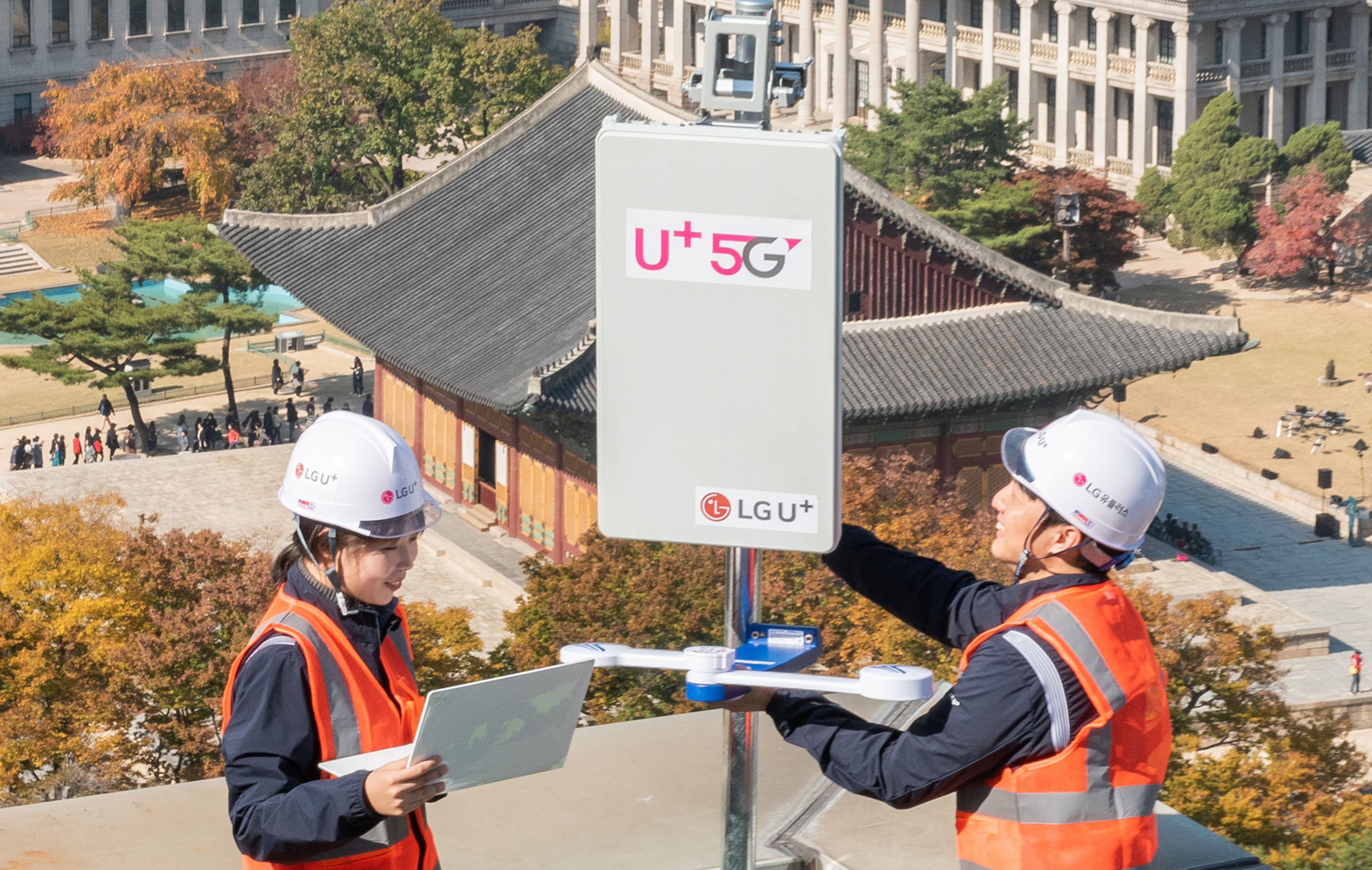
LG Uplus develops 5G beam pattern optimization technology
Accordingly, not only has the efficiency of 5G radio wave propagation increased, but also mutual interference between radio waves emitted from surrounding base stations has been minimized, allowing customers to use 5G services more stably and with higher perceived speeds.
To this end, LG U+ developed beam patterns (radio wave spread patterns/shapes) of various angles that can be applied to base station antennas, as well as a simulation program to test them.
Massive MIMO, which is essential for 5G networks, has different vertical/horizontal operating ranges depending on the beam pattern. Therefore, in order to optimize 5G coverage, it is necessary to set a beam pattern that takes into account surrounding environmental characteristics such as buildings and terrain.
Massive MIMO (Multiple-Input Multiple-Output) is a digital signal transmission method that connects to a single base station.This is a multiple-input/output technology that utilizes dozens or more transmitter antennas. It is used to transmit large amounts of data at high speed to a specific user or to transmit data to multiple users simultaneously.
For example, around high-rise buildings, it is advantageous to use a beam pattern with a wide vertical beam width to ensure quality, and in places such as parks or parking lots, it is advantageous to use a beam pattern with a wide horizontal beam width to ensure quality.
Because it is possible to change the beam pattern remotely, it is possible to quickly adjust and optimize the radio transmission angle to provide smooth service in the event of a large-scale event such as a local festival or damage caused by a natural disaster such as a typhoon or heavy snow.
Until now, the only way to adjust the radio wave emission angle was to visit the base station in person and adjust the antenna angle.
LG U+ plans to evolve its beam pattern optimization to automatically optimize it based on big data such as complaint calls and traffic conditions.
LG Uplus Network Development Manager Lee Sang-heon said, “With the development of this 5G beam pattern remote optimization function, we have secured a technology that can dramatically improve the quality of customer experience in the initial 5G network.” He added, “Going forward, we plan to thoroughly prepare to improve and stabilize 5G full quality through 5G network optimization based on big data and AI in stages.”
Comments
Related news
"A TV for the whole family, a TV for me alone." LG U+ launches wireless IPTV service.
LG U+ has launched U+tv Free, a portable IPTV service that allows users to freely enjoy IPTV services wirelessly through an integrated set-top box terminal. As the need for personalized TV has increased alongside the growth of family-oriented content offerings such as U+tv Kids Land, Netflix, U+tv Golf & Baseball, and U+idol Live, which cater to different age groups within families, LG U+ has developed U+tv Free by deploying the IPTV platform installed on existing set-top boxes to mobile TV devices. Through the company's high-performance gigabit Wi-Fi environment, users can watch IPTV with the same image quality as before anywhere in the home—in the bedroom, living room, kitchen, and beyond.
2019.01.01by 이수민 기자
Three major carriers for 2019 New Year's commitment, "Let's transform into platform operators through 5G" in unified voice
The heads of the three mobile carriers set each company's 2019 goals at New Year's events and encouraged the efforts of executives and employees. SK Telecom President Park Jung-ho revealed the New Year's goal to lead the 5G era. KT Chairman Hwang Chang-kyu expressed his determination to provide top-tier 5G services. LG U+ Vice Chairman Ha Hyun-hoe said they should lead 5G innovation by stepping away from the traditional telecommunications business perspective, proactively reading the direction of change, and turning crises into opportunities.
2019.01.07by 이수민 기자
LG U+ partners with Google to develop VR content... "Pilot content to be released in the first half of this year."
LG Uplus has announced an agreement with Google on joint production of VR content and plans to open a dedicated VR platform in line with the commercialization of 5G smartphones. The two companies have agreed to produce pilot VR content first. To this end, they will establish a joint content fund and produce and distribute VR content within the first half of this year.
2019.01.14by 이수민 기자
European Patent Applications Surpass 200,000 for the First Time… South Korea Maintains 5th Place, Led by Batteries and Telecommunications
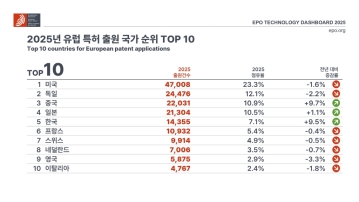
According to the European Patent Office (EPO)'s 'Technology Dashboard 2025', European patent applications last year reached 201,974, surpassing 200,000 for the first time. Korean companies and inventors filed 14,355 applications, representing a 9.5% increase from the previous year and maintaining 5th place by country. Battery, digital communication, and semiconductor technologies led the growth, with Samsung ranking as the top EPO applicant for the second consecutive year and LG reaching 3rd place. The presence of major domestic cities such as Seoul, Suwon, and Yongin was also confirmed. It was also revealed that Korea's European patent strategy is expanding beyond individual technologies to span the entire industry.
2026.03.24by 명세환 기자
SK Telecom First Applies AI-Based Network Operations at Gwanghwamun K-Pop Concert
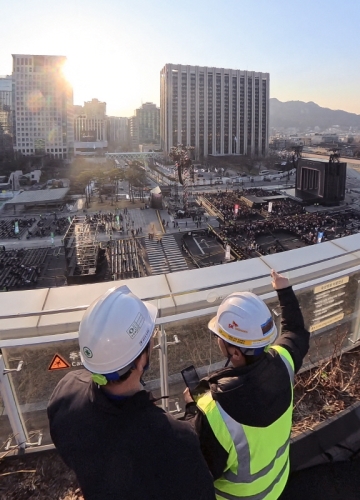
SK Telecom announced that it applied an AI-based network operation system for the first time at a large-scale K-pop concert held in the Gwanghwamun area of Seoul on March 21st, managing communication quality throughout the event. Mobile data usage during the three hours before and after the concert reached 12.15TB, approximately doubling compared to the same time slot the previous weekend. SK Telecom monitored traffic using the AI system 'A-One' in five-minute and 50-meter units to respond to potential overload situations, while also operating temporary communication facilities and on-site personnel in parallel. This case is interpreted as confirmation of the practical applicability of AI-based autonomous network operation in an environment where demand from dense events and foreign users increases simultaneously.
2026.03.23by 명세환 기자











