


ETRI secures golden time in traffic accidents with automatic rescue request terminals.
 Published2019.02.21 09:30
| 충격, 기울기 등 복합요소 고려해 사고판단
| 데이터 통신망 이용으로 빠른 신고 가능
국내 연구진이 교통사고 발생 시 사망률을 획기적으로 줄일 수 있는 긴급 구난(救難) 서비스용 단말을 개발했다.
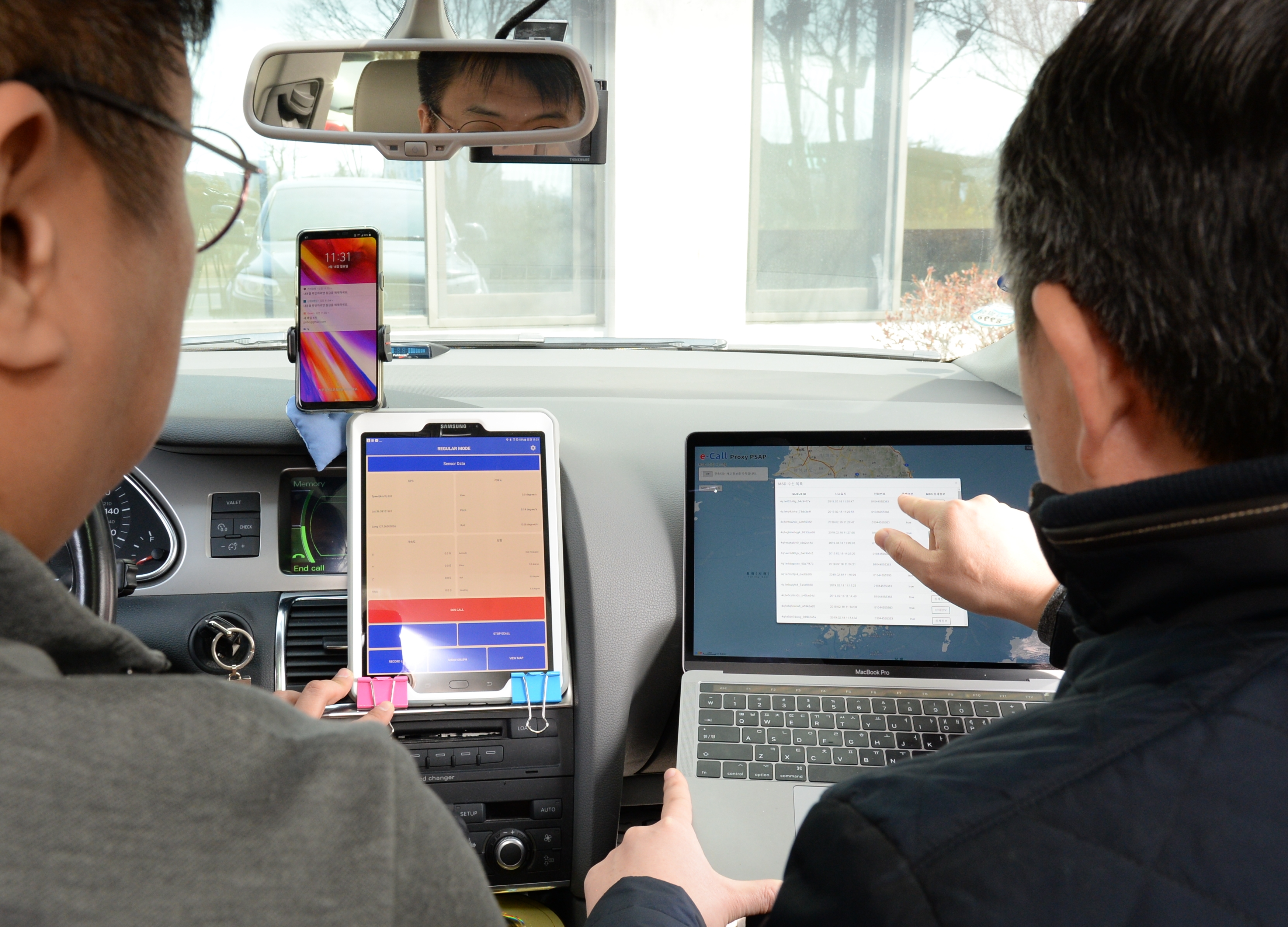
ETRI가 긴급 구난 서비스용 단말을 개발했다
한국전자통신연구원(ETRI)은 과학기술정보통신부의 ‘차량 ICT 기반 긴급구난체계(e-Call) 표준 및 차량단말 개발’ 과제 결과로 긴급 구조 서비스를 지원하는 단말기 7종을 개발했다고 19일 밝혔다.
e-Call은 교통사고가 나면 차량 내 탑재된 블랙박스나 내비게이션, 스마트폰 등이 사고를 인식, 관제 센터에 차량 위치 등 관련 정보를 자동으로 전송하는 서비스다.
연구진은 이 단말로 향후 촌각을 다투는 환자의 골든타임을 이전보다 빠르게 확보할 수 있어 사망률을 줄이는 데 큰 도움이 될 것으로 보고 있다.
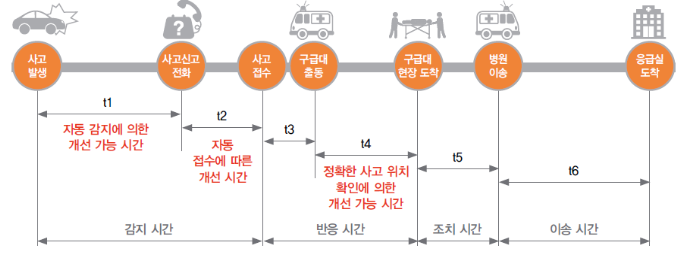
e-Call 서비스를 통한 개선 가능 시간
우리나라는 OECD 국가 중 교통사고 사망률이 두 번째로 많아 e-Call 서비스가 절실하다. 이미 미국, 유럽 등 해외에서는 e-Call 서비스 단말기 장착을 권고하고 있고, 지난해 출시차량에 대해서 의무 장착이 법제화 되었다.
정부는 지난 2014년 8월, 국가정책조정회의에서 ‘ICT 기반 교통사고 긴급구난체계 구축방안’을 수립했다. 과기부는 기존 운행 차량 대상의 애프터마켓 e-Call 단말 기술을 지원하고, 국토교통부는 신규 차량 대상의 내장형 단말과 관제센터 기술개발을 지원하는 다 부처 협력을 통해 e-Call 서비스 기술 개발을 추진하기로 결정한 바 있다.
ETRI는 2015년 팅크웨어, 지아이티, 핸디소프트, 한국정보통신기술협회, 성균관대학교, 한국지능형교통체계협회와 함께 e-Call 서비스 기술 표준 개발 및 애프터마켓용 단말 개발을 진행했다. 블랙박스, 내비게이션, 스마트폰 e-Call 단말은 이들 연구진의 공동 연구결과물이다.
기존 유럽에서 출시된 e-Call 서비스는 휴대폰의 문자메시지 서비스 통신 기능을 이용, 사고 신고를 한다. 연구진은 그러나 음성 통신망이 아닌 데이터 통신망을 통해 정보를 송수신하는 방식을 택했다. 더 빠른 사고 신고가 가능하고, 블랙박스에서 사고 순간의 사진도 함께 보내려면 대용량 데이터 전송이 가능해야하기 때문이다.
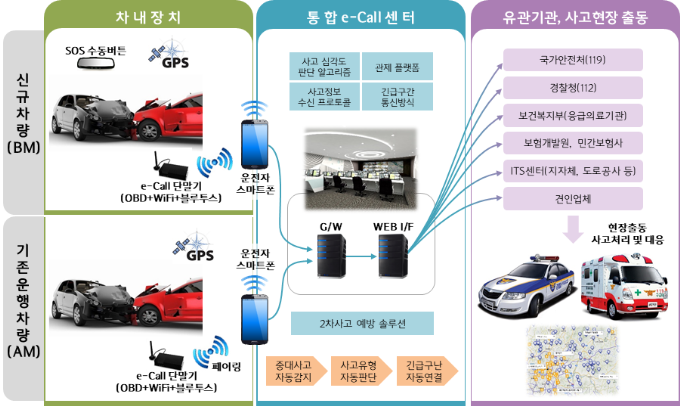
e-Call 서비스 개념도
단말기가 사고를 인식, 관제센터에 구조신고 정보를 보내면 긴급 구난 절차가 시작된다. 이때 탑승자가 구조요청 버튼을 누를 수도 있다. 관제센터에서 긴급 구난을 위해 연락을 해도 장시간 응답이 없거나 통화를 하여 사고 확인이 되면, 실제 사고로 판단, 본격적으로 긴급구난 단계별 대응이 시행된다. 만일 실제 사고가 아니라면 서비스 시행을 거절하면 된다.
사고 인식 방식에도 차이가 있다. 기존 제품은 단순히 에어백 터짐 유무에 따라 사고 여부를 판단했다. 그러나 연구진은 이처럼 교통사고로 인한 충격을 탐지하는 센서가 내장된 각종 기기를 통해 관제센터는 사고가 일어난 위치정보와 탑승객수, 사고차량의 유종(油種) 등을 손쉽게 알게 된다고 말했다.
연구진이 개발한 단말기는 충격감지 외에도 기울기 변화를 통해서도 사고를 판단한다. 일정 시간 내 차량의 속도가 큰 폭으로 변하거나 차량 뒤집힘 여부, 바퀴별 회전 상황 등 복합적인 변수를 통해 사고를 판단하는 것이다.
아울러 단말 장치가 스스로 초기 설정 값을 조절해나가기 때문에 차량 운행을 하면 할수록 더욱 똑똑하게 판단을 내리게 된다.
연구진은 다양한 종류의 단말기 개발로 e-Call 시스템이 내장되어 있지 않은 차량에도 적용이 가능하고 설명했다.
ETRI는 본 기술개발로 사고가 발생하면 자동감지로 인해 시간을 단축하고 자동 사고접수에 따라 시간을 줄이게 된다고 설명했다. 정확한 사고위치 확인이 가능함으로써 획기적인 시간단축이 예상된다고 밝혔다.
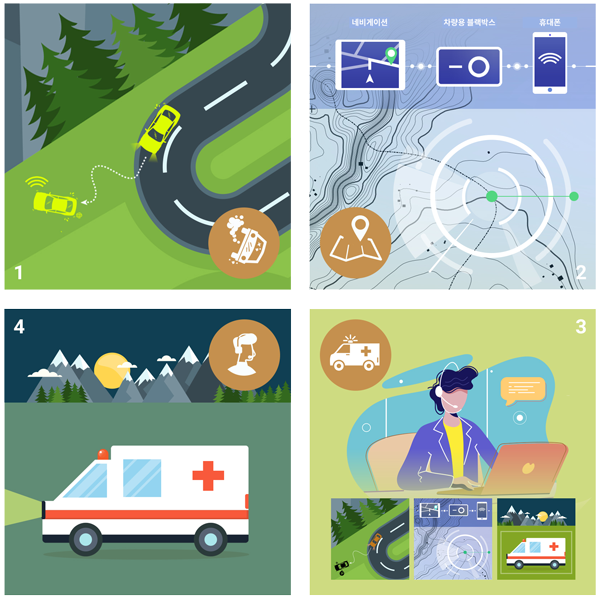
교통사고 시 자동 구조요청 단말 활용도
ETRI는 주로 시스템 운영에 필요한 표준기술 개발에 주력했다. 아울러 단말 내에서 사고신고 여부를 결정하는 판단 알고리즘을 개발했다.
연구에 함께 참여한 팅크웨어, 지아이티는 e-Call 하드웨어 단말을 담당해 알고리즘을 올렸다. 한국정보통신기술협회는 e-Call 단말에 대한 시험인증 기반을 완성하였다.
실제 ETRI는 과제를 통해 개발된 단말기를 우정사업본부의 택배 차량 21대를 대상으로 충남 금산, 충북 옥천, 영동지역에서 실제 실증도 거쳤다.
이렇게 개발된 한국형 e-Call 서비스를 통해 국제전기통신연합(ITU) 국제표준 1건을 제정 완료했고, 2건이 추가적으로 진행 중으로써, 관련 표준특허도 확보한 상태다. 연구진은 본 기술을 이전을 통해 상용화를 준비하고 있다.
사업총괄 책임인 ETRI 김형준 표준연구본부장은 “e-Call 단말 장착을 통해 교통사고 사망률을 크게 낮출 수 있다”면서, “향후 단말 장착을 의무화하는 국내 관련 법제도의 정비와 콜백(call back) 기능 업무를 수행할 관제 센터의 구축 노력도 병행되어야 할 것이다”라고 말했다.
Comments
Related news
KT Unveils NB-IoT-Based Dash Cam Service 'DeepFly'
KT has jointly developed and launched DeepFly, an NB-IoT based service, in cooperation with Mbrain, a vehicle black box developer. The DeepFly service integrates IoT GPS functionality into conventional black boxes and operates in real-time with a smartphone application, enabling users to monitor various vehicle-related information in real-time, including impacts during parking, accidents, and vehicle towing. DeepFly is initially compatible with the "U-Live Edge S1" and "U-Live Edge G1" black boxes and is available for purchase at vehicle accessory shops.
2018.12.18by 이수민 기자
Checking on a child asleep in the car with a Bluetooth cushion
Safety accidents continue to occur annually, with children being left unattended in daycare shuttle vehicles for extended periods, sometimes resulting in fatalities. As part of accident prevention measures, the government has decided to mandate installation of "sleeping child detection devices" starting next year. The Korea Institute of Industrial Technology jointly developed a smart child confirmation cushion with three partner companies that allows parents to easily check their children's boarding and alighting status via smartphone.
2018.12.26by 이수민 기자

DBMS CUBRID Adopted for Incheon Airport Integrated Operations System
CUBRID has supplied its open-source DBMS to the Incheon International Airport Corporation's integrated operations system construction project. This project by Incheon International Airport Corporation was conducted as part of the "Incheon Airport Smart 100 Major Projects" that innovatively improve Incheon Airport's overall operational procedures and customer services by utilizing fourth industrial revolution technology. The newly constructed integrated operations system is a cloud infrastructure environment within Incheon Airport's internal network utilizing server virtualization technology.
2019.01.07by 이수민 기자
European Patent Applications Surpass 200,000 for the First Time… South Korea Maintains 5th Place, Led by Batteries and Telecommunications
According to the European Patent Office (EPO)'s 'Technology Dashboard 2025', European patent applications last year reached 201,974, surpassing 200,000 for the first time. Korean companies and inventors filed 14,355 applications, representing a 9.5% increase from the previous year and maintaining 5th place by country. Battery, digital communication, and semiconductor technologies led the growth, with Samsung ranking as the top EPO applicant for the second consecutive year and LG reaching 3rd place. The presence of major domestic cities such as Seoul, Suwon, and Yongin was also confirmed. It was also revealed that Korea's European patent strategy is expanding beyond individual technologies to span the entire industry.
2026.03.24by 명세환 기자
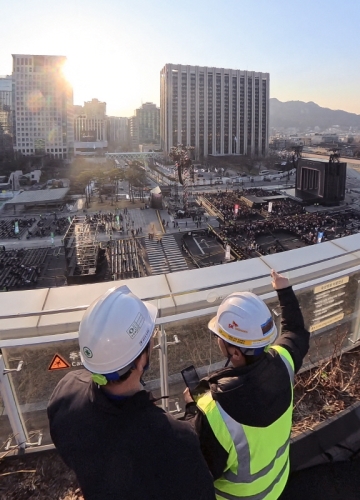
SK Telecom First Applies AI-Based Network Operations at Gwanghwamun K-Pop Concert
SK Telecom announced that it applied an AI-based network operation system for the first time at a large-scale K-pop concert held in the Gwanghwamun area of Seoul on March 21st, managing communication quality throughout the event. Mobile data usage during the three hours before and after the concert reached 12.15TB, approximately doubling compared to the same time slot the previous weekend. SK Telecom monitored traffic using the AI system 'A-One' in five-minute and 50-meter units to respond to potential overload situations, while also operating temporary communication facilities and on-site personnel in parallel. This case is interpreted as confirmation of the practical applicability of AI-based autonomous network operation in an environment where demand from dense events and foreign users increases simultaneously.
2026.03.23by 명세환 기자











