


[5G! MWC19] LG U+ Takes the Lead in the 5G Smart Factory Era
 Published2019.02.25 09:35
| The Dawn of the Era of Automation and Remote Work Environment Monitoring
| Increase accuracy and reduce time and fatigue with AI vision inspection
LG Uplus unveils a smart factory service connecting Spain and Korea over a distance of 10,000 km via 5G.
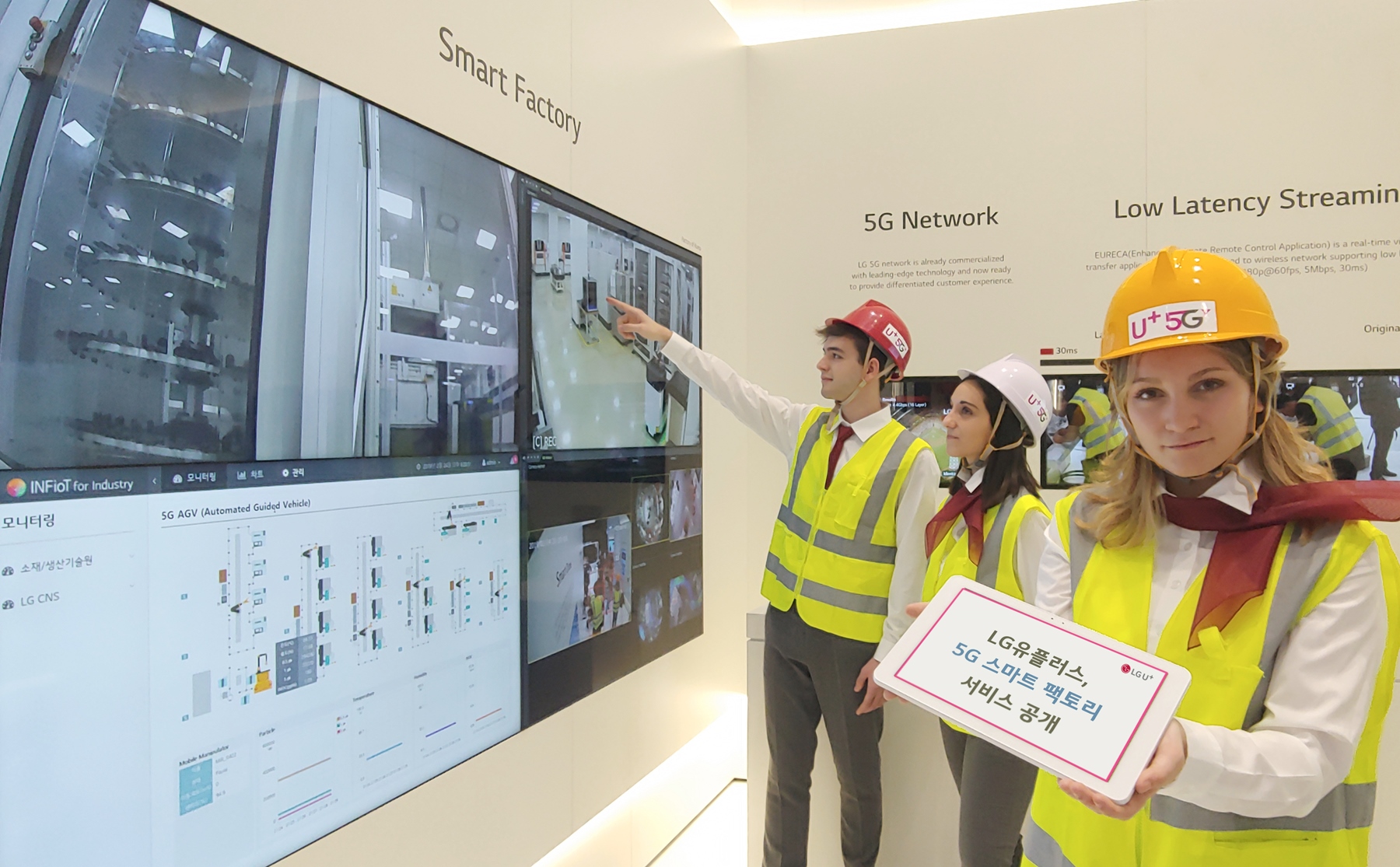
LG Uplus unveiled its 5G smart factory service.
LG Uplus announced on the 25th that it will unveil a 5G network-based smart factory service in partnership with LG Electronics and LG CNS at MWC19 in Barcelona, Spain.
LG Uplus is showcasing a 5G smart factory service that connects the MWC site and a production plant in Pyeongtaek, Korea in real time, leveraging synergies among LG Group affiliates such as its own 5G mobile network, LG Electronics’ Materials & Production Technology Institute’s factory construction experience, and LG CNS’s platform technology. This marks the first demonstration of smart factory operation and management via a 5G network from the other side of the globe.
The ultra-low latency and ultra-connectivity attributes of 5G networks are essential for smart factory services, as they exchange large amounts of data with multiple robot systems in real time without delay. LG Uplus anticipates that smart factories will become the core of innovation in the manufacturing sector, particularly through unmanned and remote operations that replace simple tasks performed by humans with logistics robots, and plans to explore specific business models in the future.
This demonstration will be conducted by connecting the MWC venue in Barcelona, Spain, with the Mold Technology Center of LG Electronics’ Materials & Production Technology Institute in Pyeongtaek, Gyeonggi-do, in real time. It will showcase autonomous driving of the 'Mobile Manipulator Specification,' which flexibly connects logistics between equipment, and factory environmental monitoring—essential elements for precision machining, such as temperature and humidity. At the Pyeongtaek plant, 'AI Vision Inspection' technology, capable of quality assessment using AI, will also be prepared.
The most notable feature is the 'Mobile Manipulator Specification,' which controls the movement of autonomous logistics robots and provides route video. Through this technology, robots execute the task of loading processed parts onto lathes using the most efficient routes. They also automatically change their paths if obstacles are encountered. Users can monitor the logistics robots' battery status, location, and other parameters in real-time, both inside and outside the factory, via a production management system.
In environments where maintaining atmospheric conditions, such as temperature and humidity, is critical—like in precision machining plants—the role of factory environment monitoring is also useful. Through various sensors mounted on logistics robots, the robots detect the working environment of the entire factory as they move, and the status of gases, dust, and other elements within the factory can be remotely monitored via LG CNS's IoT integrated platform, 'INFIOT'. Unmanned automated factories can also be remotely monitored via CCTV, and areas requiring detailed inspection can be checked using 5G cameras mounted on logistics robots.
'AI Vision Inspection,' which checks quality based on images, is also considered a key feature. This technology aims to improve quality by training equipment with inspection images used for quality assessment using artificial intelligence, thereby enhancing intelligent inspection judgment capabilities. Detection power is improved as it offers higher accuracy than direct human inspection. LG Uplus anticipates that this technology will reduce unnecessary time and effort spent on re-inspections in the future.
Choi Joo-sik, Vice President and Head of the Enterprise Business Division at LG Uplus, stated, “Once 5G services are fully commercialized, solutions dedicated to smart factories will increase significantly,” adding, “We plan to focus on securing an early market lead by discovering various ‘killer services,’ particularly centering on the high-potential areas of remote and unmanned systems.”
"He added, 'Through this, we will seek quantitative and qualitative changes in services to bring a breath of fresh air to the entrenched existing telecommunications market in the 5G era.'"
Meanwhile, this demonstration will be conducted by applying it to the field of precision mold machining, where there is a high need for intelligence, automation, and unmanned operation. In the field of precision mold machining, all movement processes are handled directly by humans, and work efficiency is low as work time increases depending on the complexity of the drawings, so the utilization of 5G smart factory services is expected to be high.
Comments
Related news
Three Mobile Carriers Announce 2018 Earnings: "Wireless Stagnates, IPTV Strong"
LG Uplus achieved annual revenue of 12.1251 trillion won and operating profit of 730.9 billion won in 2018. These figures represent increases of 0.7% and 3.7%, respectively, compared to the previous year. KT recorded annual revenue of 23.4601 trillion won and operating profit of 1.2615 trillion won in 2018. These figures represent increases of 1.6% compared to the previous year and a decrease of 11.4% in operating profit year-over-year. SK Telecom achieved annual revenue of 16.8740 trillion won and operating profit of 1.2018 trillion won in 2018. These figures represent decreases of 3.7% and 21.8%, respectively, compared to the previous year.
2019.02.14by 이수민 기자
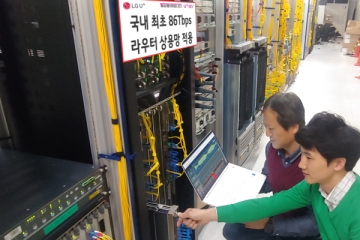
LG U+, the first in Korea to apply 86Tbps router to commercial network
LG Uplus has deployed an 86Tbps router equipment in its internet backbone network. 86Tbps represents a processing speed capable of handling data equivalent to 2,400 DVDs—each capable of storing one UHD-grade movie—in one second, which is more than 7 times faster than the router equipment previously in use. This equipment was jointly developed by LG Uplus and Nokia, and incorporates the FP4 processor, the world's first multiterabit network processor developed in 2018.
2019.02.19by 이수민 기자
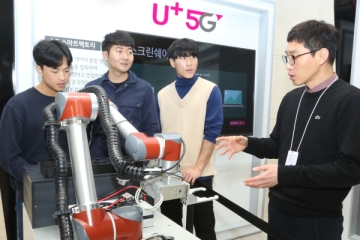
[MWC19 Preview] LG U+ Unveils 5G Strategic B2B Services
LG U+ showcases 5G-based strategic B2B services at MWC19, demonstrating how industrial sites are being reorganized around 5G. LG U+ presents not only B2C services that transform customers' daily lives in the 5G era but also B2B services that change future industrial sites, pursuing a strategy to create new business opportunities in the 5G era. The 5G B2B services introduced at this MWC include smart factories, robot remote control, intelligent CCTV, low-latency video transmission solutions, and autonomous driving HD maps.
2019.02.22by 이수민 기자
European Patent Applications Surpass 200,000 for the First Time… South Korea Maintains 5th Place, Led by Batteries and Telecommunications
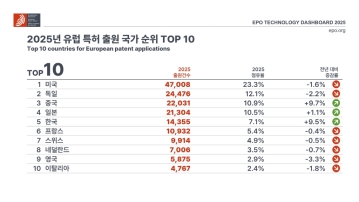
According to the European Patent Office (EPO)'s 'Technology Dashboard 2025', European patent applications last year reached 201,974, surpassing 200,000 for the first time. Korean companies and inventors filed 14,355 applications, representing a 9.5% increase from the previous year and maintaining 5th place by country. Battery, digital communication, and semiconductor technologies led the growth, with Samsung ranking as the top EPO applicant for the second consecutive year and LG reaching 3rd place. The presence of major domestic cities such as Seoul, Suwon, and Yongin was also confirmed. It was also revealed that Korea's European patent strategy is expanding beyond individual technologies to span the entire industry.
2026.03.24by 명세환 기자
SK Telecom First Applies AI-Based Network Operations at Gwanghwamun K-Pop Concert
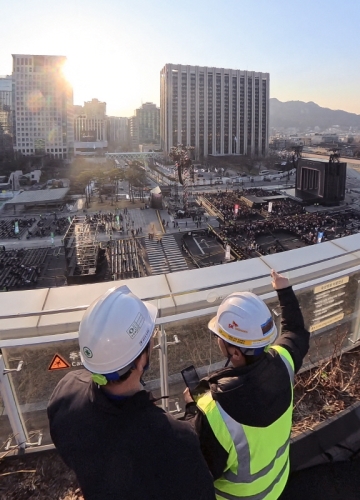
SK Telecom announced that it applied an AI-based network operation system for the first time at a large-scale K-pop concert held in the Gwanghwamun area of Seoul on March 21st, managing communication quality throughout the event. Mobile data usage during the three hours before and after the concert reached 12.15TB, approximately doubling compared to the same time slot the previous weekend. SK Telecom monitored traffic using the AI system 'A-One' in five-minute and 50-meter units to respond to potential overload situations, while also operating temporary communication facilities and on-site personnel in parallel. This case is interpreted as confirmation of the practical applicability of AI-based autonomous network operation in an environment where demand from dense events and foreign users increases simultaneously.
2026.03.23by 명세환 기자











