


Five Challenges 5G NR Device Designers Must Overcome <5> Peaceful Coexistence with LTE and Other Wireless Communications
 Published2019.03.06 17:17
To comply with the 5G NR standard, devices must operate in different operating models across different frequency bands.
5G NR must operate in adjacent cellular bands, sometimes even within the same spectrum as other wireless communication systems, such as Wi-Fi, Citizens Broadband Radio Service (CBRS), military, and satellite services.
Shared spectrum can use a collection of channels in unlicensed spectrum to expand device performance and throughput. LTE unlicensed (LTE-U), Licensed Assisted Access (LAA), and MulteFire allow LTE operation in unlicensed spectrum.
LAA uses the 4G network as an anchor and uses a Listen Before Talk (LBT) method to ensure no other tasks are performed before transmitting data using auxiliary channels. Because LAA uses multiple protocols in the same frequency band, it employs multiple permutations, requiring careful coexistence design and testing.
5G NR, operating in mid-band frequencies (3.3–4.2 GHz, 3.3–3.8 GHz, and 4.4–5 GHz), may cause interference with adjacent IEEE 802.11ac and 802.11ax Wi-Fi networks (2.4 GHz and 5 GHz), as well as other Industrial, Scientific, and Medical (IMS) bands. Therefore, if each band is not properly filtered, emissions due to harmonics, intermodulation spurs, and spectral regrowth can affect wireless transmissions in these bands.
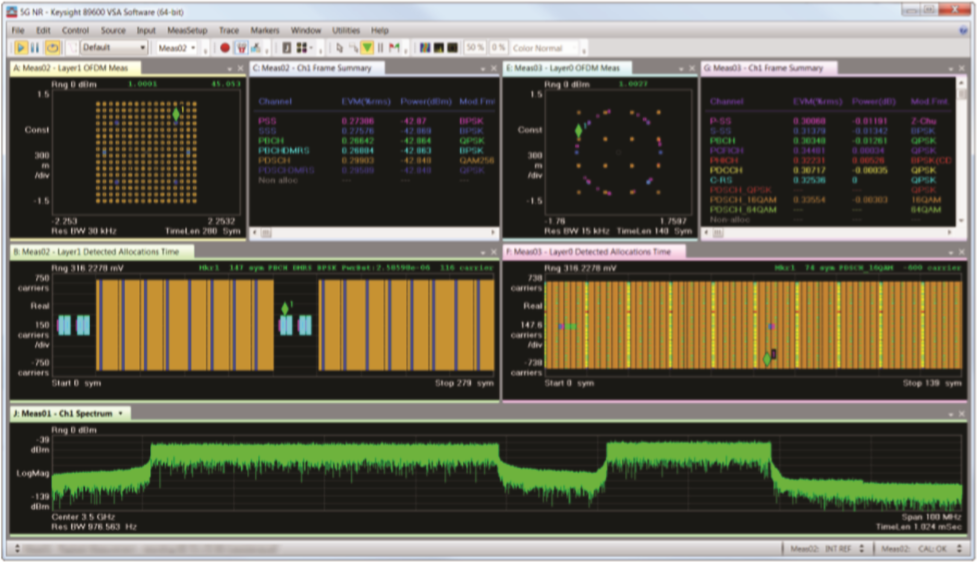
A signal analyzer with frequency band signal generator and decompression software performs 5G NR/4G LTE coexistence scenarios for device verification.
A constellation diagram simultaneously displays phase and amplitude information. Measuring a signal with a vector signal analyzer and viewing the results in a constellation diagram can reveal signal interference and distortion issues.
The EVM of isolated signals and the EVM per subcarrier can predict the likelihood of coexistence in crowded frequencies. Wideband frequency measurements such as ACLR and SEM can help identify potential interference between signals.
5G NR will need to coexist with existing commercial wireless infrastructure, as well as military and non-military radar and satellite signals. The 5G NR mmWave operating band in Frequency Band 2 (FR2) overlaps with Fixed-Satellite Services (FSS) ground station uplink (27.5–29.5 GHz) and downlink (37.5–40 GHz). In this scenario, primary users can have priority in the frequency band. 5G NR devices must sense their environment and adapt their behavior based on the policies of their location.
▒See the 5 Challenges 5G NR Device Designers Must Overcome
<1> Utilizing variable slot duration
<2> Increase throughput at high frequencies and wide bandwidths
<3> Effective use of beam steering technology at mmWave frequencies
<4> OTA testing on 5G mmWave devices
<5> Peaceful coexistence with LTE and other wireless communications
Comments
Related news
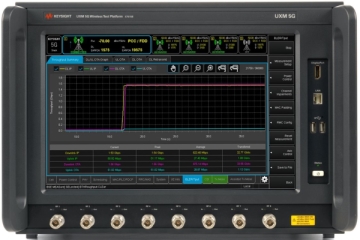
Keysight and Samsung Electronics Successfully Complete Latest 3GPP 5G NR Interoperability Test
Keysight Technologies demonstrated maximum 5G NR data throughput using the Keysight UXM 5G wireless test platform and Samsung Electronics' 5G Exynos Modem 5100, based on Keysight's 5G NR network emulation solution. This achievement through collaboration between the two companies serves as a milestone supporting the acceleration of 5G ultra-broadband wireless communication (eMBB) applications, and is evaluated as a solution that successfully led full-stack interoperability and development testing (IODT) based on 3GPP 5G NR Release 15 specifications. The demonstration validated maximum data throughput utilizing 256QAM and 4x4 MIMO technology.
2019.02.22by 이수민 기자
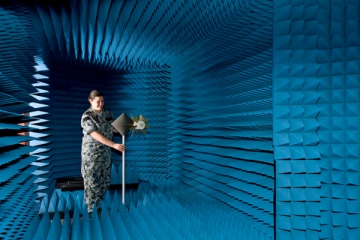
Five Challenges 5G NR Device Designers Must Overcome <4> OTA Testing on 5G mmWave Devices
Designers performing OTA testing on 5G mmWave components and devices conduct most RF performance tests below 6 GHz using cable connections. For 5G, low-frequency testing is similar to 4G, but mmWave requires the following wireless test solutions. The far-field test method has traditionally been the most comprehensive, but it presents several challenges at mmWave frequencies. As the operating frequency increases and the size of the radiating antenna grows, the distance increases, resulting in greater path loss, making it difficult to perform accurate radiated measurements. Recently, 3GPP approved the Compact Antenna Test Range (CATR) for device RF performance testing. This OTA test method can perform measurements of transmitted power, transmitted signal quality, and spurious emissions from the radiated transmitter with significantly less path loss compared to traditional far-field test chambers.
2019.03.01by 이수민 기자

Keysight accelerates 5G NR NSA device testing by obtaining GCF certification following PTCRB certification.
Keysight Technologies has obtained GCF certification for 5G NR NSA test cases. This enables acceleration of protocol and RF device certification for the mobile ecosystem. The toolset, which is part of Keysight's 5G network emulation solution portfolio, has obtained both GCF and PTCRB device certifications, now supporting a comprehensive range of GCF RF and protocol 5G NR NSA test cases and frequency band combinations.
2019.03.05by 이수민 기자
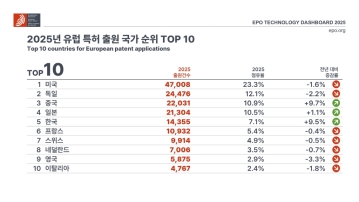
European Patent Applications Surpass 200,000 for the First Time… South Korea Maintains 5th Place, Led by Batteries and Telecommunications
According to the European Patent Office (EPO)'s 'Technology Dashboard 2025', European patent applications last year reached 201,974, surpassing 200,000 for the first time. Korean companies and inventors filed 14,355 applications, representing a 9.5% increase from the previous year and maintaining 5th place by country. Battery, digital communication, and semiconductor technologies led the growth, with Samsung ranking as the top EPO applicant for the second consecutive year and LG reaching 3rd place. The presence of major domestic cities such as Seoul, Suwon, and Yongin was also confirmed. It was also revealed that Korea's European patent strategy is expanding beyond individual technologies to span the entire industry.
2026.03.24by 명세환 기자

SK Telecom First Applies AI-Based Network Operations at Gwanghwamun K-Pop Concert
SK Telecom announced that it applied an AI-based network operation system for the first time at a large-scale K-pop concert held in the Gwanghwamun area of Seoul on March 21st, managing communication quality throughout the event. Mobile data usage during the three hours before and after the concert reached 12.15TB, approximately doubling compared to the same time slot the previous weekend. SK Telecom monitored traffic using the AI system 'A-One' in five-minute and 50-meter units to respond to potential overload situations, while also operating temporary communication facilities and on-site personnel in parallel. This case is interpreted as confirmation of the practical applicability of AI-based autonomous network operation in an environment where demand from dense events and foreign users increases simultaneously.
2026.03.23by 명세환 기자











