



VMware Unveils Service-Defined Firewall to Reduce Attack Surface in On-Premise and Cloud Environments
 Published2019.03.11 09:50
| At the network and host level
| Protects normal activities and reduces the attack surface
On the 11th, VMware unveiled 'VMware Service-defined Firewall,' which reduces the attack surface in on-premises and cloud environments.
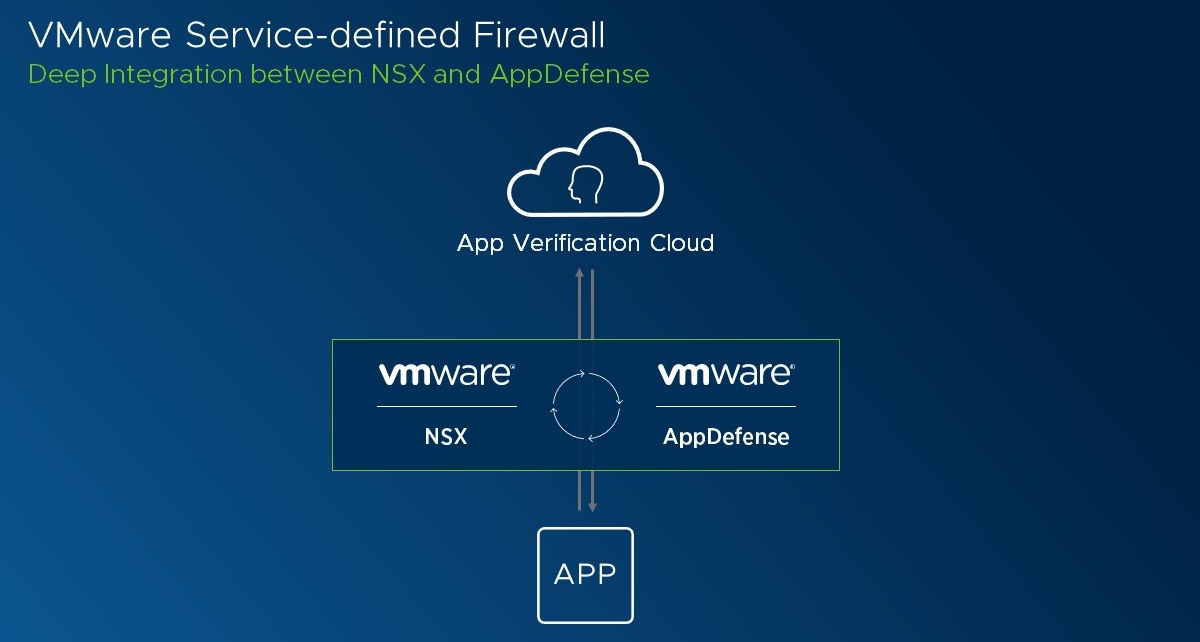
VMware Service Definition Firewall
VMware Service-Defined Firewall is characterized by combining high application visibility, an understanding of known good application activity, and intelligent, automated, adaptive firewall capabilities to support safer protection of applications, data, and users.
VMware announced a new security approach at the 'RSA Conference 2019' held in San Francisco, USA. VMware's security strategy focuses on reducing the attack surface rather than tracking unknown threats, shifting from the existing security model focused on 'chasing bad' to 'ensuring good', and focusing on the applications themselves rather than the infrastructure. By implementing inherent security in an infrastructure stack that includes VMware technology, enterprises can protect the normal operation of applications and significantly reduce risks to critical applications, sensitive data, and users.
Tom Gillis, VMware Vice President and General Manager of Network and Security, said, “The inherent security implemented by VMware leverages the unique characteristics built into the virtualization platform,” adding, “The newly unveiled VMware Service-Defined Firewall focuses on defending internal networks and verifies applications performing normal activities rather than tracking threats.”
Existing solutions used methods to install agents in the guest environment, but these agent-based solutions added complexity and had limitations in that the agent could be bypassed if an attacker obtained root privileges and controlled the host. As applications recently run in distributed environments, there is a growing need for distributed security as well.
VMware Service-Defined Firewall operates in bare metal, virtual machine, and container-based application environments, and will also support hybrid cloud environments such as VMware Cloud on AWS and AWS Outposts. Additionally, enterprises can use the VMware Service-Defined Firewall solution as a standalone firewall solution.
The characteristics of VMware service-based firewalls are as follows.
Application Authentication Cloud
VMware Service Defined Firewall can gain a high level of understanding of applications and hundreds or thousands of microservices through changes over time on the host. The Application Authentication Cloud leverages the intelligence of millions of virtual machines worldwide to accurately build an information map of the application's planned healthy state. Once the application's healthy state is authenticated, this solution can generate adaptive security policies capable of Layer 7 functionality and health checks.
Protection from guests
VMware Service Defined Firewall solutions leverage inherent capabilities to inspect guest operating systems and applications without remaining in the guest environment, ensuring that even if an attacker gains root access, they cannot breach the security network of the Service Defined Firewall. VMware Service Defined Firewall solutions present a new approach to network firewalls and host IPS, such as detecting and blocking suspicious traffic on the network while the OS and applications are running.
Firewall distribution within the software
The traditional approach to hardware firewalls involves diverting traffic for scanning from a virtual environment to a hardware appliance using hairpinning (or NAT loopback, a method of accessing services from an internal network using public IP addresses). For modern applications involving services and components running across heterogeneous clouds and multiple servers, this approach is difficult to scale and inefficient. The software-based VMware Service-Defined Firewall runs at the point where applications operate across the cloud and supports consistent policies without complex traffic hairpinning across the cloud environment.
Meanwhile, VMware collaborated with global security company Verodin to demonstrate the effectiveness of service-defined firewalls. VMware utilized Verodin’s Security Instrumentation Platform (SIP) to verify whether the VMware service-based firewall could effectively identify and defend against known and potential threats, and succeeded in detecting and defending against 100% of suspicious attacks in detection and prevention modes.
Comments
Related news
VMware Introduces a Digital Workspace Solution that Transcends Devices, OS, Cloud, and Software
VMware has announced its vision of supporting all types of devices and applications across all clouds. VMware enables enterprises to achieve digital transformation optimized for rapidly changing business trends. The end-user computing strategy proposed by VMware is to implement a digital workspace—an environment that supports diverse business applications without being tied to specific devices. VMware Workspace ONE, an intelligence-based digital workspace platform built on VMware AirWatch technology, can easily and securely deliver and manage all applications across all devices.
2019.01.29by 이수민 기자

IBM Announces Offering for Hybrid Cloud 'Rapid and Secure' Adoption
According to a recent report from the IBM Institute for Business Value, while 98% of enterprises are expected to adopt hybrid cloud in 2021, only 38% of enterprises will possess the necessary tools for configuring, maintaining, and managing hybrid cloud. In response, IBM announced new offerings to support enterprise hybrid cloud adoption. IBM will address challenges that enterprises face when migrating and integrating cloud across any environment—on-premises, private cloud, or public cloud—while managing these systems and providing top-tier security capabilities.
2019.02.23by 이수민 기자
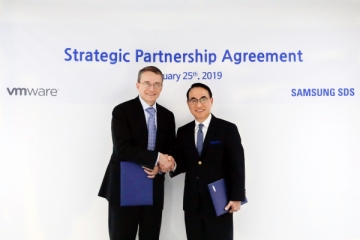
Samsung SDS and VMware Jointly Promote Digital Work Environment Innovation Project
Digital workplace transformation innovation enables enterprises to perform tasks anytime and anywhere using PCs and mobile devices by leveraging IT technologies such as cloud computing and virtualization, thereby improving work efficiency. Accordingly, Samsung SDS has established a strategic partnership with VMware to jointly develop digital workplace transformation projects. VMware is leading digital workplace transformation innovation with its Workspace ONE solution, which enables secure and flexible management of various mobile devices.
2019.02.26by 이수민 기자
.png)
Databricks Unveils Open AI Security Monitoring 'Lakewatch'
Databricks entered the security market on March 24 by unveiling LakeWatch, an open-source agentic SIEM. The core functionality of this product is to integrate and analyze security, IT, and business data in a single environment to support AI-based threat detection and investigation. The company explained that it reduces the limitations of existing security operations centers, which have had to forgo some data due to high cost structures, and enables large-scale data analysis and automation based on open formats and ecosystems. LakeWatch is currently offered as a private preview, with Adobe and Dropbox mentioned as early customers. Databricks also announced an expanded partnership with Anthropic as well as the acquisition of Antimatter and SiftD.ai.
2026.03.26by 배종인 기자
Kaspersky Unveils Revamped 'NEXT' Combining SOC Integrated Management and AI Analytics
As enterprises increase demand for integrated management and automation in the construction and operation of Security Operations Centers (SOC), Kaspersky has disclosed updates to its B2B security product suite 'Kaspersky Next'. This update expands EPP, EDR, XDR, and SIEM integration through a single console based on OSMP, incorporates AI capabilities such as DLL hijacking detection and suspicious account takeover behavior identification, and includes integration with generative AI assistant tool KIRA. The company stated that in large-scale deployment environments, EDR Expert can reduce resource requirements by up to 30%, and XDR Expert by up to 60%.
2026.03.25by 배종인 기자











