



"Gastrointestinal endoscopy now done with capsules" ETRI develops capsule endoscopy based on human communication
 Published2019.03.18 12:12
| Position and attitude control possible, high-speed transmission of 24 shots per second
| Plans to enter the upper gastrointestinal tract market first, including China and Europe
A domestic research team has succeeded in developing a capsule endoscope that can effectively diagnose the esophagus and stomach, which account for approximately 54% of human digestive diseases, in collaboration with a domestic company, using human communication technology.
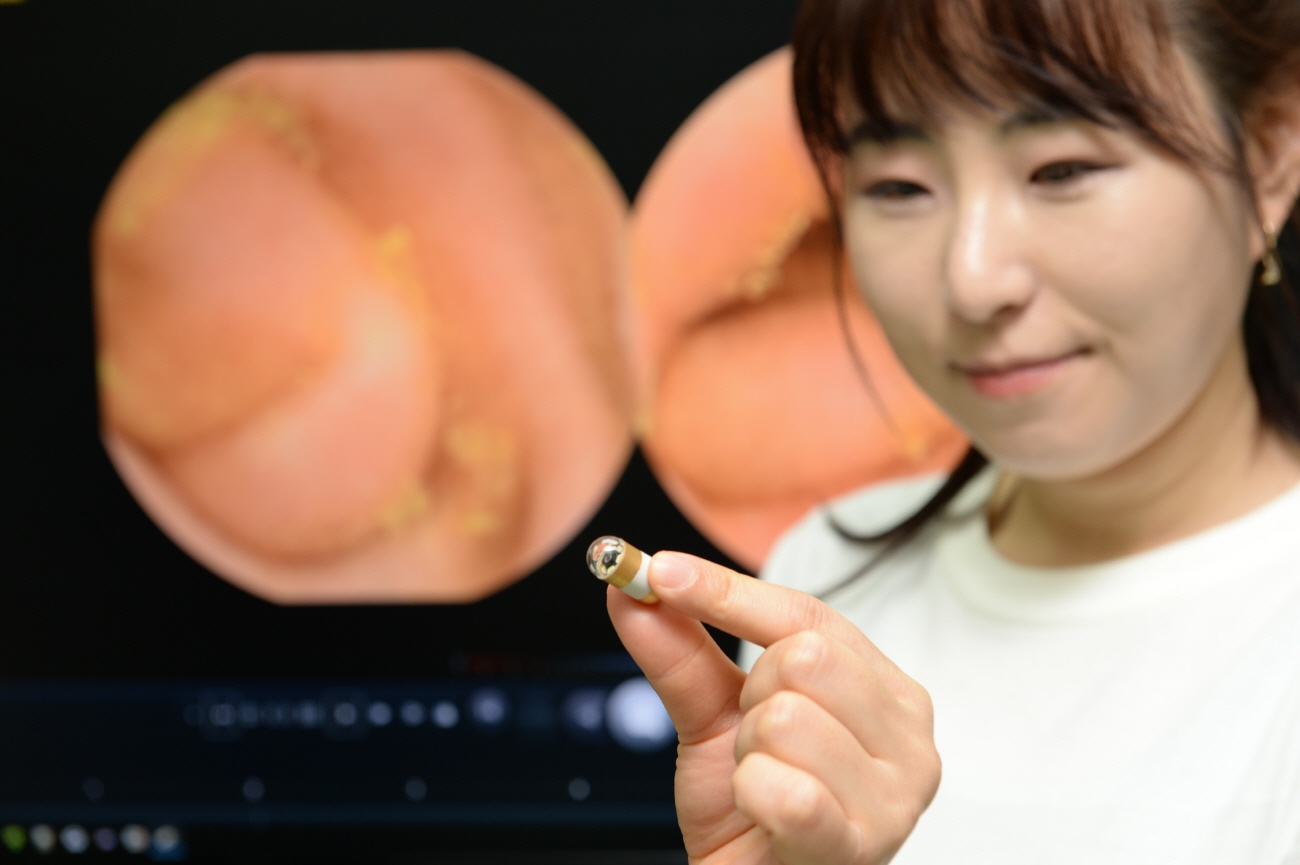
Capsule endoscopy using InBody human body communication technology
The Electronics and Telecommunications Research Institute (ETRI) announced on the 14th that it has made possible high-speed transmission of 24 frames per second, which is four times faster than the existing video transmission speed of domestic companies, by utilizing the InBody human body communication technology that transmits data using the human body as a medium.
ETRI explained that the InBody human body communication technology enabled high-speed data communication, making detailed observation possible even in areas where capsules pass quickly, such as the esophagus. As the capsule descends quickly, many areas need to be photographed at once, and this has been resolved.
The research team explained that they used ▲signal modulation technology ▲receiver structure change technology of analog circuits to increase the speed required to transmit large amounts of image data using high-speed shooting.
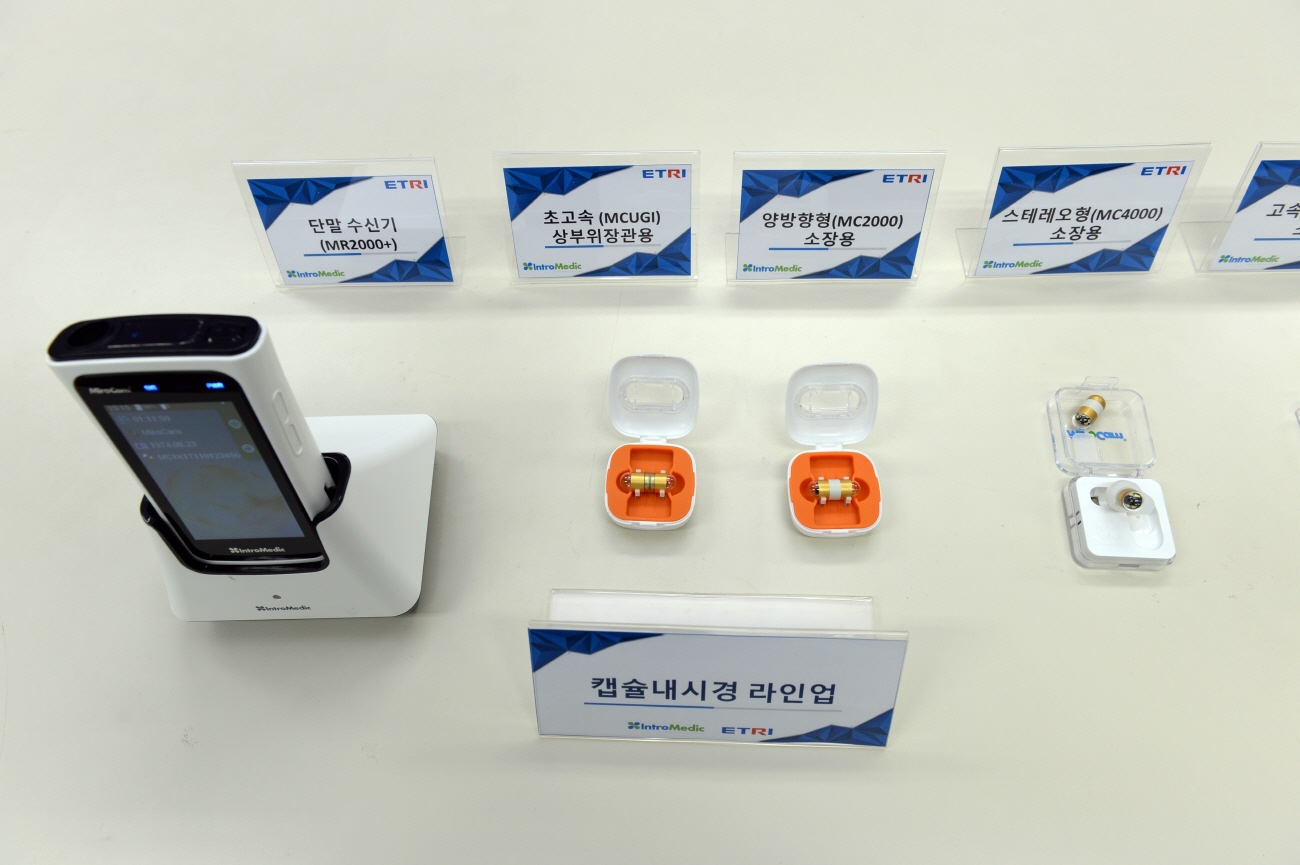
Size of capsule endoscope
The capsule used in the endoscope measures 1cm x 3.1cm. The capsule acts as a transmitter and contains an LED lamp, two front and rear cameras, a coin-type battery, and a magnet inside.
The images captured by the capsule are transmitted and stored to a cell phone-sized receiver outside the body via electrodes attached to the body or a belt-type receiver. The resolution is 320 x 320 dpi and the battery can last for 2 hours.
The doctor can control the capsule, which contains a magnet, from outside the body using a magnetic controller while looking at the receiver. The capsule can be freely positioned or made to rest on the stomach wall for more detailed observation.
The research team explained that the system is composed of ▲a capsule endoscope for the upper gastrointestinal tract ▲an image analysis system for symptom interpretation ▲a terminal receiver for the upper gastrointestinal tract.
In the case of conventional endoscopes for upper gastrointestinal examinations, cross-infection due to reuse, abdominal discomfort due to foreign body sensation or air injection, and nausea or belching of the examinee were factors that made examinations difficult, but capsule endoscopes can compensate for these shortcomings.
Capsule endoscopy is expected to have a promising role in helping doctors diagnose as a means to replace wired endoscopy in the future.
The capsule endoscopy market currently accounts for approximately 64% in advanced countries such as North America and Europe, while demand has been rapidly increasing in China recently. The market size is expected to grow steadily at an average annual rate of 9.3% from KRW 742.4 billion in 2018 to KRW 1.0595 trillion by 2022.
The research team plans to first expand the use of upper gastrointestinal capsule endoscopes in China, which has the highest incidence of gastrointestinal diseases, and in the UK and Europe, which have a high incidence of esophageal diseases, together with partner companies.
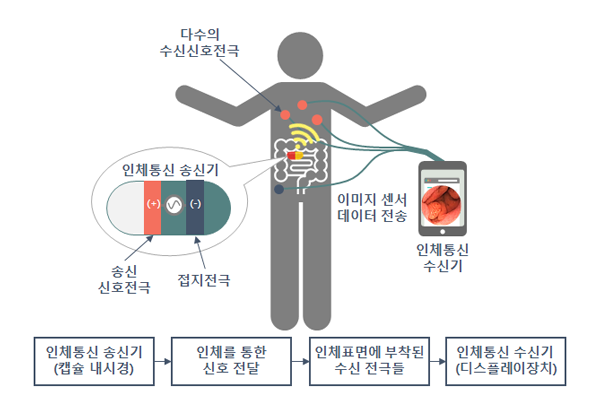
Principles of human communication
In the future, we plan to further develop this technology and focus on developing technology and products that can examine the entire digestive system, including the esophagus, stomach, duodenum, small intestine, and large intestine. The current examination time is approximately 8 to 10 hours. InBody's human body communication can operate for up to 12 hours, providing ample time for testing.
We also plan to develop a capsule endoscope that mainly uses one-way communication to enable two-way communication, so that the shooting and operating speed can be controlled.
InBody's human body communication technology can achieve data transmission speeds of up to 10 Mbps. It was revealed that this will increase the speed to enable shooting up to 50 frames per second in the future, while also improving the resolution of the captured images.
This research has been conducted as part of the Ministry of Science and ICT's 'Giga Korea Project' since 2015, and 5 SCI-level papers and 17 domestic and international patents related to 'InBody human communication technology' have been applied for. The research team successfully developed a prototype of a high-resolution capsule endoscope for the small intestine based on human communication through joint research with IntroMedic. ETRI transferred the InBody human communication source technology to IntroMedic in July of last year.
Through the Giga Korea Phase 2 commercialization project, ETRI developed the commercialization technology for the InBody human communication capsule endoscope system, which enables position and posture control with IntroMedic and is the best in terms of transmission speed and operation time.
“The way has opened for more accurate and comfortable examinations of the esophagus and stomach,” said Park Hyung-il, project manager of ETRI’s SoC design research group. “Compared to global commercial products, this technology has great competitiveness in position control, data transmission, etc.”
IntroMedic Research Institute Director Lee Byeong-seok said, “We plan to begin commercialization of this technology in earnest after completing verification of the system and certification tests for product approval around next year.”
Comments
Related news
"Bring Touch Tags into Your Parents' Homes" ETRI Develops Touch Care Technology Based on Human Body Communication
The Electronics and Telecommunications Research Institute (ETRI) has successfully developed touch care technology that can identify user behavior at the moment the user makes contact with objects in daily life, utilizing in-house proprietary human body communication technology. Human body communication technology is a technology that transmits data using the human body as a medium. The research team developed the technology by creating touch tags that can be attached to objects and composing them with a wristband-type touch watch.
2019.02.16by 이수민 기자
ETRI secures golden time in traffic accidents with automatic rescue request terminals.
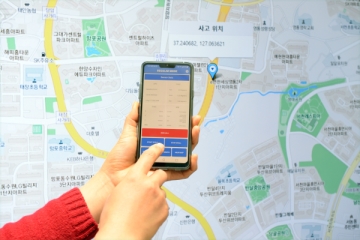
The Electronics and Telecommunications Research Institute (ETRI) has developed seven types of e-Call terminals that support emergency rescue services as a result of a project funded by the Ministry of Science and ICT to establish standards for vehicle ICT-based emergency rescue systems and develop vehicle terminals. e-Call is a service that automatically transmits relevant information such as vehicle location to a control center when an in-vehicle device such as a black box, navigation system, or smartphone detects a traffic accident. Researchers expect that this terminal will help reduce mortality rates by securing the golden hour for critical patients faster than before, which is crucial in time-sensitive medical situations.
2019.02.21by 이수민 기자
Teledyne e2v Launches 5-Megapixel CMOS Image Sensor for Machine Vision, Capable of Streaming 50-FPS Video in 10-Bit
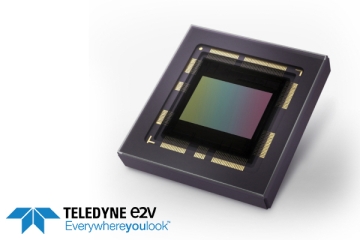
Teledyne e2v has launched a new 5-megapixel Emerald CMOS image sensor. The Emerald 5M was developed for machine vision, automated optical inspection, and factory automation applications that require converting moving objects into high-resolution images. Available in both monochrome and color versions, the sensor adopts a low-noise 2.8μm global shutter pixel design with an optical format of 1/1.8 inch. It features a 2560 x 1936 pixel array and can stream 50 frames of video at 10-bit resolution through a 4-wire MIPI CSI-2 interface.
2019.03.12by 이수민 기자
European Patent Applications Surpass 200,000 for the First Time… South Korea Maintains 5th Place, Led by Batteries and Telecommunications
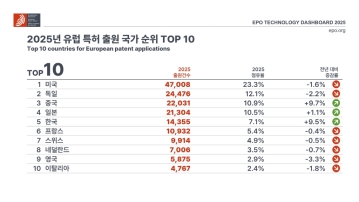
According to the European Patent Office (EPO)'s 'Technology Dashboard 2025', European patent applications last year reached 201,974, surpassing 200,000 for the first time. Korean companies and inventors filed 14,355 applications, representing a 9.5% increase from the previous year and maintaining 5th place by country. Battery, digital communication, and semiconductor technologies led the growth, with Samsung ranking as the top EPO applicant for the second consecutive year and LG reaching 3rd place. The presence of major domestic cities such as Seoul, Suwon, and Yongin was also confirmed. It was also revealed that Korea's European patent strategy is expanding beyond individual technologies to span the entire industry.
2026.03.24by 명세환 기자

SK Telecom First Applies AI-Based Network Operations at Gwanghwamun K-Pop Concert
SK Telecom announced that it applied an AI-based network operation system for the first time at a large-scale K-pop concert held in the Gwanghwamun area of Seoul on March 21st, managing communication quality throughout the event. Mobile data usage during the three hours before and after the concert reached 12.15TB, approximately doubling compared to the same time slot the previous weekend. SK Telecom monitored traffic using the AI system 'A-One' in five-minute and 50-meter units to respond to potential overload situations, while also operating temporary communication facilities and on-site personnel in parallel. This case is interpreted as confirmation of the practical applicability of AI-based autonomous network operation in an environment where demand from dense events and foreign users increases simultaneously.
2026.03.23by 명세환 기자











