



Two Smart Lab Implementation Institutions Selected to Expand Smart Factory Distribution and Train Professionals
 Published2019.03.20 12:13
| 교육대상: 산업단지 인근 대학생 및 재직자
| 4월부터 교과개설 운영 등 사업 본격 추진
중소벤처기업부는 산업현장에 근접한 산학융합지구내 스마트공장 통합 전문인력 양성을 위해 경남창원산학융합원(이하 창원산학융합원), 한국산업기술대(이하 산기대)에 스마트랩을 구축한다고 19일 밝혔다.
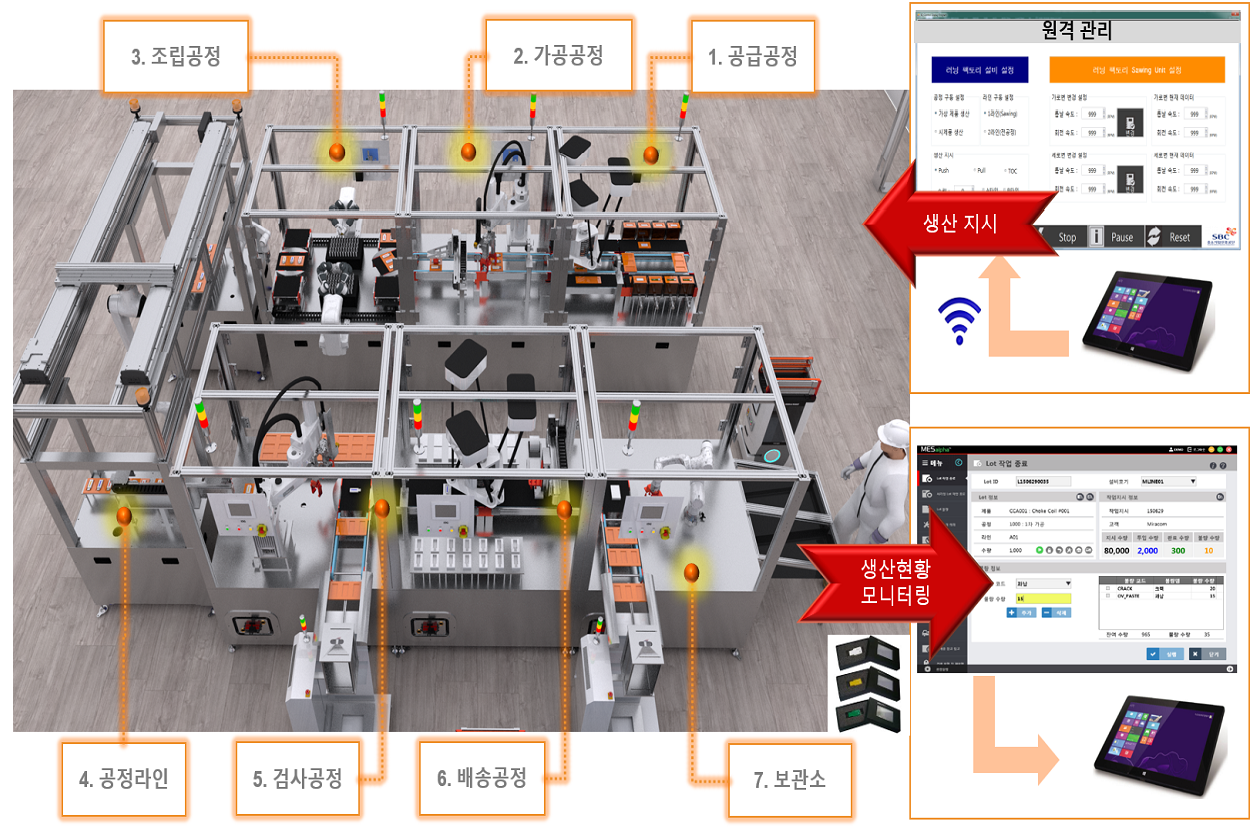
스마트랩 구축 예시
스마트랩은 스마트공장의 운영·설계·코디·컨설팅 등을 종합적으로 수행할 수 있는 전문 인력을 양성하는 현장실습 교육 인프라다. 현장실습 교육에는 주요 공정 스마트관리시스템, 데이터 분석 모니터링 플랫폼, 원격 제어관리 시스템, 협동로봇, 운영 디바이스, 통신 및 클라우드 서버 등이 포함된다.
이 사업은 작년 12월, 관계부처 합동으로 제조업 전반의 혁신을 이끌기 위해 발표한 ‘중소기업 스마트 제조혁신 전략‘의 일환으로 시작됐다.
교육대상은 산업단지 인근 대학 재학(또는 졸업)생, 입주기업 재직자로 스마트공장에 대한 이론 및 실습 교육이 병행될 예정이며, 이를 통해 재학(또는 졸업)생은 스마트공장 구축(또는 희망) 기업에 취업과 재직자는 직무 전환(또는 재배치)이 가능할 것으로 기대된다.
이번 사업은 전담기관인 한국산업단지공단(이하 산단공)을 통해 수행기관 선정계획을 지난 1월 16일부터 2월 16일까지 공고하였다. 이번에 선정된 2개 수행기관은 사업의 필요성, 수행능력, 수행계획, 사업비 구성 등을 종합 고려하여 결정되었다.

창원산학융합원
창원산학융합원은 3개 대학(경상대, 경남대, 마산대)이 컨소시엄을 구성하여 지능형 기계, 방산, 정밀기계, 메카트로닉스 등 창원국가산단의 특성을 살린 교육과정과 실증형 스마트랩 구축 계획을 수립했다. 연내 500명 교육, 그 중 120명의 취업목표와 지자체의 적극적인 재정지원 의지로 가장 우수한 평가를 받았다. 또한, 경남도와 창원시가 이 사업에 지방비 3억 원의 추가 지원을 약속하기도 했다.
산기대
산기대는 제2캠퍼스에 공고대비 2배 규모의 전용공간(1,000㎡)을 확보하여 경기산학융합원과 함께 국내 최대 중소기업 집적지인 반월시화 국가산단에 특화된 실증형 스마트랩 1개소, R&D형 스마트랩 2개소 구축하기로 하였다. 또한, 연내 400명 교육과 수료생의 산업단지 내 중소기업에 135명 취업 목표가 긍정적인 평가를 이끌어 냈다.
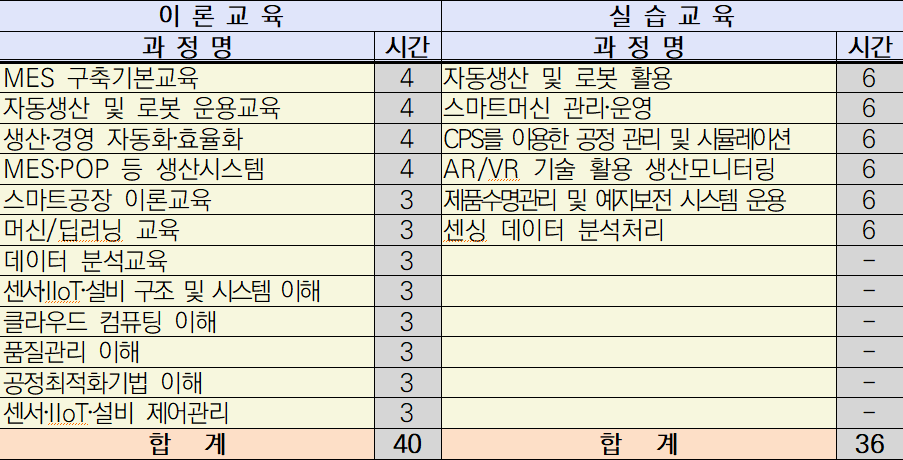
교육 커리큘럼 예시
향후 창원산학융합원과 산기대는 국비 총 50억 원을 지원받아 3월중 전담기관인 산단공과 사업수행을 위한 업무협약을 맺고 4월부터 교과개설 운영, 스마트랩 구축을 본격적으로 착수할 예정이다.
한편, 중기부와 산단공은 내년도 사업 참여를 희망하는 기관들과의 간담회를 통해 향후 개선과제 및 확대방안 등의 의견을 수렴할 계획이다. 또한, 2022년까지 스마트공장 3만개 구축 및 전문 인력 10만 명 양성을 위해 중기재정 확보 등의 노력을 다할 예정이다.
Comments
Related news
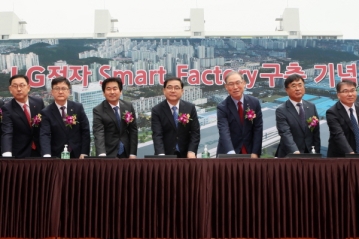
LG Electronics: "First Results from Changwon Smart Factory"
LG Electronics held a "Smart Factory Construction Commemoration Ceremony" on the 26th at its Changwon Plant 1 located in Changwon, Gyeongnam, with the attendance of Song Dae-hyun, President of the H&A Business Division, Heo Sung-moo, Mayor of Changwon City, and Cheon Sung-bong, Director of the Future Industry Bureau of Gyeongnam Province.
2018.10.26by 명세환 기자
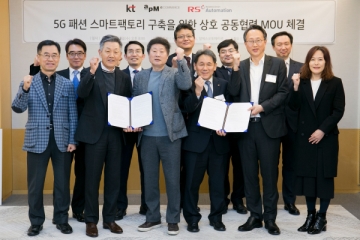
"The fashion industry is getting smarter." KT, apM eCommerce, and RS Automation are building a 5G fashion smart factory.
KT has signed a mutual cooperation MOU with apm e-commerce and RS Automation for the establishment of a 5G fashion smart factory. The business agreement focuses on applying IT technology across the fashion industry, including the construction of 5G-based network environments and IT infrastructure, development of 5G intelligent robots optimized for sewing factories, fashion trend analysis utilizing AI and big data, and smart factory establishment. The three companies will develop 5G fashion smart factory solutions to improve work environments and enhance productivity. Additionally, they plan to increase the efficiency of the clothing production process based on AI and big data, and provide customers with innovative purchasing experiences through rapid trend forecasting.
2019.03.08by 이수민 기자
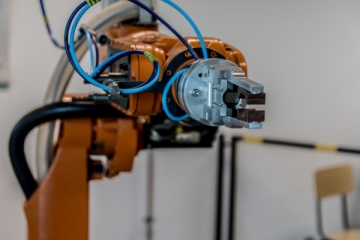
The first company to achieve smart factory certification was born... A commemorative ceremony and a meeting for new entrants were held.
The Ministry of SMEs and Startups announced the selection of Coavis, located in Sejong City, as the first company for smart factory level verification. The smart factory level verification system is implemented to reflect the field's request that when the private sector independently introduces a smart factory without government support, a credible institution verifies the smart factory level and enables reference for future advancement. Coavis, selected as the first company for level verification, participated in the government's smart factory support project in 2016 and established a smart factory at level 1, which partially standardizes and manages data. According to the smart factory level verification of Coavis conducted by the Korean Standards Association, the company was confirmed to have achieved level 3 capability, which enables real-time control by collecting and analyzing manufacturing process-related data and information.
2019.03.19by 이수민 기자
Nvidia invests $5 billion in Intel
NVIDIA and Intel, leaders in global AI computing technology, are now forging ahead in providing cutting-edge solutions through NVLink-based architecture integration. NVIDIA and Intel have officially announced a strategic partnership and stated that they will jointly develop customized data center and personal computing products to accelerate diverse applications and workloads ranging from hyperscale to enterprise and consumer markets, thereby laying the foundation for the next generation computing era.
2025.09.22by 배종인 기자
.jpg)
Applied Materials Launches Environmental Protection Campaign to Mark World Cleanup Day
Applied Materials Korea (CEO Park Kwang-seon) is carrying out environmental cleanup activities with employees and their families around the Dongtan Sinricheon area on the occasion of World Cleanup Day, evolving into a company that engages with the local community beyond technological innovation.
2025.09.22by 명세환 기자











