


NVIDIA Unveils Drive AV Safety Force Field, "Mathematically Validated to Reduce Autonomous Vehicle Accident Rates."
 Published2019.03.20 16:37
| Unpredictable driving decision-making algorithm
| Protecting your vehicle from real-world road traffic conditions…
| SFF computations performed on vehicle sensor data
NVIDIA announced today that it has further enhanced its NVIDIA DRIVE AV autonomous vehicle software suite with a control layer designed to deliver a safe and comfortable driving experience.
A key component of this software is the Safety Force Field (SFF), a robust driving strategy that protects the vehicle, its occupants, and other road users.
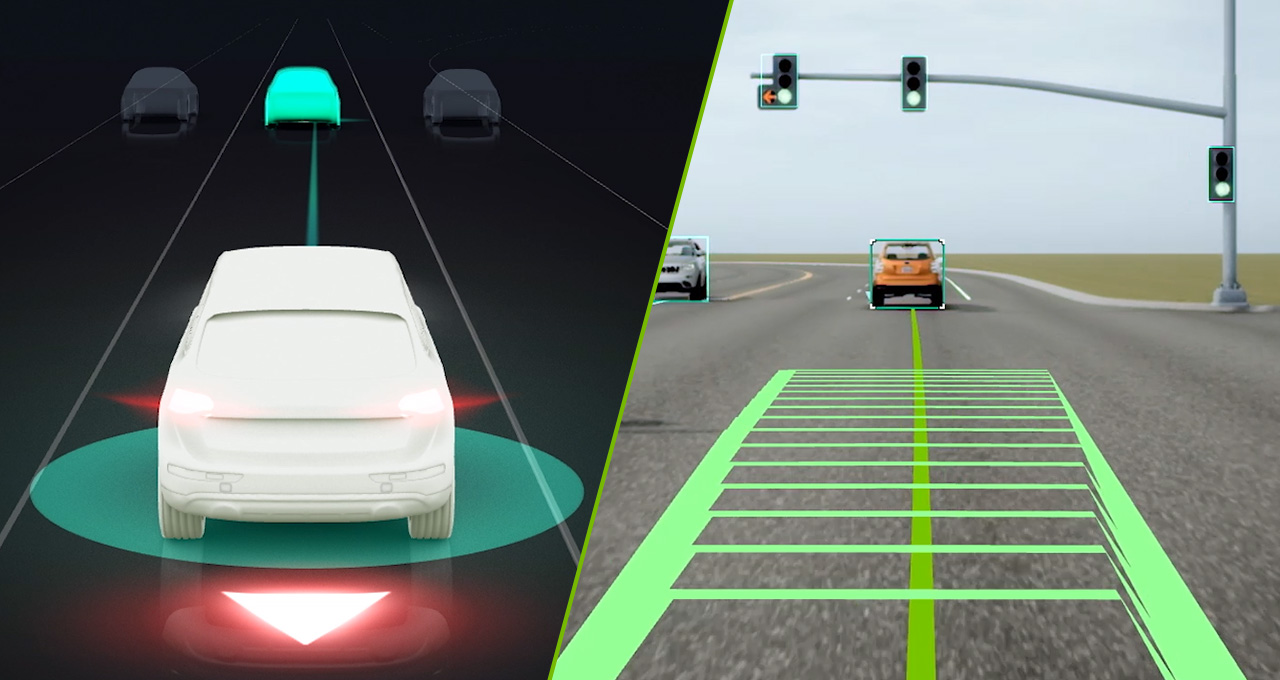
NVIDIA Drive AV Safety Force Field
SFF collects sensor data and analyzes and predicts the movements of the surrounding environment, determining a series of actions to protect vehicles and other road users. The SFF framework ensures that unsafe situations do not occur or lead to unsafe conditions during operation and includes measures necessary to mitigate potential risks.
With powerful computational capabilities, SFF enables vehicles to maintain safety based on mathematical verification of zero collisions, rather than attempting to model the high complexity of real-world scenarios with limited statistics. Running on the NVIDIA DRIVE platform, frame-by-frame, physics-based SFF computations are performed on vehicle sensor data.
SFF has also undergone real-world data and bit-accurate simulation validation, including scenarios related to highway and urban driving that are difficult to replicate in the real world.
Mitigating risk situations and preventing complete collisions
With the U.S. National Highway Traffic Safety Administration (NHTSA) estimating that approximately 94% of crashes are caused by human error, the industry is striving to achieve a "zero accident rate" through the development of autonomous vehicles. Enhanced Drive AV platforms, with safety features such as path planning, prediction, and SFF, aim to achieve this goal.
A unique feature of SFF is its ability to consider both braking and vehicle steering constraints. This dual functionality helps prevent vehicle behavioral anomalies that could occur if operated separately. This policy follows one core principle: conflict prevention, rather than large-scale rules and predictions.
“By removing the human error factor from driving, we can prevent the vast majority of crashes and minimize their impact,” said David Nister, vice president of autonomous driving software at NVIDIA. “Autonomous vehicles using SFF are mathematically designed to act like magnets, protecting themselves from dangerous situations and not causing them.”
Transparent open platform
SFF is an open platform that can be integrated with other driving software. Serving as a safe decision-making policy within the motion planning stack, SFF monitors and prevents unsafe behavior. It also clearly distinguishes obstacle avoidance from complex and extensive road rules.
When running on high-performance computing platforms like NVIDIA Drive, it provides a high level of safety by adding another layer of diversity and redundancy features.
Comments
Related news
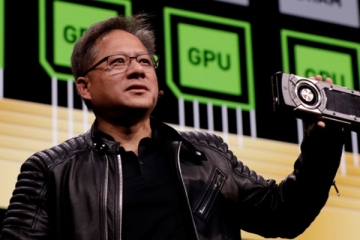
NVIDIA CEO Jensen Huang to Keynote at the 10th GPU Technology Conference
Nvidia CEO Jensen Huang will serve as a keynote speaker at the 10th GTC, which will be held in San Jose, California from March 17 to 21. The event is expected to draw up to approximately 10,000 developers, data scientists, and industry professionals. More than 800 speakers and approximately 200 exhibitors representing various sectors including AI, data centers, cloud computing, healthcare, finance, telecommunications, autonomous vehicles, robotics, and IoT will participate in the conference.
2019.02.08by 이수민 기자
How to Realize Safe Autonomous Driving Functions? A Compromise Between Cost, Technology, and Strategy Is Necessary
According to the World Health Organization, more than 1.25 million people die annually in traffic accidents, and prevention and recovery costs account for approximately 3% of GDP. To enhance driving safety while ultimately providing autonomous driving capabilities, ADAS integrates sensors, processors, and software. As a result, it is delivering meaningful achievements. According to a 2016 IIHS study, automatic braking systems reduced rear-end collisions by approximately 40%, while collision warning systems reduced them by 23%. Nevertheless, the automotive industry faces significantly more complex challenges than before in realizing Level 4 or Level 5 autonomous driving. Sensor fusion is required, which combines measurement data from numerous sensors to derive results, and synchronization, high-power processing, and continuous advancement of the sensors themselves are necessary. Automotive manufacturers must therefore find an appropriate balance among three critical trade-offs: cost, technology, and strategy.
2019.03.13by 명세환 기자
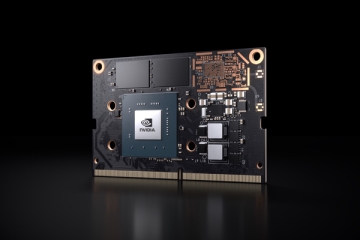
NVIDIA Sets Out to Popularize AI Computers with 'Jetson Nano'
Nvidia has announced Jetson Nano, an AI computer that enables the construction of millions of intelligent systems. The compact AI computer Jetson Nano, based on CUDA-X, processes the latest AI workloads at a computing speed of 472 gigaflops and consumes only 5W of power, demonstrating high power efficiency. Jetson Nano supports high-resolution sensors and can simultaneously process multiple sensors while running multiple state-of-the-art neural networks on each sensor stream. The Jetson Nano Developer Kit, priced at $99, is expected to bring a wave of new innovation for manufacturers, inventors, developers, and students alike by enabling access to cutting-edge AI capabilities on an affordable platform.
2019.03.20by 이수민 기자
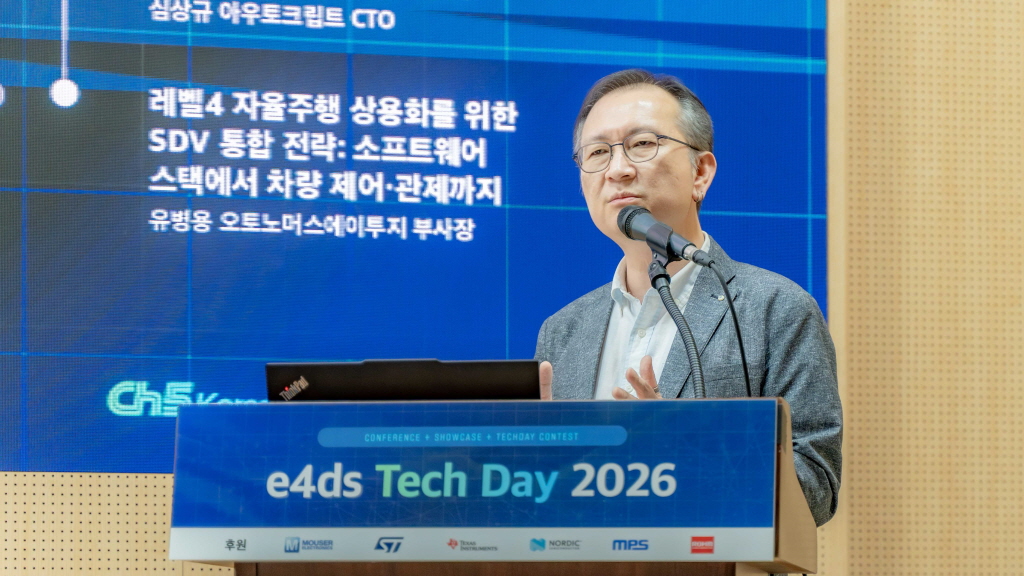
[e4ds Tech Day 2026 ⑨] Sim Sang-gyu, Autocrypt CTO: "In the Physical AI Era, Automotive Security Must Extend Beyond the Vehicle"
At e4ds Tech Day 2026, Sim Sang-gyu, CTO of Autocrypt, explained automotive cybersecurity strategies in the era of Physical AI and SDV (Software-Defined Vehicle). Automobiles are evolving as part of an ecosystem connected to AI, cloud, chargers, IoT, and robots, and he emphasized that the scope of security must expand beyond the vehicle interior to the entire connected environment. In particular, AI model tampering, adversarial attacks, OTA updates, and EV charger hacking were identified as major threats. He explained that response measures require zero trust, AI model integrity protection, intrusion detection, Security by Design and Default, and full lifecycle security management, and that proactive security system establishment beyond regulatory compliance is critical for securing future mobility competitiveness.
2026.10.12by 배종인 기자

Practical HIL Construction Strategy for Automotive and Off-Highway Controller Validation
As vehicle E/E architecture transitions to zonal structures and shifts to software-defined vehicles (SDV), the number of controllers (ECUs) requiring validation and software complexity are surging dramatically. Meanwhile, real vehicle testing cannot provide repeated verification under identical conditions and entails lead time and safety concerns. This white paper explains the principles of HIL (Hardware-in-the-Loop) validation and the structure of the NI platform composed of PXI, SLSC, and VeriStand, and through two actual implementation cases—Camera Record & Replay HIL for In-Cabin Monitoring Controller (ICMU) and Forklift Controller (VCU) HILS—describes how controller-level regression testing becomes possible. Additionally, it explicitly states application boundaries and limitations, such as lack of A2B support.
2026.10.12by 편집부











