



ETRI Successfully Develops Nanocrystal Metamaterial Perfect Absorber: "Reflective Displays Now Sharper"
 Published2019.04.24 11:49
| Applications include reflective displays and solar cells
| Flexible substrates can also be easily manufactured using a solution process.
The Electronics and Telecommunications Research Institute (ETRI) has succeeded in developing a nanocrystal-based wideband metamaterial perfect absorber technology.
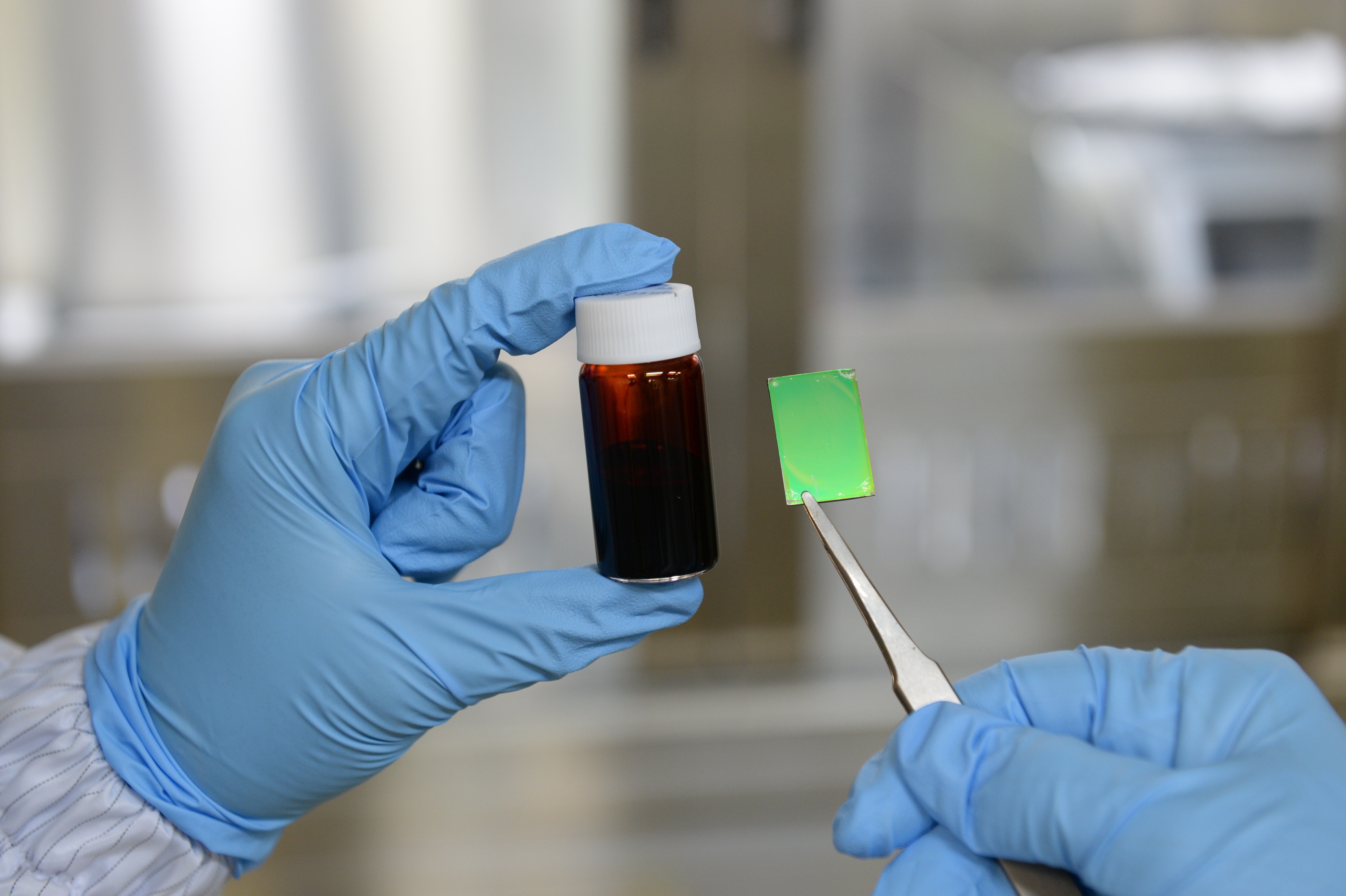
Nanocrystal solution and silver nanocrystal-based metamaterial perfect absorber
Metamaterials are artificial materials that alter the structure or arrangement of naturally occurring materials. Unlike conventional materials, they can exhibit properties not found in nature and can be manufactured into extremely thin, small, and lightweight forms, making them versatile for a wide range of applications. Perfect absorbers are materials that can completely absorb light or electromagnetic waves across a desired wavelength range, and can be applied to displays, solar cells, infrared sensors, and stealth.
Last August, ETRI researchers produced a metamaterial perfect absorber. However, this metamaterial perfect absorber only absorbed a narrow band of visible light wavelengths, making it difficult to achieve a clear reflection color.
However, this time, the ETRI research team succeeded in not only increasing the absorption bandwidth compared to before to improve color reproducibility, but also making it easy to produce desired colors.
This technology could be used to improve 'reflective display' technology. Reflective displays are often used in LCD displays, outdoor screens, and e-books, which don't perform well in direct sunlight. The metamaterial perfect absorber developed by ETRI researchers is expected to significantly contribute to the high image quality and low power consumption of reflective displays.
(1).jpg)
Silver nanocrystal-based metamaterial perfect absorber
In addition, since it is possible to implement high-resolution pixels, it is expected to be widely used in areas such as preventing counterfeiting of banknotes, brand protection, holograms, and multi-color solar cells.
The ETRI research team solved the problem by changing the elements of the layers that make up the metamaterial perfect absorber. Absorbers are usually made of three layers using metals and insulators, with the top layer usually made of metals such as gold (Au) or silver (Ag). However, the research team formed the layer using nanocrystal metamaterials instead of the existing metals. As a result, they were able to increase the optical loss rate and widen the absorption bandwidth. While the absorption bandwidth of existing metal-based absorbers was 28 nanometers (nm), the nanocrystal absorber increased it by more than 10 times, up to 300 nm, resulting in clearer reflection colors.
We also succeeded in realizing a wider range of colors. When light enters a metamaterial perfect absorber, the wavelength range that can be absorbed can be controlled depending on the metamaterial structure, including its thickness. In other words, by varying the thickness of the metamaterial perfect absorber, desired colors can be realized. By expanding the bandwidth and expressing colors through changes in thickness, a color reproducibility of 33.8% was achieved.
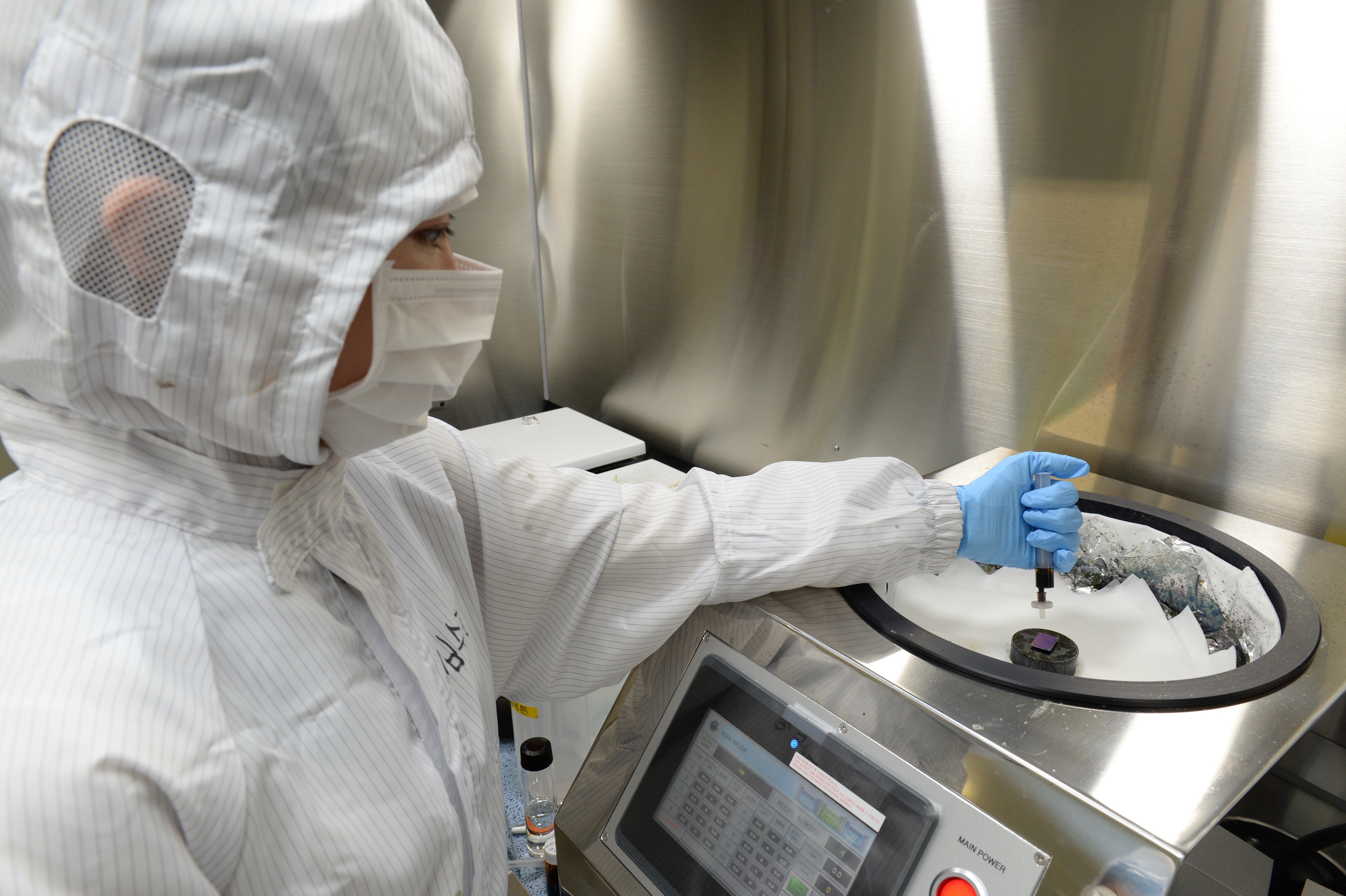
The ETRI researchers also adopted a solution process rather than a deposition process. This solution process not only allows for easy fabrication of large areas at low costs, but also enables the production of flexible or polymer substrates. Using this method, the ETRI researchers fabricated a flexible metamaterial based on silver nanocrystals measuring 2.5 cm x 2.5 cm and 100–200 nm in thickness. Metamaterials produced in this way can be applied to a single pixel that implements color in flexible displays, etc.
The results of this study were also recognized in the academic world and were published online in February in 'ACS Applied Materials & Interfaces,' an international academic journal in the field of nanotechnology published by the American Chemical Society.
Dr. Hong Seong-hun of the ETRI ICT Materials Research Group said, “In the future, we plan to continue research on active metamaterials that can change their properties at will whenever desired, beyond the current level of passive methods that only have one fixed characteristic, and on expanding the absorption band to increase color reproducibility.”
The research team plans to continue research related to this technology and promote technology transfer to display manufacturers and solar cell companies in the future.
This research was conducted as part of the Ministry of Science and ICT's 'Development of 3D low-loss metamaterials based on nanocrystals for visible light wavelengths' project and 'Development of 3D photoelectronics core technology' project.
Comments
Related news
KETI Successfully Develops Solid-State Bonding Technology for SiC Power Semiconductor Packaging
The Electronics and Telecommunications Research Institute has developed a solid-state bonding technology using silver for the assembly of silicon carbide power semiconductors. Solid-state bonding refers to the process of joining different types of materials in their unfused solid state without melting. Silicon carbide semiconductors, along with gallium nitride and others, are wide bandgap semiconductors that exhibit stable high-temperature operation, high thermal conductivity, low resistance, and high voltage withstand capability compared to conventional silicon semiconductors.
2018.12.11by 이수민 기자
"Gastrointestinal endoscopy now done with capsules" ETRI develops capsule endoscopy based on human communication
The Electronics and Telecommunications Research Institute (ETRI) has successfully developed a capsule endoscope with a domestic company that can effectively diagnose the esophagus and stomach, which account for approximately 54% of human gastrointestinal disorders, by utilizing human body communication technology. The Institute announced that by applying in-body human body communication technology that transmits data using the human body as a medium, it has enabled high-speed transmission of 24 frames per second, which is 4 times faster than the existing image transmission speed that the domestic company previously possessed.
2019.03.18by 이수민 기자
ETRI Improves QLED Efficiency with Quantum Dot Surface Substitution Technology
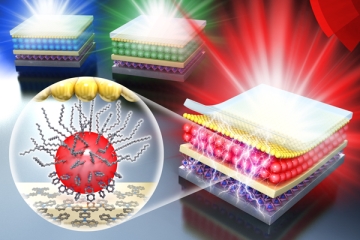
While OLED utilizes organic materials, QLED leverages semiconductors, specifically quantum dots, instead of organic materials. Through the development of QLED hole injection improvement technology, ETRI has developed core technology that can enhance the brightness, current, and power efficiency of QLEDs by modifying the molecular sieves that constitute the quantum dot surface. In the device that comprises a QLED display, electrons and holes injected from both electrodes meet at the quantum dots to emit light. However, while electrons move freely up and down, holes face difficulty in movement due to slower energy transfer between the electrode and quantum dots. This electron-hole imbalance problem degrades the performance of quantum dot light-emitting diodes and shortens the device lifespan, necessitating research to address this issue.
2019.04.17by 이수민 기자

Intel Unveils Next-Generation 'Core Ultra Series 3' and vPro Platform for Enterprise PCs
Intel has officially unveiled the "Intel Core Ultra Series 3" for next-generation enterprise PCs and the latest vPro platform, addressing a wide range of demands from enterprise notebooks to high-performance workstations.
2026.03.26by 배종인 기자
ROHM Launches ESD Protection Diode Compatible with High-Speed Interfaces of 10Gbps or Higher
Semiconductor specialist ROHM has developed the 'RESDxVx series' of ESD (electrostatic discharge) protection diodes capable of responding to next-generation high-speed data communication environments exceeding 10Gbps, simultaneously enhancing both signal quality maintenance required in high-speed interfaces and IC protection performance.
2026.03.26by 배종인 기자











