



LG Uplus Launches Open Innovation Project at LTE-R Comprehensive Verification Center
 Published2019.05.10 11:59
Backpack-type base station, capable of measuring radio environment suitable for the field
| Multi-simultaneous video transmission technology, equipped with the latest training facilities
LG Uplus announced on the 8th that it will launch an open innovation project to lead the evolution of LTE-R technology together with small and medium-sized enterprises at its 'LTE-R Comprehensive Verification Center.'
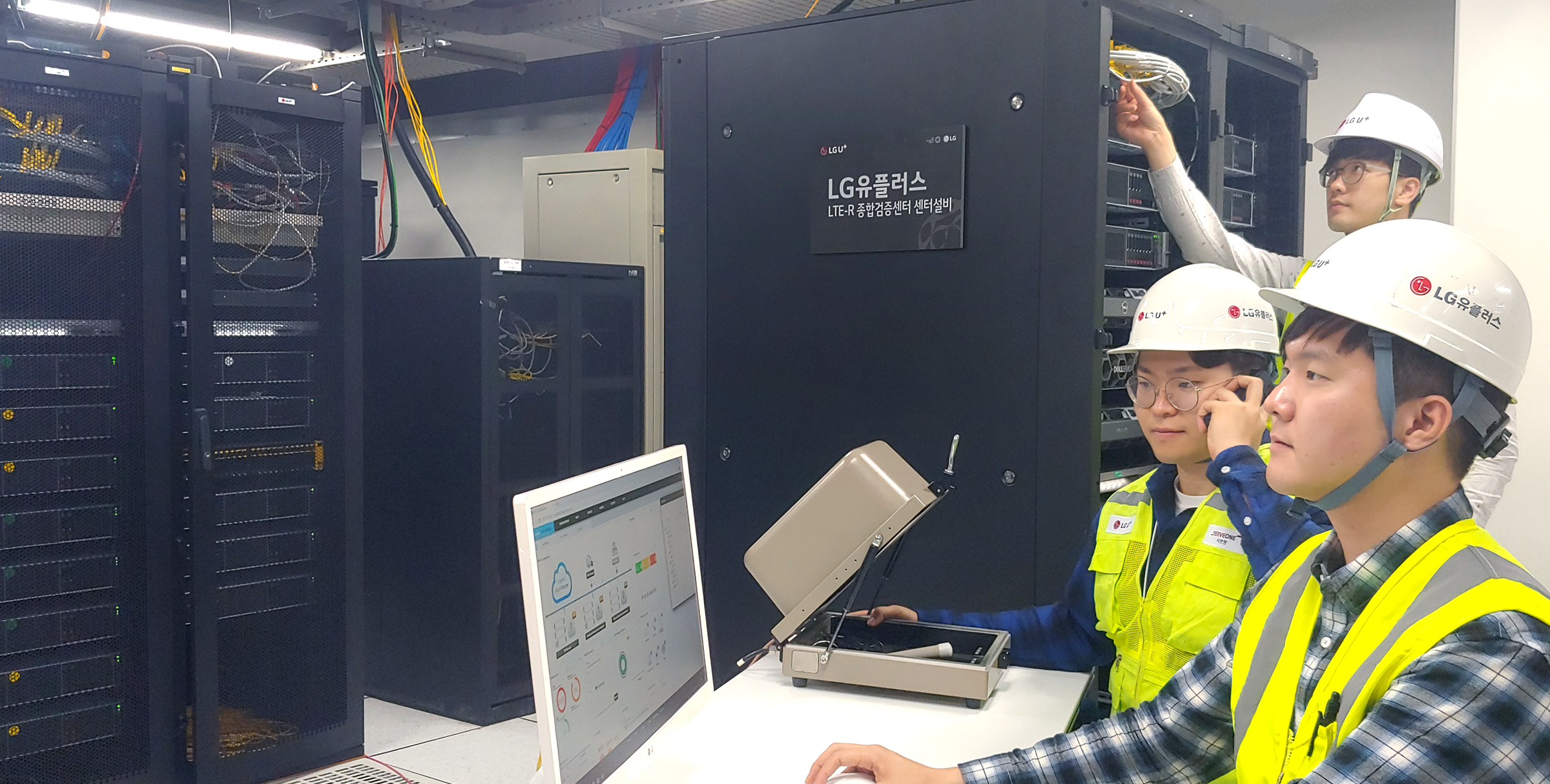
LTE-R (LTE-R) is a technology that utilizes LTE, a 4G mobile communications technology, for railways. It aims to improve aging train radio equipment (VHF) and efficiently transmit necessary voice, video, and data between running trains, between trains and control centers, and between maintenance personnel.
Through this project, LG U+ will explore ways to integrate new technologies and solutions with small and medium-sized enterprises (SMEs) to support LTE-R deployment on existing and new railway lines. The goal is to strengthen collaboration with SMEs and startups seeking to enter the LTE-R field and enhance the competitiveness of the LTE-R Comprehensive Verification Center.
The LTE-R Comprehensive Verification Center is an LTE-R test center built earlier this year through a long-distance transmission network between the LG Science Park in Magok, Seoul (center facilities) and the Daejeon R&D Center (field facilities). It is the only platform in Korea with a structure 100% identical to the actual railway operating environment, providing an optimal environment for various partners to extract various test and verification data.
The Integrated Verification Center also boasts a backpack-type mobile base station equipped with center equipment, enabling it to measure radio environment and conduct call testing tailored to each regional railway operation site. Furthermore, facilities for testing eMBMS (eMBMS) technology have been established, enabling stable group call service testing and verification in response to peak call volumes.
LG U+ also offers comprehensive training programs for LTE-R. The state-of-the-art training facility at its Daejeon R&D Center allows for a combination of theory and practice. In addition to basic 700MHz wireless network technology for communication between the LTE-R Center and field sites, the company has developed and operates specialized LTE training programs covering transmission, networking, and power generation. Through these programs, LG U+ plans to support the development of specialized personnel and technological advancements for its partners and customers.
Oh Young-hyun, head of LG Uplus' wireless business division, said, "As the LTE-R construction project has recently been in full swing, we have established an open testing environment based on collaboration with small and medium-sized enterprises." He emphasized, "Through this project, we will lay the foundation for improving the stability and quality of products to be supplied to the railway integrated wireless network site, and furthermore, we will strive to lead the market so that the entire domestic LTE-R technology can be upgraded to the next level."
Meanwhile, LG U+ has been upgrading the aging train wireless system of subway lines 2 and 5 with LTE-R in cooperation with Seoul Metro since June 2018. Last month, we won the contract for the Sillim Line light rail LTE-R project, and are currently building an integrated railway wireless network in the Wonju-Jecheon section of the Jungang Line, including the Osong Test Line of the Korea Railroad Facilities Corporation.
Comments
Related news

Ride the Seoul Subway Safer with U+ LTE-R
LG Uplus announced on the 23rd that it has secured a 30.4 billion won contract for the integrated railway wireless communication network project for Seoul Metro Lines 2 and 5. Uplus plans to upgrade the aging train wireless system to the LTE-R method to respond to increasing wireless communication demands from Seoul Metro and contribute to safe train operations.
2018.08.24by 이수민 기자
U+, Mobile IoT Communication 'LTE-M1' Nationwide Network Service Begins
LG U+ announced that it will launch nationwide service for IoT communication LTE-M1. LTE-M1 is an IoT technology suitable for services that frequently transmit moderate-capacity data such as HD-grade images and video. With high power efficiency, the service can be provided without battery concerns for several years even when transmitting large amounts of data. In particular, it is expected to serve as a foundation for IoT expansion in mobile terminal and control service areas, such as black boxes and electric bicycles.
2019.04.22by 이수민 기자
LG U+, Incorporating 5G Technology into Educational Services
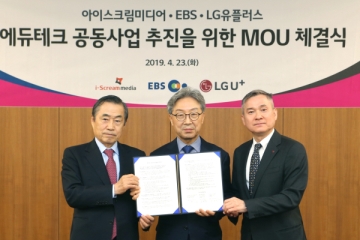
Edutech is a term combining education and technology, referring to next-generation education utilizing ICT such as 5G, big data, and AI. LG U+ is partnering with Icecream Media and EBS to launch edutech business operations. The three companies have signed an MOU and agreed to establish and operate working-level committees and formulate detailed cooperation measures. Specifically, they plan to pursue organic cooperation regarding joint business initiatives related to edutech and mutual cooperation for the advancement of future education.
2019.04.24by 이수민 기자
European Patent Applications Surpass 200,000 for the First Time… South Korea Maintains 5th Place, Led by Batteries and Telecommunications
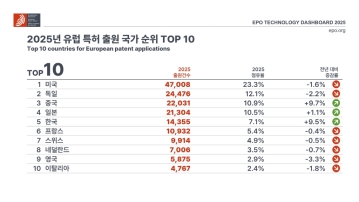
According to the European Patent Office (EPO)'s 'Technology Dashboard 2025', European patent applications last year reached 201,974, surpassing 200,000 for the first time. Korean companies and inventors filed 14,355 applications, representing a 9.5% increase from the previous year and maintaining 5th place by country. Battery, digital communication, and semiconductor technologies led the growth, with Samsung ranking as the top EPO applicant for the second consecutive year and LG reaching 3rd place. The presence of major domestic cities such as Seoul, Suwon, and Yongin was also confirmed. It was also revealed that Korea's European patent strategy is expanding beyond individual technologies to span the entire industry.
2026.03.24by 명세환 기자
SK Telecom First Applies AI-Based Network Operations at Gwanghwamun K-Pop Concert
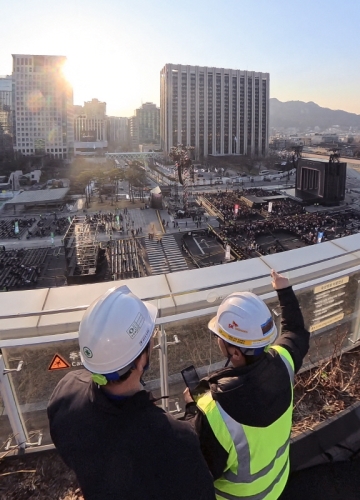
SK Telecom announced that it applied an AI-based network operation system for the first time at a large-scale K-pop concert held in the Gwanghwamun area of Seoul on March 21st, managing communication quality throughout the event. Mobile data usage during the three hours before and after the concert reached 12.15TB, approximately doubling compared to the same time slot the previous weekend. SK Telecom monitored traffic using the AI system 'A-One' in five-minute and 50-meter units to respond to potential overload situations, while also operating temporary communication facilities and on-site personnel in parallel. This case is interpreted as confirmation of the practical applicability of AI-based autonomous network operation in an environment where demand from dense events and foreign users increases simultaneously.
2026.03.23by 명세환 기자











