


Training smart factory personnel is the driving force behind the spread of smart factories.
 Published2019.06.07 07:01
The Ministry of SMEs and Startups and the Ministry of Employment and Labor held a 'Forum for the Promotion and Expansion of Smart Factories for SMEs and Human Resource Development' at the Seoul Jeongsu Campus of Korea Polytechnic University on the 4th.
The government is promoting the training of 100,000 smart manufacturing personnel by 2022 through the 'Small and Medium Enterprise Smart Manufacturing Innovation Strategy' announced in December of last year.
On the 3rd, the Minister of SMEs and Startups and the Minister of Employment and Labor signed a 'People-Centered Smart Factory Business Agreement' with representatives of labor, management, and government, and agreed to actively cooperate in fostering specialized manpower and supporting employment necessary for smart factory operation.
This forum was organized as part of a cooperative project between the Ministry of SMEs and Startups and the Ministry of Employment and Labor to foster smart manufacturing personnel, and to seek ways for government ministries to collaborate and promote smart factories and foster personnel that reflect the voices of the industrial sector.
The event was attended by approximately 300 people from the industry, including the Chairman of the Board of Trustees of Korea Polytechnic University, the Director of Technology Innovation Policy at the Ministry of SMEs and Startups, the Director of the Job Ability Policy Bureau at the Ministry of Employment and Labor, executives from the Korea Institute for SMEs and Startups, and the Korea Small and Medium Business Administration, as well as representatives of small and medium-sized enterprises.
The forum was held in the following order: ▲keynote speech on global smart factory trends, ▲introduction of the current status of smart factory distribution and human resource development, ▲presentation of training cases for employees, and ▲talk concert to listen to difficulties and resolve questions from the field.
Professor Seok Min-gu, Columbia University
Professor Seok Min-gu of Columbia University in the United States, who gave the keynote speech in the first part of the forum, said, “There is a clear difference between factory automation, which simply replaces human labor with machines, and smart factories,” and emphasized, “The introduction of machine learning techniques, which allow AI technology to learn data collected throughout the manufacturing process and reflect the results in process control and operation, and the training of process control personnel with data analysis capabilities are the key to implementing smart factories.”
In parts 2 and 3, experts from the forum hosting organization explained the current status of smart factory distribution and expansion policies necessary for small and medium-sized enterprises, smart factory expert training programs, and examples of training for in-service workers using smart learning factories.
Lastly, the talk concert collected a wide range of diverse opinions through real-time on-site Q&A with attendees.
The participants of the forum that day agreed that the introduction of smart factories is a key area for enhancing industrial competitiveness and invigorating the manufacturing industry, and that in order to expand and successfully establish smart factories, the strengthening of the industry’s self-reliance should be a priority, and that the government’s interest and support should also be supported.
The Ministry of SMEs and Startups and the Ministry of Employment and Labor have decided to jointly develop a training course tailored to the needs of smart factory construction companies in order to provide systematic support for smart factory construction/operation and human resource development, and to seek ways to develop human resources suitable for smart factories by linking the infrastructures of both ministries.
The policy is to strengthen cooperation with relevant organizations so that trained personnel can be employed in smart factory-related companies.
In addition, the Small and Medium Business Technology Information Promotion Agency is an affiliated organization, ‘ We plan to establish a ‘Smart Manufacturing Innovation Promotion Team’ in May to comprehensively support small and medium-sized enterprises to establish smart factories, from new construction to advanced development.
The Korea SMEs and Startups Agency plans to reorganize the technical education courses of in-service training centers to focus on smart manufacturing and provide job transfer education to 60,000 people by 2022 to make existing field workers smarter by establishing regional “Smart Factory Learning Centers,” which are training centers dedicated to practical training.
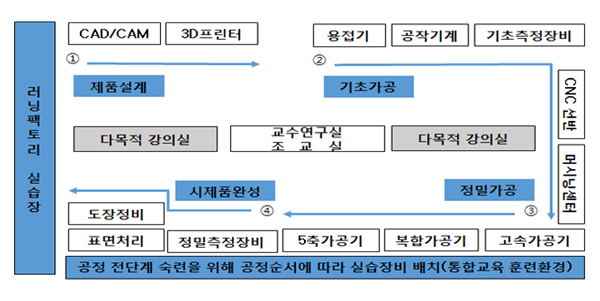
Polytechnic University Running Factory Concept
Korea Polytechnic University has designated smart factory specialized campuses in Incheon and Changwon to foster specialized manpower needed by smart factory demand and supply companies, and plans to foster 4,400 basic and intermediate level specialized manpower by 2022 through the establishment of a ‘Learning Factory (a practical support center capable of integrated training at all stages of the process)’ and department reorganization.
Kim Young-tae, director general of the Ministry of SMEs and Startups’ Technology Innovation Policy Bureau, said on the day, “It was found that small and medium-sized enterprises that introduced smart factories had a significant effect in strengthening their competitiveness through process improvement and creating jobs (an average of 3 people).” He added, “As the Ministry of SMEs and Startups is the department in charge of smart factories for small and medium-sized enterprises, we will promote not only the popularization and expansion of smart factories through cooperation between all ministries, but also the training of specialized personnel to support them.”
Jang Shin-cheol, director of the Ministry of Employment and Labor's job competency policy bureau, said, "In the future, it will be necessary to innovate the manufacturing industry.“We plan to provide a tight-knit job skill development service to foster smart factory experts and improve the capabilities of smart factory workers,” he said, adding, “I am hopeful that today’s forum, which was prepared in collaboration with government ministries and related organizations, will serve as a catalyst for strengthening the competitiveness of our country’s manufacturing industry and creating quality jobs.”
Lee Seok-haeng, chairman of Korea Polytechnic University, said, “Securing specialized manpower will be crucial for smart factories to take root in the field,” and added, “We will breathe life into the manufacturing industry by connecting excellent technical talents with industrial sites.”
Comments
Related news
.png)
The Ministry of SMEs and Startups will accelerate the smart factory boom in May and June.
The Ministry of SMEs and Startups plans to create a regional manufacturing innovation boom through extensive promotional efforts regarding smart factories. In order to enhance interest and understanding of smart factories among small and medium-sized manufacturing enterprises across all regions and to enable customized implementation, 12 regional SME and startup agencies and 19 manufacturing innovation centers will jointly hold approximately 230 regional joint seminars, briefing sessions, and demand-supply company matching days. Approximately 4,700 companies interested in smart factory implementation will participate in various events held in each region. In particular, small and medium-sized enterprises participating in seminars in the five major regional zones will receive detailed guidance on government support measures and implementation effects through excellent cases when introducing smart factories, and can receive customized one-on-one consulting with experts such as Smart Meisters.
2019.05.22by 이수민 기자
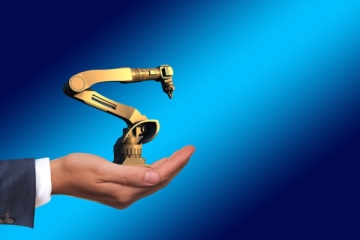
Smart Factory Introduction SMEs' Productivity Improves by an Average of 30%
The Ministry of SMEs and Startups announced the results of its performance analysis on the smart factory distribution project. According to the announcement, small and medium-sized enterprises that adopted smart factories achieved increased competitiveness with an average 30% increase in productivity, 43.5% improvement in quality, 15.9% reduction in costs, and 15.5% increase in on-time delivery rate. Additionally, as sales increased, employment also grew by an average of 3 positions per company, and industrial accidents decreased by 18.3%, demonstrating the creation of quality jobs.
2019.05.25by 이수민 기자
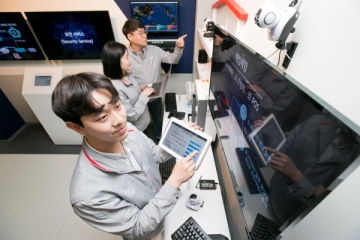
KT Strengthens IoT Terminal Security in the 5G Era with 'Fusion Security Verification Center'
In the hyper-connected 5G era, numerous IoT terminals including various sensors are connected to networks and operate for the implementation of smart homes, smart cities, and smart factories. In such network environments, IoT terminals are exposed to numerous security threats such as hacking and DDoS attacks, making terminal security itself increasingly important. To provide IoT terminals with pre-validated security in response to these security threats, KT opened a Convergence Security Demonstration Center at KT Gwacheon Tower. At the Convergence Security Demonstration Center, rigorous security validation can be performed at the design and pre-launch stages of wired and wireless IoT terminals, including products from small and medium-sized enterprises.
2019.05.25by 이수민 기자
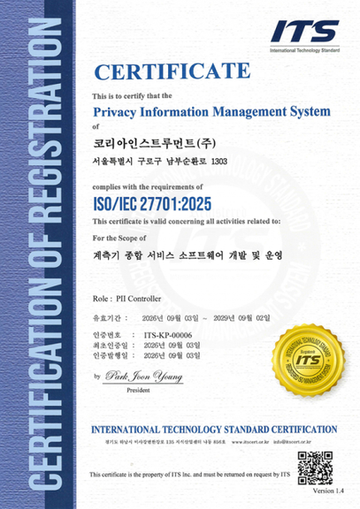
Korea Instrument, KOLAS Accredited Calibration Agency First to Simultaneously Acquire ISO/IEC 27,001·27,701
Korea Instrument has become the first among KOLAS accredited calibration agencies to simultaneously acquire ISO/IEC 27,001 and ISO/IEC 27,701 certifications. Through its proprietary platforms CWIZ Enterprise and CWIZ Partners, the company has embedded information security and personal data protection requirements across all business processes including customer information, equipment data, and calibration reports, with plans to continuously advance its management system through regular audits and security inspections.
2026.10.12by 배종인 기자
TeamViewer One, IT Incident Automation Workflow and Resolution Center Enhanced
TeamViewer has added IT incident automation capabilities and an advanced Resolution Center to its integrated digital workplace management platform 'TeamViewer ONE'. Recurrent service disruptions, configuration errors, and capacity shortages are automatically handled according to preset policies, and device status verification through script deployment can be managed in a unified interface, significantly reducing repetitive tasks for IT teams.
2026.10.12by 배종인 기자











