



Solving the textile and fashion industry's labor shortage with manufacturing robots.
 Published2019.07.06 07:02
On the 4th, the Ministry of Trade, Industry and Energy held a 'Manufacturing Robot National Tour Briefing Session' in Dongdaemun, Seoul, to promote and expand manufacturing robots and innovate the textile industry.
This was the second briefing session held in Siheung, Gyeonggi Province, following the first one held in May for the automotive and electronic parts industries. This session was held for the textile and fashion industries, including sewing companies, near Dongdaemun.
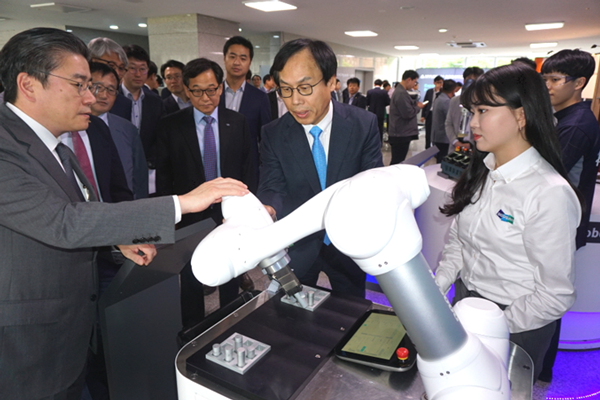
The briefing session was attended by approximately 150 people including representatives from the Ministry of Trade, Industry and Energy, robot and textile machinery manufacturers, demand companies, associations and organizations.
The textile and fashion industry was a key driver of Korea's economic growth in the past.
However, amidst rapidly changing fashion trends and the rapid pursuit of emerging countries, the Korean textile and fashion industry is facing a difficult situation due to the weakening of the domestic production base caused by rising production costs and aging facilities.
In particular, garment manufacturing companies near Dongdaemun, such as Changsin-dong and Suyu-dong, are experiencing a serious labor shortage due to the aging of skilled workers and poor working conditions.
Accordingly, the government announced on June 19th a plan to revitalize the textile and fashion industry as a follow-up measure to the manufacturing renaissance.The plan is to overcome the crisis by making the fashion industry smarter.
To this end, we are pursuing process automation using sewing robots in line with the Speed Factor strategy to improve the manufacturing environment and enhance productivity.
Speedfactory is a combination of the words smart factory and store. It refers to a business-to-consumer (B2C) model of the textile and fashion industry that aims to produce customized products by receiving consumer orders at stores based on the automation of the existing smart factory production process.
This briefing session was held to promote the introduction of manufacturing robots, thereby achieving two goals: expanding the market for robotics companies and enhancing the competitiveness of the textile and fashion industry.
At the briefing session, examples of robot applications in the textile and fashion industry and collaborative robots were exhibited and introduced to increase the understanding of robots in textile and fashion manufacturing companies, and the current status of robot development in the textile and fashion industry was shared.
Eleven types of robots from seven companies were exhibited, including collaborative robots from Doosan Robotics, Hanwha Precision Machinery, and Neuromeca; general manufacturing robots from Hyundai Robotics, Hizen Motor, and Robot & Beyond; and sewing-related machines from Suntech.
Additionally, consultations were held on the difficulties faced by companies hoping to introduce robots and their purchasing decisions. Government support and financial programs in accordance with the "Robot Industry Development Plan" announced in March were also introduced.
Choi Nam-ho, director of the Manufacturing Industry Policy Bureau at the Ministry of Trade, Industry and Energy, said, “We will create an environment where textile and fashion manufacturing companies can introduce robots more easily than now,” and added, “We plan to continue to hold manufacturing robot briefings focused on fields with relatively low robot utilization, such as food and beverage, roots, and machine parts industries.”
Comments
Related news
Government Announces Manufacturing Renaissance Strategy: "Full-scale Promotion of AI-based Industrial Intelligence"
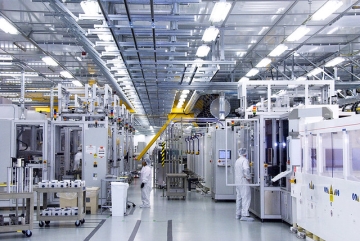
The government has announced a manufacturing renaissance vision and strategy to achieve a leap to the world's 4th largest manufacturing power through the revitalization of manufacturing. Through the manufacturing renaissance initiative, the government plans to innovate the industrial structure by raising the manufacturing value-added rate from the current 25% to 30%, the level of advanced countries. Additionally, it will increase the proportion of new industries and new products in manufacturing production from 16% to 30%, expand world-class companies by more than twofold, and make a leap to the world's 4th largest manufacturing power by export scale. To achieve the manufacturing renaissance vision, the government will prioritize four key implementation strategies.
2019.06.21by 이수민 기자
The textile and fashion industry is becoming smarter through ICT convergence.
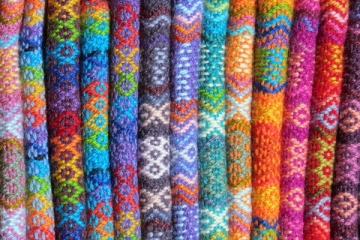
The government announced measures to revitalize the textile and fashion industry. These measures are follow-up initiatives prepared as part of the transformation through innovation of key industries presented in the Manufacturing Renaissance Vision and Strategy. The measures include innovation strategies to make the textile and fashion industry smarter through convergence with ICT and 5G, and to transform it into new material industries for advanced automotive and aerospace applications. The government plans to support core technology development and pilot projects to expand speed factories across all textile and fashion processes, and to create public demand for advanced textile new materials in sectors such as defense, safety, and transportation.
2019.06.27by 이수민 기자
KDB Joins 5G Smart Factory Alliance
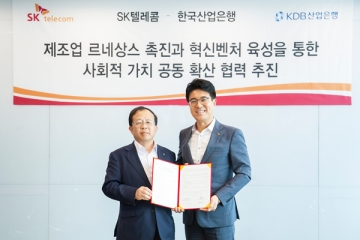
SK Telecom and KDB Development Bank have signed a memorandum of understanding to jointly promote a manufacturing renaissance and foster innovative ventures while expanding social value creation. Through this agreement, KDB Development Bank will directly participate in evaluating the selection of Stargate items—SK Telecom's in-house promising technology commercialization program—and will jointly review investment feasibility and financial support. The two companies plan to progressively discuss ways for SK Telecom to participate as a business partner in KDB Development Bank's invested companies and provide technical support. KDB Development Bank has decided to join the 5G Smart Factory Alliance led by SK Telecom and the Smart Manufacturing Innovation Center, expanding investments targeting promising small and medium-sized enterprises.
2019.07.01by 이수민 기자
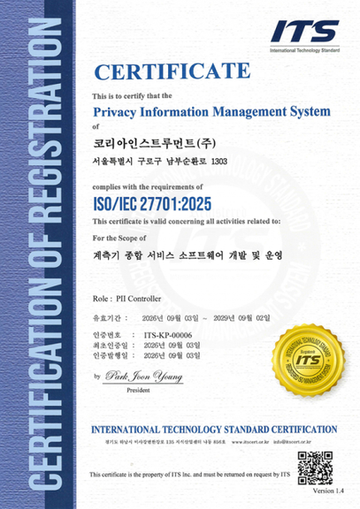
Korea Instrument, KOLAS Accredited Calibration Agency First to Simultaneously Acquire ISO/IEC 27,001·27,701
Korea Instrument has become the first among KOLAS accredited calibration agencies to simultaneously acquire ISO/IEC 27,001 and ISO/IEC 27,701 certifications. Through its proprietary platforms CWIZ Enterprise and CWIZ Partners, the company has embedded information security and personal data protection requirements across all business processes including customer information, equipment data, and calibration reports, with plans to continuously advance its management system through regular audits and security inspections.
2026.10.12by 배종인 기자
TeamViewer One, IT Incident Automation Workflow and Resolution Center Enhanced
TeamViewer has added IT incident automation capabilities and an advanced Resolution Center to its integrated digital workplace management platform 'TeamViewer ONE'. Recurrent service disruptions, configuration errors, and capacity shortages are automatically handled according to preset policies, and device status verification through script deployment can be managed in a unified interface, significantly reducing repetitive tasks for IT teams.
2026.10.12by 배종인 기자











