



Mouser now stocks ADI's LTM7400 regulator, easing data center cooling requirements.
 Published2019.08.10 07:01
| Easing data center infrastructure cooling requirements
| ADC-DAC-EEPROM integration and remote monitoring
Mouser Electronics announced today that it is now stocking Analog Devices' (ADI) LTM4700 µModule regulator.
.png)
The LTM4700 step-down switching mode regulator combines high power characteristics with energy-efficient performance to ease cooling requirements for data center infrastructure.
The LTM4700, available from Mouser Electronics, is a dual 50A or single 100A step-down DC/DC regulator solution that integrates high-speed analog loops, precision mixed-signal circuitry, power MOSFETs, inductors, and support components.
The module features a novel heatsink packaging technology that increases server density and data center throughput and computing performance while minimizing system size and cooling costs.
Measuring 15 × 22mm, the LTM4700 integrates an analog-to-digital converter (ADC), a digital-to-analog converter (DAC), and EEPROM, and supports remote configuration and power via the PMBus protocol. It also supports remote monitoring of management parameters.
The input voltage range is 4.5 to 16 V, and the digitally supported output voltage range is 0.5 to 1.8 V.
System designers can connect up to eight devices to provide up to 800A of load current, meeting the needs of higher-power data center processors such as FPGAs, ASICs, GPUs, and MCUs.
Application areas include cloud computing, high-speed computing, optical networking systems, communications infrastructure, PCIe boards, as well as medical, industrial, test and measurement equipment.
Mouser also offers an LTM4700 demonstration board that supports up to four LTM4700 regulators on a single board and provides up to 400A of output current.
The demo board delivers maximum power by default without serial bus communication and supplies power based on set resistance, allowing easy evaluation of the LTM4700 µModule device.
Comments
Related news

ADI-First Sensors Commit to Mass Supply of LiDAR Solutions
Analog Devices will collaborate with First Sensor AG to develop autonomous sensing products for unmanned vehicles, aerial and underwater transportation systems used across various industrial sectors including transportation, agriculture, and manufacturing. As part of this collaboration, the two companies will develop products that reduce the lidar signal chain. Through this product, manufacturers seeking to incorporate sensing and recognition technologies into autonomous safety systems will be able to achieve superior system performance while reducing system size, weight, power consumption, and cost. The two companies also plan to develop additional lidar products for automotive and industrial manufacturing applications.
2019.07.05by 이수민 기자
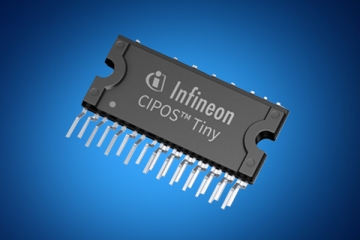
Mouser supplies Infineon ultra-compact three-phase inverter modules
Mouser Electronics supplies the 'CIPOS Tiny' three-phase inverter module from Infineon Technologies. CIPOS Tiny is the latest generation of Infineon's IPM product line, providing high power density for variable-speed motor drives in products such as washing machines, range hoods, indoor air conditioning, commercial and industrial fans. The CIPOS Tiny three-phase inverter module uses Infineon's latest TRENCHSTOP IGBT 6, reducing installation footprint by 33% compared to the CIPOS Mini series. The module incorporates one three-phase, level-shifting high-voltage driver IC and is compatible with controller outputs as low as 3.3V.
2019.07.19by 이수민 기자
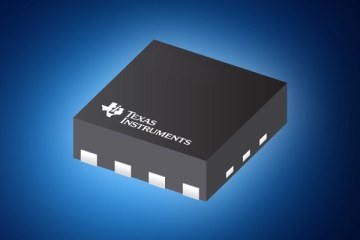
Mouser now stocks TI's OPA855 8GHz uncompensated amplifier.
Mouser Electronics supplies TI's uncompensated amplifier OPA855. The OPA855 is a wideband, low-noise, bipolar input operational amplifier that delivers performance in high-bandwidth transimpedance and voltage amplifier applications. With an 8GHz GBWP characteristic, the OPA855 can be configured to achieve high gain while maintaining a wide closed-loop bandwidth. Its low input voltage noise of 0.98nV/√Hz minimizes amplifier noise, and the high slew rate of 2,750V/µs enables a wide output voltage swing. With an input capacitance of only 0.8pF, the OPA855 minimizes total circuit input capacitance when designing TIA applications and improves circuit speed.
2019.08.01by 이수민 기자

Intel Unveils Next-Generation 'Core Ultra Series 3' and vPro Platform for Enterprise PCs
Intel has officially unveiled the "Intel Core Ultra Series 3" for next-generation enterprise PCs and the latest vPro platform, addressing a wide range of demands from enterprise notebooks to high-performance workstations.
2026.03.26by 배종인 기자

ROHM Launches ESD Protection Diode Compatible with High-Speed Interfaces of 10Gbps or Higher
Semiconductor specialist ROHM has developed the 'RESDxVx series' of ESD (electrostatic discharge) protection diodes capable of responding to next-generation high-speed data communication environments exceeding 10Gbps, simultaneously enhancing both signal quality maintenance required in high-speed interfaces and IC protection performance.
2026.03.26by 배종인 기자











