


Huawei Unveils 5G Smartphone SoC Smaller Than Samsung and Qualcomm
 Published2019.09.08 08:06
Equipped with a DaVinci architecture-based dual-core NPU
Huawei P30 Pro, FreeBuds 3 Earphones Also Unveiled
As the U.S.-China trade dispute intensifies, Huawei is accelerating the strengthening of its own competitiveness in the 5G sector.
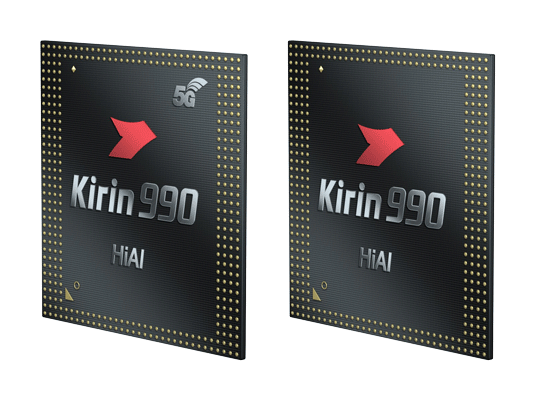
On the 6th, Richard Yu, CEO of Huawei Consumer Business Group, delivered a keynote speech at IFA 2019 under the theme "Rethink Evolution." At the same time, he unveiled the "Kirin 990 Series," a flagship chipset consisting of the "Kirin 990" and "Kirin 990 5G."
Huawei plans to launch the Huawei Mate series equipped with the new Kirin 990 series in September.
CEO Richard Yu said, “The Kirin 990 5G has made improvements in performance, power efficiency, AI computing, and ISP to enhance the 5G experience for 5G smartphone users.” The Kirin 990, unveiled alongside the Kirin 990 5G, is also designed to provide a better LTE experience for LTE smartphone users.
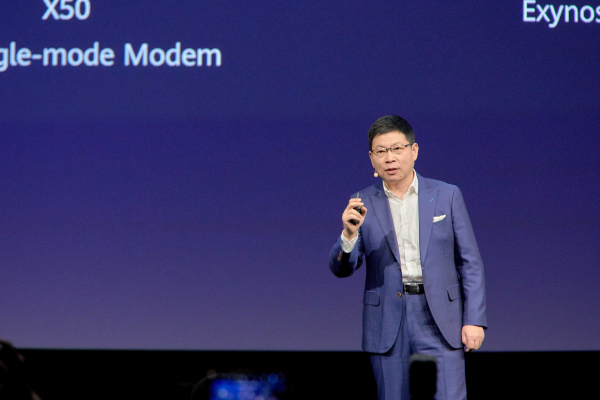
CEO Richard Yu (Photo: Huawei)
The Kirin 990 5G was manufactured using a 7nm EUV manufacturing process.
It integrates a 5G modem to reduce size and power consumption, and supports 5G NSA (Non-Standalone) and SA (Standalone). While supporting the entire frequency band for TDD (Frequency Division Duplex) and FDD (Time Division Duplex), it provides downlink speeds of up to 2.3 Gbit/s and uplink speeds of up to 1.25 Gbit/s.
It is also equipped with a dual-core NPU based on the Da Vinci architecture, consisting of a large NPU core and a small NPU core. The large core is responsible for high performance and power efficiency in complex computing scenarios, while the small core powers ultra-low power consumption applications.
The Kirin 990 series features a three-stage power efficiency structure. It consists of two extra-large cores, two large cores, and four small cores, featuring a dominant frequency of up to 2.86 GHz.
In addition, it supports intelligent flow distribution that can save bandwidth and reduce power consumption by utilizing the 16-core Mali-G76 GPU and a new system-level Smart Cache. It also provides a faster gaming experience with Kirin Gaming+ 2.0 support.
The Kirin 990 5G features ISP 5.0, which supports hardware noise reduction, block matching, and 3D filtering (BM3D) for capturing clear images in low-light environments. Dual-domain video NR was also utilized for more accurate video noise processing. Real-time video post-processing and rendering use AI segmentation to adjust image colors frame by frame, enabling the production of high-quality video.
CEO Richard Yu stated, “Huawei’s Kirin 990 is 36% smaller than Samsung’s Exynos and 26% smaller than Qualcomm’s Snapdragon,” adding, “Although Samsung announced the Exynos 980 with an integrated 5G modem, the commercialization of the Kirin 990 will be faster.”
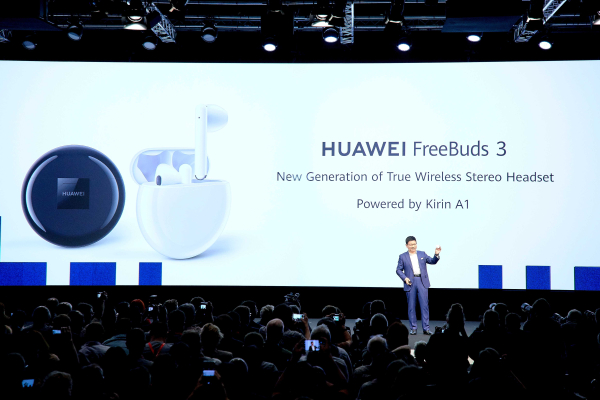
Meanwhile, Richard Yu unveiled the flagship wireless earphones, the Huawei FreeBuds 3, along with the new design of Huawei's flagship smartphone, the Huawei P30 Pro. Huawei FreeBuds 3 is powered by a self-developed Kirin AI chip.
Comments
Related news

LG Uplus on the verge of commercializing 5G-based cloud gaming service 'NVIDIA GeForce Now'
LG Uplus plans to partner with NVIDIA to exclusively introduce GeForce NOW, a cloud gaming service that can be used on 5G smartphones and PCs without downloading. With GeForce NOW, smartphones and PCs only handle screen output and input, while all computing processing required for games is performed on cloud servers. This enables high-spec games to be streamed from the cloud and implemented in just a few seconds on 5G smartphones as well as low-spec PCs or notebooks. During the free trial period, LG Uplus will offer approximately 150 games including popular PC games and PC versions of console games, and plans to expand further with over 200 titles by the end of the year, adding high-definition, large-capacity blockbuster games.
2019.08.29by 이수민 기자
.png)
Intel Begins Full-Scale Shipments of 10nm FPGA "Agilex" for '5G Era Data Centers'
Intel has begun shipping Intel Agilex FPGAs manufactured on its 10-nanometer process to early access program customers. Reconfigurable and power-efficient, Agilex provides the flexibility and agility needed to address these challenges with high performance and low latency. It also creates intelligent, higher-bandwidth networks through accelerated AI and other analytics performed across edge, cloud, and network environments. It also offers compute capabilities and high-speed interface capabilities that deliver actionable insights in real time. Intel provides a custom logic continuum that enables developers to seamlessly migrate designs from FPGAs to structured ASICs.
2019.09.02by 이수민 기자
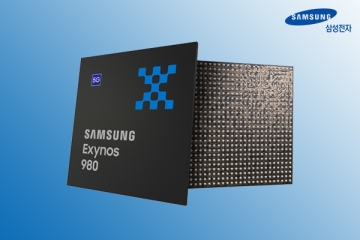
Samsung Electronics Launches Exynos 980, a 5G Modem + Mobile AP
Samsung Electronics has unveiled the Exynos 980, a 5G mobile processor that integrates a 5G communication modem and mobile AP into a single chip. The Exynos 980 implements two chips in one, improving power efficiency and reducing the physical footprint of components, thereby enhancing design convenience for mobile devices. Additionally, by applying advanced 8-nanometer FinFET process technology, it supports a wide range of mobile communication standards from 2G to 5G with a single chip, and features an integrated high-performance NPU that enhances AI performance.
2019.09.05by 이수민 기자

Intel Unveils Next-Generation 'Core Ultra Series 3' and vPro Platform for Enterprise PCs
Intel has officially unveiled the "Intel Core Ultra Series 3" for next-generation enterprise PCs and the latest vPro platform, addressing a wide range of demands from enterprise notebooks to high-performance workstations.
2026.03.26by 배종인 기자

ROHM Launches ESD Protection Diode Compatible with High-Speed Interfaces of 10Gbps or Higher
Semiconductor specialist ROHM has developed the 'RESDxVx series' of ESD (electrostatic discharge) protection diodes capable of responding to next-generation high-speed data communication environments exceeding 10Gbps, simultaneously enhancing both signal quality maintenance required in high-speed interfaces and IC protection performance.
2026.03.26by 배종인 기자











