


How Can Analog Technological Capabilities, Still Important, Be Developed?
 Published2019.10.09 07:01
ADI, 아날로그 지식 함양 위한 학습 모듈 개발
오늘날 미디어와 인터넷을 보면 세상은 완전히 디지털로 바뀌었고 아날로그 기술은 과거의 유물이 된 것 같다. 그런데 정말 그럴까? 결론부터 말하자면, 아니다.
오디오 신호나 온도 같은 모든 물리적 요소는 아날로그값이다. 아날로그값을 측정하거나 다루려면 아날로그 기술이 필요하다. 모든 고속 디지털 신호 전송은 아날로그 현상을 다루어야 하며, 기술 활용을 극대화하려면 아날로그에 대한 이해가 필요하다. 소프트웨어만으로는 모든 문제를 해결할 수 없다.
아날로그 지식이 없다면 전기차나 재생 에너지 같은 신기술을 제어할 수 없다. 그런데도 하드웨어 전문가의 수는 계속해서 줄고 있다. 달리 생각하면 전기·전자 업계로 취업하길 원하는 대학 재학생이나 졸업생이 반도체 회로 기술에 대한 지식을 쌓는다면, 더 많은 취업 기회를 가질 수 있다는 뜻이기도 하다.
아날로그 기술 전문가의 길을 가고자 하는 이를 돕기 위해 아나로그디바이스(ADI)는 실질적으로 아날로그 지식과 경험을 쌓을 수 있는 일련의 학습 모듈을 개발했다. 이 모듈들을 대학 교과 과정에서나 개인적으로 활용해서 이론에 대한 이해를 높일 수 있다. 시간과 장소에 구애 없이 언제 어디서나 전자 회로를 실제로 실험할 수 있다.
어떤 학생은 밤에 혼자 연구하는 것을 좋아할 수도 있고, 또 어떤 학생은 다른 학생들과 함께 연구하면서 결과를 주제로 토론하는 것을 좋아할 수도 있다. 실험이 실패하더라도 다른 사람의 눈치를 볼 필요 없이 재실험할 수 있다. 이 학습 모듈들은 대학에서 실험실 공간, 시간, 장비를 확보하기 어려울 때도 유용하다. 다수의 학생이 단지 관찰만 하는 것이 아니라 동시에 실험을 진행할 수도 있다.
이 학습 모듈들은 결과가 준비된 PC 시뮬레이션이 아니라 실질적인 랩 실험이다. 회로를 구축하고, 입력 신호를 인가하고, 아날로그나 디지털 출력 신호를 측정하고, PC 상에서 결과를 분석할 수 있다. 게다가 가격대도 경제적이다.
ADI 디스크리트 소자 포함한 ADALP2000
ADALP2000은 ADI의 다양한 칩과 그 밖에 저항이나 커패시터 같은 디스크리트 소자들을 포함하는 종합 킷이다.
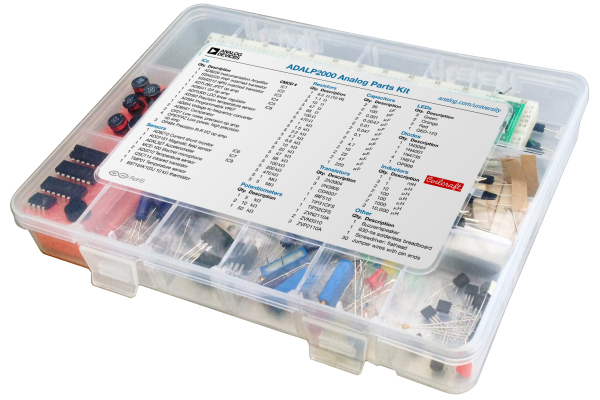
이 킷을 활용하면 키트에 포함된 브레드보드 상에 솔더링을 하지 않고도 다양한 전자 회로를 구축할 수 있다.
기본 실험용 ADALM1000
기본적인 실험을 할 수 있는 학습 모듈이다. USB 인터페이스를 통해 연결할 수 있으며, 2.5V 또는 5V 중 선택이 가능하며 최대 200mA로 전원 공급을 설정할 수 있다.
2개의 채널을 통해 서로 다른 전압 및 전류 파형을 제공할 수 있다. 0V~5V의 전압과 -200mA~+200mA의 전류가 가능하며, 최대 100kSPS로 파형을 샘플링할 수 있다.
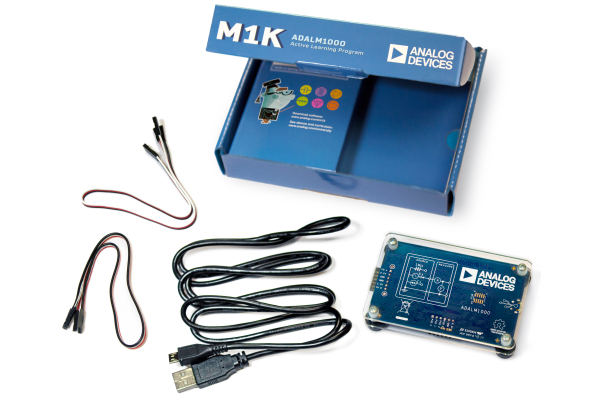

윈도, 리눅스, Mac OS X 시스템용으로 제공되는 지원 소프트웨어를 사용해서 파라미터를 조절하고 오실로스코프 기능을 사용해서 컴퓨터 상에 측정 결과를 표시할 수 있다. ADI 웹사이트에서 “Circuit I and II Lab Activities” 항목에 들어가면 ADALM1000을 사용해서 할 수 있는 다양한 실험에 대한 자세한 설명을 볼 수 있다.
ADALM1000 받고 더블로 가! ADALM2000
ADALM2000은 고급 실험을 할 수 있는 학습 모듈로서, ADALM1000 모듈이 제공하는 모든 기능 외에 더 많은 추가 기능들을 제공한다.
최대 25MHz의 신호 측정과 최대 30MHz의 신호 생성을 할 수 있으며, 속도는 약 1000배 더 빠르다. 2개의 전원은 0V~+5V와 -5V~0V의 범위에서 조절할 수 있다.
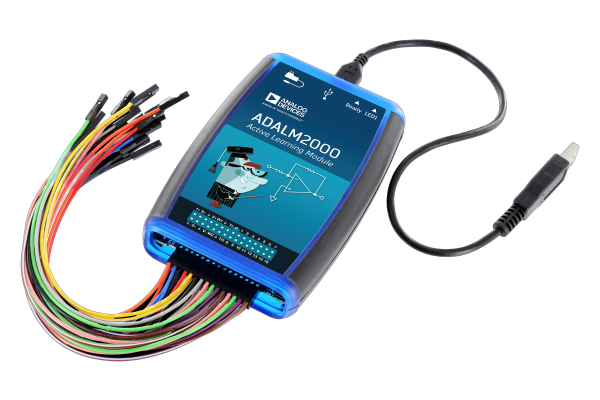
소프트웨어로 2채널 오실로스코프와 16채널 디지털 로직 분석기 및 전압계를 표시할 수 있다. 네트워크, 스펙트럼, 디지털 버스를 분석할 수 있다.
ADI 웹사이트에서 “Electronics I and II Lab Activities” 항목에 들어가면 이 학습 모듈을 사용해서 할 수 있는 다양한 실험에 대한 자세한 설명을 볼 수 있다. 조금만 조정하면, ADALM1000 킷으로 할 수 있는 실험들을 이 킷으로도 수행할 수 있다.
SDR 지식 쌓을 수 있는 ADALM-Pluto
ADALM-Pluto 킷은 소프트웨어 정의 무선(Software-Defined Radio; SDR)에 대해 깊이 있는 지식을 쌓을 수 있는 고주파 킷이다.
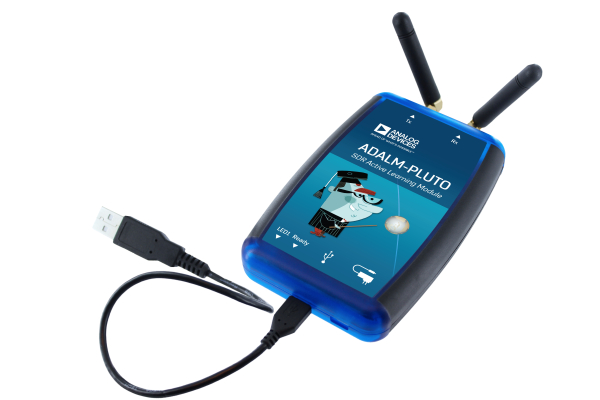
소프트웨어를 통해서 고주파 및 무선 통신용으로 주파수 대역과 속성을 설정할 수 있으며, 325MHz~3.8GHz에 이르는 주파수 범위의 송신 및 수신 채널을 제공한다.
“Software-Defined Radio for Engineers”라고 제목의 e-book을 통해 관련 시스템들에 대한 정보를 확인할 수 있으며, ADALM-Pluto 킷으로 수행할 수 있는 실험들에 대해서도 설명한다. 이 e-book은 analog.com에서 무료로 다운로드할 수 있다.
해당 킷들에 관한 자세한 정보는 analog.com의 “Education” 항목에서 확인할 수 있으며 또는 검색 버튼에서 “active learning modules”를 입력해 찾아볼 수 있다.
각각의 킷들은 ADI나 공식대리점을 통해 구매할 수 있다.
궁금한 사항은 ADI 엔지니어존의 “Virtual Classroom for ADI University Program” 항목에서 문의할 수 있다.
이 기사는 아나로그디바이스 EMEA 지역 FAE팀의 우베 브뢰켈만(Uwe Bröckelmann) 기술 감독의 ‘디지털화가 되어도 세상은 여전히 아날로그! 필요한 아날로그 지식을 구하는 방법은?!(The World Is Analog—How Do I Obtain the Necessary Knowledge?!)’라는 제목의 글을 정리한 것입니다.
Comments
Related news

TI Launches Two 'Reference Clocking Resonator Integrated' BAW Products
TI has launched embedded processing and analog chip products applying BAW technology for next-generation connectivity and communication infrastructure. Developers can achieve reliable data transmission and simplified system design using TI's SimpleLink CC2652RB wireless MCU and LMK05318 network synchronization clock products with BAW technology applied. New products implementing TI's BAW resonator technology integrate reference clocking resonators and deliver high frequencies through a compact form factor. In addition to enhanced performance, they demonstrate excellent resistance to mechanical stress such as vibration and shock. Furthermore, they enable reliable data transmission, allowing precise and continuous transmission of wired and wireless signal data synchronization.
2019.08.27by 최인영 기자
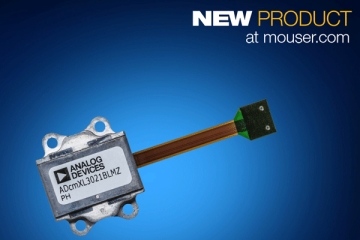
Mouser Supplies ADI's 3-Axis Vibration Sensors for Monitoring
Mouser Electronics supplies ADI's three-axis vibration sensor. The ADcmXL3021, which applies ADI's MEMS sensor technology, enables early monitoring of machine fatigue and potential shutdown. In particular, it is used in industrial and transportation equipment to reduce repair costs and maintain high levels of productivity. The ADcmXL3021 is a three-axis vibration monitoring subsystem that combines ADI's MEMS sensor with one ADC, high-performance signal processing capability, data buffer, data logging function, and a user interface that works well with most embedded processors.
2019.09.08by 최인영 기자
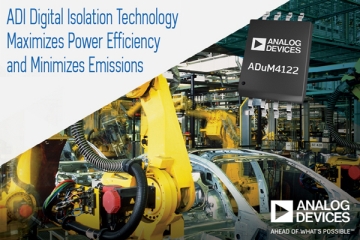
ADI Unveils Dual-Drive Capability Output Driver for IIoT Applications, Boosting Power Efficiency and Reducing Electromagnetic Emissions
Analog Devices has unveiled the ADuM4122, an isolated dual-channel gate driver based on its iCoupler technology. The ADuM4122 enables designers to leverage high-efficiency power switch technology. According to the IEA, electric motor drive systems account for 40% of global electricity consumption, so improving motor efficiency can deliver significant economic and environmental benefits. The ADuM4122 allows users to switch MOSFETs or IGBTs on and off at desired speeds by providing adaptive control tailored to operating conditions, thereby controlling motor current consumption accordingly.
2019.09.19by 최인영 기자

Intel Unveils Next-Generation 'Core Ultra Series 3' and vPro Platform for Enterprise PCs
Intel has officially unveiled the "Intel Core Ultra Series 3" for next-generation enterprise PCs and the latest vPro platform, addressing a wide range of demands from enterprise notebooks to high-performance workstations.
2026.03.26by 배종인 기자
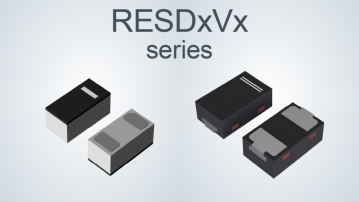
ROHM Launches ESD Protection Diode Compatible with High-Speed Interfaces of 10Gbps or Higher
Semiconductor specialist ROHM has developed the 'RESDxVx series' of ESD (electrostatic discharge) protection diodes capable of responding to next-generation high-speed data communication environments exceeding 10Gbps, simultaneously enhancing both signal quality maintenance required in high-speed interfaces and IC protection performance.
2026.03.26by 배종인 기자











