


ON Semiconductor Develops Sensor-Fusion Autonomous Driving Platform Prototype with Hungary's AI Motive
 Published2019.10.17 18:21
ON Semi-AI Motive, HW Platform Demo Development
On the 16th, ON Semiconductor announced that it would jointly develop a sensor fusion platform prototype for automotive applications with AImotive, a Hungarian autonomous vehicle company.
.png)
The two companies are jointly developing a series of hardware platform demos by combining ON Semiconductor's HD cameras, radar sensors, and preprocessor chipsets with AI Motive's advanced AI-based cognitive algorithms, hardware acceleration, and simulation technologies.
ON Semiconductor offers all four sensor modalities: imaging, radar, lidar, and ultrasonic sensing. By combining these sensor types with the technology of companies like AI Motive, it is possible to meet the requirements of a high-performance sensor fusion platform that supports ADAS and autonomous driving.
Through the platform to be developed, the two companies plan to demonstrate the accuracy, durability, and low latency of AI-based real-time sensor fusion using AI Motive's 'aiWare' hardware neural network (NN) acceleration IP, 'aiDrive' software portfolio modules, and 'aiSim' simulation environment on FPGA-based prototypes.
Davide Santo, Senior Director and General Manager of the Automotive Radar Sensing Solutions business unit at ON Semiconductor’s Intelligent Sensing Group, stated, “Customers expect to improve performance by combining various sensors,” adding, “AI and simulation are key technologies to meet these demands.”
AI Motive CEO Laszlo Kishonti said, “Together, the two companies will demonstrate that using the right chips and algorithms enhances the performance of integrated sensor fusion solutions while providing a cost-effective and practical solution for high-volume production.”
Comments
Related news
ON Semiconductor Introduces Two PoE Interface Controllers Compliant with IEEE 802.3bt
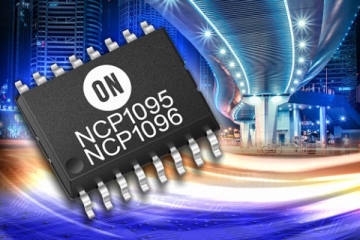
The IEEE 802.3bt standard for PoE has the potential to transform the IoT market by enabling sophisticated devices connected to larger networks. On Semiconductor has launched interface controllers NCP1095 and NCP1096 that support the IEEE 802.3bt standard. The two controllers integrate all functions of the PoE system, including detection, automatic classification, and current limiting. The two controllers can utilize high-efficiency PoE interfaces up to 90W, the power standard limit, or exclusively up to 100W for cases requiring higher power.
2019.09.07by 이수민 기자
ON Semiconductor Unveils Square 300,000-Pixel Image Sensor
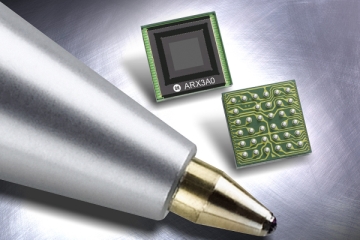
onsemi has unveiled the ARX3A0 digital image sensor, which delivers a resolution of 300,000 pixels in a 1:1 aspect ratio. The ARX3A0 operates like a global shutter at up to 360 frames per second in various environments, while also featuring the characteristics of a BSI rolling shutter sensor in terms of size, performance, and sensitivity. Additionally, its compact square form factor and high frame rate make it suitable for not only small auxiliary security cameras but also cutting-edge technologies such as machine vision, AI, and AR/VR applications.
2019.09.19by 이수민 기자
South Korea aims to have Level 4 autonomous driving infrastructure in place by 2027.
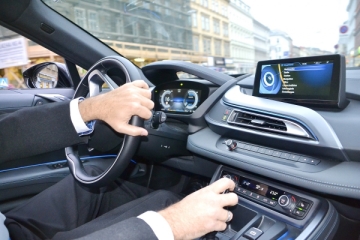
The automotive market is undergoing changes toward eco-friendliness, intelligence, and service-oriented business models due to the Fourth Industrial Revolution and strengthened environmental regulations. The government held a declaration ceremony for a national vision on future automobiles and announced the 2030 Future Vehicle Industry Development Strategy in coordination with related ministries. After holding a total of 21 discussion sessions with automobile OEMs and parts suppliers, telecommunications, software, and semiconductor companies, automotive-related labor unions, and academic societies, the government established the 2030 Future Automobile Industry Development Strategy.
2019.10.30by 이수민 기자

[e4ds Tech Day 2026 ⑨] Sim Sang-gyu, Autocrypt CTO: "In the Physical AI Era, Automotive Security Must Extend Beyond the Vehicle"
At e4ds Tech Day 2026, Sim Sang-gyu, CTO of Autocrypt, explained automotive cybersecurity strategies in the era of Physical AI and SDV (Software-Defined Vehicle). Automobiles are evolving as part of an ecosystem connected to AI, cloud, chargers, IoT, and robots, and he emphasized that the scope of security must expand beyond the vehicle interior to the entire connected environment. In particular, AI model tampering, adversarial attacks, OTA updates, and EV charger hacking were identified as major threats. He explained that response measures require zero trust, AI model integrity protection, intrusion detection, Security by Design and Default, and full lifecycle security management, and that proactive security system establishment beyond regulatory compliance is critical for securing future mobility competitiveness.
2026.10.12by 배종인 기자

Practical HIL Construction Strategy for Automotive and Off-Highway Controller Validation
As vehicle E/E architecture transitions to zonal structures and shifts to software-defined vehicles (SDV), the number of controllers (ECUs) requiring validation and software complexity are surging dramatically. Meanwhile, real vehicle testing cannot provide repeated verification under identical conditions and entails lead time and safety concerns. This white paper explains the principles of HIL (Hardware-in-the-Loop) validation and the structure of the NI platform composed of PXI, SLSC, and VeriStand, and through two actual implementation cases—Camera Record & Replay HIL for In-Cabin Monitoring Controller (ICMU) and Forklift Controller (VCU) HILS—describes how controller-level regression testing becomes possible. Additionally, it explicitly states application boundaries and limitations, such as lack of A2B support.
2026.10.12by 편집부











