



How will the IEC-based Korean Electrical Installation Regulations, scheduled to be introduced in January 2021, replace electrical installation technology standards?
 Published2019.10.29 16:27
Electrical installation technology standards introduced from Japan in 1962,
It has caused confusion due to noncompliance with IEC international standards.
In 1995, when the WTO/TBT Agreement on Technical Barriers to Trade came into effect, the IEC international standards began to be applied in the domestic electrical installation regulations field. However, since they were not consistent with the existing 'Electrical Installation Technical Standards' introduced from Japan in 1962, there have been problems of inconsistency in their application.
On the 29th, Schneider Electric held a press conference at the Millennium Hilton Hotel in Jung-gu, Seoul to introduce the direction of the revision of the IEC international standard and the Korean standard, KEC, based on it. The conference included an introduction to the IEC international standard and an explanation of the Korea Electro-technical Code (KEC), which will be applied from January 2021.
The International Electrotechnical Commission (IEC) is a non-profit international standardization organization for electrical, electronic, and related technologies, founded in 1906 in Geneva, Switzerland. Korea is a full member of the IEC and participates in the process of establishing international standards.
IEC international standards can be developed and established only with the consent of two-thirds of member countries, and have subcommittees responsible for different topics. Standard development takes about three years, and member countries have equal say regardless of their national size.
KEC began development in 2011 when the government and the Korea Electrical Association shared the need to develop Korean standards that meet international standards. KEC is scheduled to be introduced in 2021 after a three-year grace period to minimize confusion in the industry following the announcement in 2018.
KEC, which integrated the existing judgment criteria that were divided into the electrical equipment and power generation equipment fields, organized them into ▲common items ▲low-voltage electrical equipment ▲high-voltage and extra-high-voltage electrical equipment ▲electric railway equipment ▲distributed power equipment ▲thermal power equipment for power generation ▲hydroelectric power equipment for power generation. It also organized them into a numbering system that takes future expandability into account.
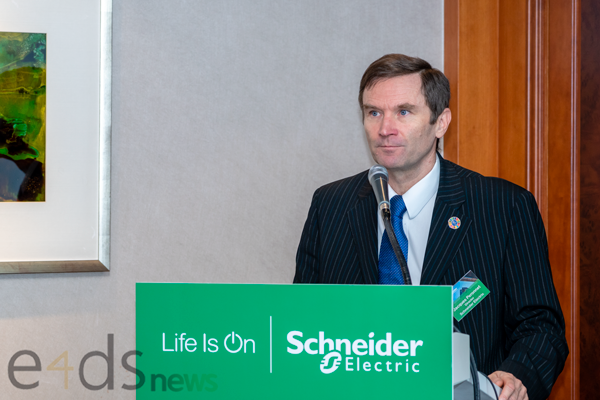
Jacques Perrone, IEC TC 64 Chairman, who attended the meeting that day, introduced the IEC and explained the following topics: ▲IEC 60364 organization ▲global standard application trends ▲differentiating points of the IEC 60364 standard under the topic of ‘Revision direction of the International Electrical Installation Regulation IEC 60364 and its impact on the domestic market.’
IEC 60364 is a standard for low-voltage electrical equipment (AC 1000 V, DC 1500 V or less) in building electrical equipment. The low voltage specified in the standard is AC 600 V, DC 750 V or less, and until January 2021, either IEC 60364 or electrical equipment technical standards must be selected and applied, and the two standards cannot be used together.
From January 2021, the electrical installation technical standards will be replaced by KEC based on IEC 60364. This is expected to resolve field application issues that have arisen due to partial application of IEC, such as insufficient details and inconsistent content.
“Energyization is progressing rapidly worldwide,” said Jacques Perrone, Chair of IEC TC 64. “Standardization of the electrical equipment market will greatly contribute to maximizing energy efficiency, user safety, and national development.”
He also said, “As KEC is based on the IEC international standard, which is applied by more than 82% worldwide, it will resolve the problem of dual application standards in domestic and overseas markets,” and “It will contribute to enhancing global capabilities by improving the competitiveness of Korean electric-related companies and activating overseas expansion.”
Comments
Related news
LG and Siemens Sign MOU for Joint Development of Manufacturing Intelligence Solutions
LG Electronics and Siemens have concluded an MOU for joint development of manufacturing intelligence solutions. Siemens Digital Industry provides integrated solutions spanning from design to service to implement smart manufacturing environments. LG Electronics and Siemens plan to establish collaborative models based on manufacturing intelligence, thereby driving digital transformation in the manufacturing sector rapidly. The two companies will strategically cooperate to develop future solutions that can enhance productivity and efficiency for manufacturers.
2019.09.02by 이수민 기자
Schneider Electric Launches 3rd Generation EcoStruxure Power
Schneider Electric has launched third-generation EcoStruxure Power. Built on EcoStruxure's digital platform, third-generation EcoStruxure Power enhances the safety and efficiency of power distribution and enables early detection of abnormal temperature rises within the system. By reducing electrical fire risk and allowing for a reduction or elimination of regularly scheduled thermography inspections, total cost of ownership can be reduced by up to 60% over the entire lifecycle. Cybersecurity across the entire system has also been strengthened.
2019.10.11by 이수민 기자
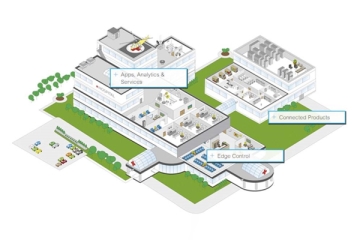
SE-Sawwire Sign MOU to Build Smart Digital Hospital
Schneider Electric announced that it has established a strategic partnership with Softwire, a digital twin company, at the Innovation Summit Barcelona 2019 held in Barcelona, Spain from the 2nd to the 3rd to build a smart healthcare environment. The two companies plan to implement a patient-centric smart digital hospital to address the lack of connectivity between facility management and clinical operations that today's healthcare systems face, improve satisfaction among patients and healthcare professionals, and enhance operational efficiency.
2019.10.16by 이수민 기자
Nvidia invests $5 billion in Intel
NVIDIA and Intel, leaders in global AI computing technology, are now forging ahead in providing cutting-edge solutions through NVLink-based architecture integration. NVIDIA and Intel have officially announced a strategic partnership and stated that they will jointly develop customized data center and personal computing products to accelerate diverse applications and workloads ranging from hyperscale to enterprise and consumer markets, thereby laying the foundation for the next generation computing era.
2025.09.22by 배종인 기자
.jpg)
Applied Materials Launches Environmental Protection Campaign to Mark World Cleanup Day
Applied Materials Korea (CEO Park Kwang-seon) is carrying out environmental cleanup activities with employees and their families around the Dongtan Sinricheon area on the occasion of World Cleanup Day, evolving into a company that engages with the local community beyond technological innovation.
2025.09.22by 명세환 기자











