



Busan Port to Evolve into a 5G Smart Port Starting End of This Year
 Published2019.11.03 16:17
Ultra-low latency 5G communication video transmission solution and
Additional cooperation in the smart port sector
Starting from the end of this year, Busan Port will be transformed into a 5G smart port.

Container unloading operations in progress (Photo by LG Uplus)
LG Uplus announced on October 31 that it had signed an MOU for '5G-based smart port crane automation business cooperation' with the Busan Port Authority, Dongbu Busan Container Terminal, Seoho Electric, and the Advanced Institute of Technology.
A smart port is a port operating system that maximizes container operation efficiency through a crane remote control system. This project focuses on establishing a '5G Smart Port' through the application of 5G-based automation of Rubber-Tired Gantry (RTG) cranes at the East Busan Container Terminal.
Through this MOU, each cooperating entity plans to engage in cooperation regarding ▲ a remote control and automation system for port cranes utilizing 5G communication ▲ a 5G communication-based ultra-low latency video transmission solution for remote control of port cranes ▲ additional business cooperation utilizing mobile communication networks in the smart port sector.
Specifically, remote control and automation technology will be introduced to one crane at Busan Port within the year, and the application will be gradually expanded to more cranes.
Through this, ▲ container picking and landing, hazardous material container unloading ▲ implementation of automatic crane operation functions such as driving, traversing, hoisting, and collision prevention ▲ improvement of machine learning-based automatic crane operation performance ▲ spreader correction such as preventing shaking and twisting and fine movement adjustment.
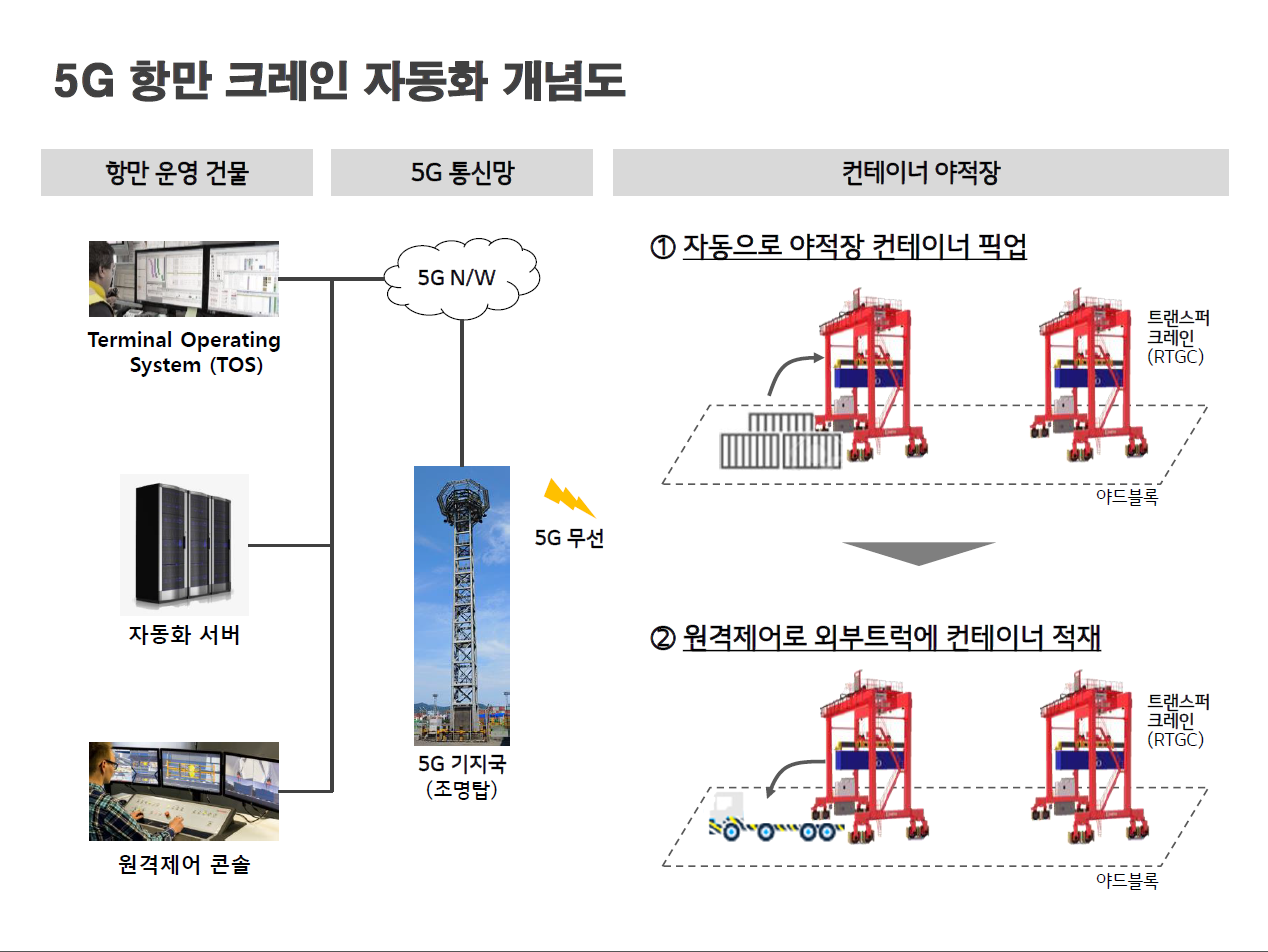
Next year, the 'Terminal Operating System' that allocates tasks within the port, and 'Block Management' that determines the work sequence algorithm within yard blocksIt also integrates with work instruction systems such as 'nt'.
Kwon So-hyun, Head of the Construction Division at the Busan Port Authority, stated, “We will strive to lay the foundation for building a Korean-style smart port by actively utilizing technologies possessed by domestic companies, such as commercial 5G communication network technology and port crane system manufacturing technology.”
Seo Jae-yong, Executive Vice President of LG Uplus’s Enterprise 5G Business, stated, “By utilizing 5G, conventional ports can be rapidly smartened without the need for separate fiber optic conduit construction,” adding, “I hope Busan Port will take another leap forward through the 5G smart port system.”
Meanwhile, Nokia's 5G communication equipment and Fixed Wireless Access (FWA) terminals will be used in the 5G smart port project starting within the year.
Comments
Related news
LG Uplus Demonstrates Voice-Controlled 5G Drone… Real-time FHD Video Transmission Also Capable
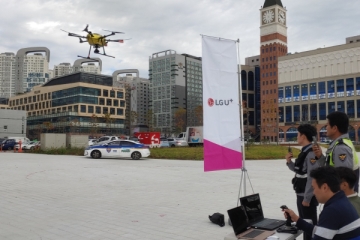
LG U+ unveiled the 5G U+ Smart Drone equipped with AI voice recognition and real-time FHD video transmission technology during a public demonstration in Baegot New City. Officials from the Siheung Police Station controlled the drone, which moves at a maximum altitude of 50m and speed of 36km/h, using voice commands through a smartphone app. The high-definition real-time video transmission technology via the drone's camera was also demonstrated. Using a 5G-based joystick, the camera was operated in real-time with left, right, up, and down movements, and through zoom in/out functions, text on a business card-sized object on the ground was displayed. The demonstration was conducted jointly with Usys, Celvas AI, and Ubivellox Mobile.
2019.10.22by 이수민 기자
KT Demonstrates 28GHz Band Enterprise 5G Network Technology
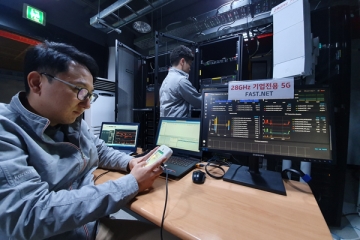
KT demonstrated FAST.NET, an enterprise-dedicated 5G network technology, using the 28GHz frequency band. The FAST.NET technology is KT's ultra-low latency infrastructure technology designed to transmit all data from terminals through networks to services within a round-trip latency of 10ms or less. It is a core technology for future enterprise-exclusive 5G networks aimed at realizing autonomous vehicles and smart factory automation control. In the demonstration, using 5G base station equipment and terminals supporting the domestic 28GHz band, ultra-low latency data transmission of a minimum of 5ms and an average of 8ms was achieved in actual wireless environments.
2019.10.31by 이수민 기자
"Analyzing Video with AI Following Voice" Xilinx and SKT Strengthen Cooperation in AI Inference
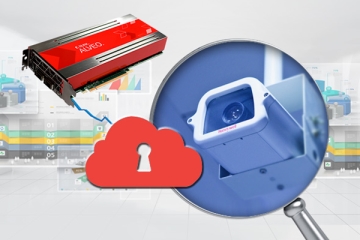
To realize AI-based physical unauthorized access detection, it is necessary to monitor millions of commercial and residential camera systems in real time. For this, fast and accurate AI accelerators are required. Xilinx announced that its data center accelerator card is used in SK Telecom's unauthorized access detection service 'T-View'. This marks the third instance of SK Telecom using Xilinx's FPGA-based accelerator card in its services, following the ASR-based AI speaker Nugu and call center SST solution. Xilinx's Alveo U250 data center accelerator card is mounted on SK Telecom's AI inference accelerator AIX and runs on SK Telecom's data center servers.
2019.11.01by 이수민 기자
Korea Instrument, KOLAS Accredited Calibration Agency First to Simultaneously Acquire ISO/IEC 27,001·27,701
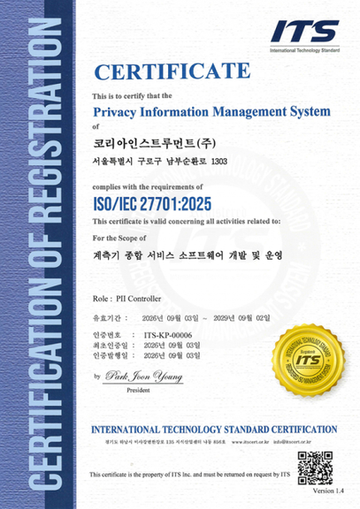
Korea Instrument has become the first among KOLAS accredited calibration agencies to simultaneously acquire ISO/IEC 27,001 and ISO/IEC 27,701 certifications. Through its proprietary platforms CWIZ Enterprise and CWIZ Partners, the company has embedded information security and personal data protection requirements across all business processes including customer information, equipment data, and calibration reports, with plans to continuously advance its management system through regular audits and security inspections.
2026.10.12by 배종인 기자
TeamViewer One, IT Incident Automation Workflow and Resolution Center Enhanced
TeamViewer has added IT incident automation capabilities and an advanced Resolution Center to its integrated digital workplace management platform 'TeamViewer ONE'. Recurrent service disruptions, configuration errors, and capacity shortages are automatically handled according to preset policies, and device status verification through script deployment can be managed in a unified interface, significantly reducing repetitive tasks for IT teams.
2026.10.12by 배종인 기자











