This page was machine-translated and may differ from the original. View original
5 Major Hot Issues: Level 4, C-ITS, AI, Semiconductors, SOTIF21448
Autonomous vehicles transforming from a means of transportation into a living space
With the global automotive market projected to record low growth of around 1%, domestic automobile production in the first half of 2019 reached 2,028,332 units (a 1.2% increase compared to the same period last year). The electric vehicle market has expanded due to the impact of the Fourth Industrial Revolution and stricter environmental regulations, while the development and commercialization of autonomous vehicles and car-sharing services are gradually gaining momentum.
ICT industry experts identified 5G as the key keyword defining 2019. So, what were the hottest issues throughout 2019 in the field of autonomous vehicles, which will transform everything from the movement of people and goods to the spatial structure and lifestyles we inhabit?
[Level 4 Autonomous Driving]
Unlike the existing automotive market, the future car market currently lacks a clear dominant player, presenting an opportunity for the Korean automotive industry to make a significant leap forward. Accordingly, after holding a total of 21 meetings with automotive OEMs and parts manufacturers, telecommunications, software, and semiconductor companies, automotive-related labor unions, and academic societies, the government held a proclamation ceremony for the national vision of future automobiles on October 15 and jointly announced the '2030 Future Car Industry Development Strategy' with relevant ministries.
▲ The key to the competition in autonomous driving development depends on who can secure more driving data.
First, we will increase the domestic new car sales share of electric and hydrogen vehicles to 33% and the global market share to 10% by 2030, and after launching Level 4 autonomous vehicles in 2024, we will build major road infrastructure nationwide to support Level 4 autonomous driving by 2027 to pursue the world's first commercialization.
The three major strategies for Korea's future car industry over the next 10 years are: targeting the global market through the acceleration of eco-friendly vehicle technology and domestic distribution; establishing a fully autonomous driving system and infrastructure by 2024; and transitioning to an open future car ecosystem based on private investment of approximately 60 trillion won.
To this end, the government plans to invest a total of 385.6 billion won from 2020 to 2026 and will also strengthen investment in autonomous vehicle systems, parts, and communications. To implement Level 4 autonomous driving, 1.7 trillion won is planned to be invested from 2021 to 2027.
A government national project involving officials from the Ministry of Trade, Industry and Energy, the Ministry of Economy and Finance, the Ministry of Science and ICT, the Ministry of Environment, the Ministry of Land, Infrastructure and Transport, the Ministry of SMEs and Startups, and the National Police Agency, as well as industry experts, aims to reduce traffic accident fatalities to 1,000 or fewer, decrease traffic congestion by 30%, reduce greenhouse gas emissions by 30%, and reduce fine dust by 11% by 2030.
Meanwhile, according to Navigant Research's 2019 overall ranking of autonomous driving technology, Waymo ranked first, GM second, and Ford third, while South Korea's Hyundai Motor Group remained at 15th place.
According to a Hyundai Motor Group official, “The key to the global competition in autonomous driving development is who can secure more driving data from more partners,” adding, “Natural collaboration with fields such as 5G communication and artificial intelligence will proceed based on domestic and overseas research centers.”
Currently, Japan's Toyota Motor Corporation has formed autonomous vehicle technology alliances with SoftBank, Volkswagen with Argo AI, and BMW with Intel and Mobileye, while Hyundai Motor Group partnered with Aptiv, which was spun off from Automotive, to establish a joint venture in the U.S. last September.
[Digital Infrastructure: C-ITS]
In 2019, the three major domestic mobile carriers successively demonstrated C-V2V and C-V2X technologies based on 5G and entered the autonomous vehicle market. With the C-ITS pilot project led by the Ministry of Land, Infrastructure and Transport set to be completed this coming December, it appears that higher-level technologies will be developed.
The Ministry of Land, Infrastructure and Transport has been conducting C-ITS pilot projects since 2014.
The C-ITS project, which has been underway since 2014, has a total budget of 33 billion won and consists of a total of 87.8 km of sections connecting expressways, national roads, and urban roads from Daejeon to Sejong City.
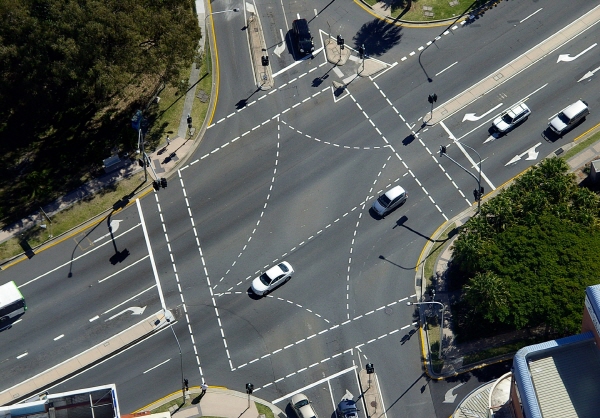
Next-generation intelligent transportation systems (C-ITS) and fully autonomous vehicles, which consist of V2X technologies such as vehicle-to-vehicle (V2V), vehicle-to-infrastructure (V2I), vehicle-to-person (V2P), and vehicle-to-network (V2N), as well as supporting mechanical elements such as Lidar, Radar, digital cameras, sonar, GPS, and IMU, and complementary technologies such as CAN buses and 3D mapping, rely heavily on real-time data transmission and reception based on 5G and artificial intelligence technology based on deep learning for organic networking.
As C-ITS requires a large amount of data for real-time data transmission and reception, 5G mobile communication, characterized by ultra-high speed, ultra-connectivity, and ultra-low latency, is essential.
According to Intel's analysis, the amount of data that autonomous vehicles will generate is expected to be 4,000 GB per day, with radar and sonar alone generating 10 to 100 KB of data per second, GPS generating 50 KB per second, and LiDAR generating 10 to 70 MB per second.
Fully autonomous vehicles emitting up to 4TB of data per hour are 5G capable of achieving a theoretical maximum speed of 20Gbps It is estimated that complete analysis and security measures can be taken within the cloud through communication alone. This is because approximately 2GB of data can be downloaded per second, or about 8,300GB per hour.
Fully autonomous vehicles will now use 5G networks and the like to communicate in real-time with roadside traffic management servers based on data.
According to the definition by the International Telecommunication Union (ITU), 5G offers transmission speeds of over 20 Gbps per second, which is 20 to 40 times faster than LTE. In a 5G network, one million devices will connect and exchange data within a 1 km radius of a telecommunications base station.
When applied to autonomous vehicles, the data latency is 0.04 to 0.05 seconds for LTE, whereas it is 0.001 seconds or less for 5G. When a vehicle detects a hazard and brakes suddenly, it moves 0.8 to 1.35 meters without any control in an LTE environment, but it is pushed back 0.027 meters in a 5G environment.
When driving at 100 km/h, with LTE latency (50 ms), the braking command starts after the vehicle moves 1.4 m, but with 5G, with ultra-low latency of 1 ms, braking starts after moving 2.8 cm. Considering that the human braking delay is about 200 to 300 ms, 5G can provide a sufficiently safe data transmission and reception environment.
The C-ITS pilot project is scheduled to be expanded nationwide following demonstration projects in local governments and on highways.
[Physical Infrastructure : AI]
According to the Ministry of Trade, Industry and Energy's 2019 Future Car Industry Development Strategy, the commercialization of fully autonomous driving is expected by 2030.
Autonomous driving technology is expected to converge with the fields of software, telecommunications, security, ICT, IoT, and AI.
The key to Level 4 autonomous vehicles is achieving fully autonomous driving within the Design Operational Scope (ODD) and securing response technologies for various driving and fault situations.
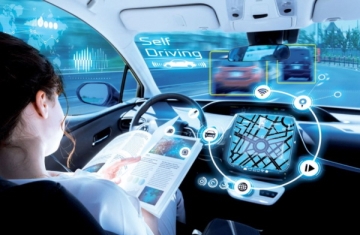
To this end, the role of AI is becoming increasingly important as it uses spatial information to identify and determine vehicles, objects, and traffic conditions on the road in place of humans, and to control the steering wheel and brakes.
Securing driving data is essential for autonomous driving AI to improve its capabilities through iterative learning of various driving environments. It requires various data such as object recognition, situation prediction, collision judgment, response to unexpected situations, driving area extraction, and end-to-end, and requires the development of deep learning models through applications in addition to deep learning networks.
Autonomous driving technology is expected to move beyond the traditional method of developing vehicles independently, such as existing surround sensors, and converge with areas such as software, communication, security, ICT infrastructure, IoT sensors, and AI.
[Physical Infrastructure: Automotive Semiconductors Due to Vehicle Electrification]
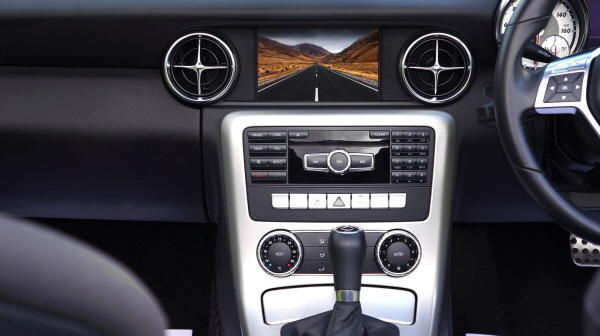
For Level 4 or higher autonomous driving, electronic components capable of controlling the vehicle without driver intervention must be expanded, rather than mechanical components like those used in the past..jpg)
The electrification of vehicles is necessary to realize fully autonomous driving.
Consequently, the markets for automotive electronics, ADAS, automotive infotainment, and autonomous vehicles are becoming the next battleground for the electronics industry.
Autonomous driving consists of three main stages: perception, judgment, and control. Among these, the core sensors of autonomous vehicles are cameras, radar, and lidar.
The primary reason a driver must drive is monitoring. Drivers must monitor their surroundings and make appropriate decisions at every moment. However, by combining electronic components, monitoring and responding to the vehicle's environment becomes possible. The key component for this is the sensor.
However, most of the recognition sensors currently being developed domestically are foreign products, so the actual localization rate can be considered 0%.
As the Society of Automotive Engineers (SAE) predicts that Level 5 autonomous vehicles will be completed by 2035, the localization of core components must definitely proceed.
According to Strategy Analytics, a specialized analysis firm, the ADAS market size is projected to reach $43.8 billion in 2023, and sales of sensors for ADAS are expected to reach $16.8 billion.
[Logical Infrastructure : SOTIF 21448]
With the release of ISO 26262 in November 2011, there has been a shift in perception toward prioritizing the safety of the vehicle and its occupants over vehicle performance, and vehicles have been equipped with various electronic devices.
▲ As the level of autonomous vehicles increases, unexpected safety accidents are occurring.
Electronic devices have now advanced beyond protecting the vehicle and driver to the point of providing convenience for the driver. However, as the level of autonomous vehicles improved, safety accidents (a third variable) occurred due to users misusing autonomous driving functions rather than the vehicle's own capabilities.
While ISO 26262 is designed to identify safety issues in advance, such as vehicle system failures and temporary failures like SW/HW design bugs, SOTIF 21448 is focused on addressing intended safety functions, unintended operating system performance limits, and predictable user misuse without failure.
Such real-world accident analysis helps provide data for training autonomous driving algorithms as well as for testing autonomous driving performance.
While technological advancements are making the driving experience increasingly convenient, it will be nothing more than a house built on sand without a foundation of safety.
Autonomous vehicles transforming from a means of transportation into a living space
With the global automotive market projected to record low growth of around 1%, domestic automobile production in the first half of 2019 reached 2,028,332 units (a 1.2% increase compared to the same period last year). The electric vehicle market has expanded due to the impact of the Fourth Industrial Revolution and stricter environmental regulations, while the development and commercialization of autonomous vehicles and car-sharing services are gradually gaining momentum.
ICT industry experts identified 5G as the key keyword defining 2019. So, what were the hottest issues throughout 2019 in the field of autonomous vehicles, which will transform everything from the movement of people and goods to the spatial structure and lifestyles we inhabit?
[Level 4 Autonomous Driving]
Unlike the existing automotive market, the future car market currently lacks a clear dominant player, presenting an opportunity for the Korean automotive industry to make a significant leap forward. Accordingly, after holding a total of 21 meetings with automotive OEMs and parts manufacturers, telecommunications, software, and semiconductor companies, automotive-related labor unions, and academic societies, the government held a proclamation ceremony for the national vision of future automobiles on October 15 and jointly announced the '2030 Future Car Industry Development Strategy' with relevant ministries.

▲ The key to the competition in autonomous driving development depends on who can secure more driving data.
First, we will increase the domestic new car sales share of electric and hydrogen vehicles to 33% and the global market share to 10% by 2030, and after launching Level 4 autonomous vehicles in 2024, we will build major road infrastructure nationwide to support Level 4 autonomous driving by 2027 to pursue the world's first commercialization.
The three major strategies for Korea's future car industry over the next 10 years are: targeting the global market through the acceleration of eco-friendly vehicle technology and domestic distribution; establishing a fully autonomous driving system and infrastructure by 2024; and transitioning to an open future car ecosystem based on private investment of approximately 60 trillion won.
To this end, the government plans to invest a total of 385.6 billion won from 2020 to 2026 and will also strengthen investment in autonomous vehicle systems, parts, and communications. To implement Level 4 autonomous driving, 1.7 trillion won is planned to be invested from 2021 to 2027.
A government national project involving officials from the Ministry of Trade, Industry and Energy, the Ministry of Economy and Finance, the Ministry of Science and ICT, the Ministry of Environment, the Ministry of Land, Infrastructure and Transport, the Ministry of SMEs and Startups, and the National Police Agency, as well as industry experts, aims to reduce traffic accident fatalities to 1,000 or fewer, decrease traffic congestion by 30%, reduce greenhouse gas emissions by 30%, and reduce fine dust by 11% by 2030.
Meanwhile, according to Navigant Research's 2019 overall ranking of autonomous driving technology, Waymo ranked first, GM second, and Ford third, while South Korea's Hyundai Motor Group remained at 15th place.
According to a Hyundai Motor Group official, “The key to the global competition in autonomous driving development is who can secure more driving data from more partners,” adding, “Natural collaboration with fields such as 5G communication and artificial intelligence will proceed based on domestic and overseas research centers.”
Currently, Japan's Toyota Motor Corporation has formed autonomous vehicle technology alliances with SoftBank, Volkswagen with Argo AI, and BMW with Intel and Mobileye, while Hyundai Motor Group partnered with Aptiv, which was spun off from Automotive, to establish a joint venture in the U.S. last September.
[Digital Infrastructure: C-ITS]
In 2019, the three major domestic mobile carriers successively demonstrated C-V2V and C-V2X technologies based on 5G and entered the autonomous vehicle market. With the C-ITS pilot project led by the Ministry of Land, Infrastructure and Transport set to be completed this coming December, it appears that higher-level technologies will be developed.

The Ministry of Land, Infrastructure and Transport has been conducting C-ITS pilot projects since 2014.
The C-ITS project, which has been underway since 2014, has a total budget of 33 billion won and consists of a total of 87.8 km of sections connecting expressways, national roads, and urban roads from Daejeon to Sejong City.
Next-generation intelligent transportation systems (C-ITS) and fully autonomous vehicles, which consist of V2X technologies such as vehicle-to-vehicle (V2V), vehicle-to-infrastructure (V2I), vehicle-to-person (V2P), and vehicle-to-network (V2N), as well as supporting mechanical elements such as Lidar, Radar, digital cameras, sonar, GPS, and IMU, and complementary technologies such as CAN buses and 3D mapping, rely heavily on real-time data transmission and reception based on 5G and artificial intelligence technology based on deep learning for organic networking.
As C-ITS requires a large amount of data for real-time data transmission and reception, 5G mobile communication, characterized by ultra-high speed, ultra-connectivity, and ultra-low latency, is essential.
According to Intel's analysis, the amount of data that autonomous vehicles will generate is expected to be 4,000 GB per day, with radar and sonar alone generating 10 to 100 KB of data per second, GPS generating 50 KB per second, and LiDAR generating 10 to 70 MB per second.
Fully autonomous vehicles emitting up to 4TB of data per hour are 5G capable of achieving a theoretical maximum speed of 20Gbps It is estimated that complete analysis and security measures can be taken within the cloud through communication alone. This is because approximately 2GB of data can be downloaded per second, or about 8,300GB per hour.
Fully autonomous vehicles will now use 5G networks and the like to communicate in real-time with roadside traffic management servers based on data.
According to the definition by the International Telecommunication Union (ITU), 5G offers transmission speeds of over 20 Gbps per second, which is 20 to 40 times faster than LTE. In a 5G network, one million devices will connect and exchange data within a 1 km radius of a telecommunications base station.
When applied to autonomous vehicles, the data latency is 0.04 to 0.05 seconds for LTE, whereas it is 0.001 seconds or less for 5G. When a vehicle detects a hazard and brakes suddenly, it moves 0.8 to 1.35 meters without any control in an LTE environment, but it is pushed back 0.027 meters in a 5G environment.
When driving at 100 km/h, with LTE latency (50 ms), the braking command starts after the vehicle moves 1.4 m, but with 5G, with ultra-low latency of 1 ms, braking starts after moving 2.8 cm. Considering that the human braking delay is about 200 to 300 ms, 5G can provide a sufficiently safe data transmission and reception environment.
The C-ITS pilot project is scheduled to be expanded nationwide following demonstration projects in local governments and on highways.
[Physical Infrastructure : AI]
According to the Ministry of Trade, Industry and Energy's 2019 Future Car Industry Development Strategy, the commercialization of fully autonomous driving is expected by 2030.

Autonomous driving technology is expected to converge with the fields of software, telecommunications, security, ICT, IoT, and AI.
The key to Level 4 autonomous vehicles is achieving fully autonomous driving within the Design Operational Scope (ODD) and securing response technologies for various driving and fault situations.
To this end, the role of AI is becoming increasingly important as it uses spatial information to identify and determine vehicles, objects, and traffic conditions on the road in place of humans, and to control the steering wheel and brakes.
Securing driving data is essential for autonomous driving AI to improve its capabilities through iterative learning of various driving environments. It requires various data such as object recognition, situation prediction, collision judgment, response to unexpected situations, driving area extraction, and end-to-end, and requires the development of deep learning models through applications in addition to deep learning networks.
Autonomous driving technology is expected to move beyond the traditional method of developing vehicles independently, such as existing surround sensors, and converge with areas such as software, communication, security, ICT infrastructure, IoT sensors, and AI.
[Physical Infrastructure: Automotive Semiconductors Due to Vehicle Electrification]
For Level 4 or higher autonomous driving, electronic components capable of controlling the vehicle without driver intervention must be expanded, rather than mechanical components like those used in the past.
.jpg)
The electrification of vehicles is necessary to realize fully autonomous driving.
Consequently, the markets for automotive electronics, ADAS, automotive infotainment, and autonomous vehicles are becoming the next battleground for the electronics industry.
Autonomous driving consists of three main stages: perception, judgment, and control. Among these, the core sensors of autonomous vehicles are cameras, radar, and lidar.
The primary reason a driver must drive is monitoring. Drivers must monitor their surroundings and make appropriate decisions at every moment. However, by combining electronic components, monitoring and responding to the vehicle's environment becomes possible. The key component for this is the sensor.
However, most of the recognition sensors currently being developed domestically are foreign products, so the actual localization rate can be considered 0%.
As the Society of Automotive Engineers (SAE) predicts that Level 5 autonomous vehicles will be completed by 2035, the localization of core components must definitely proceed.
According to Strategy Analytics, a specialized analysis firm, the ADAS market size is projected to reach $43.8 billion in 2023, and sales of sensors for ADAS are expected to reach $16.8 billion.
[Logical Infrastructure : SOTIF 21448]
With the release of ISO 26262 in November 2011, there has been a shift in perception toward prioritizing the safety of the vehicle and its occupants over vehicle performance, and vehicles have been equipped with various electronic devices.

▲ As the level of autonomous vehicles increases, unexpected safety accidents are occurring.
Electronic devices have now advanced beyond protecting the vehicle and driver to the point of providing convenience for the driver. However, as the level of autonomous vehicles improved, safety accidents (a third variable) occurred due to users misusing autonomous driving functions rather than the vehicle's own capabilities.
While ISO 26262 is designed to identify safety issues in advance, such as vehicle system failures and temporary failures like SW/HW design bugs, SOTIF 21448 is focused on addressing intended safety functions, unintended operating system performance limits, and predictable user misuse without failure.
Such real-world accident analysis helps provide data for training autonomous driving algorithms as well as for testing autonomous driving performance.
While technological advancements are making the driving experience increasingly convenient, it will be nothing more than a house built on sand without a foundation of safety.
본 기사에 대한 정정·반론·추후보도 청구는 보도 청구 안내를, 그간 게재된 보도문은 정정·반론보도 모아보기를 참고해 주세요.