


LTE services remain strong despite the introduction of 5G
 Published2019.12.23 11:37
LTE 평균 다운·업로드 속도 지난해 수준 유지
상용·공공 와이파이 전년 대비 9%·11.5% 개선
2019년 한 해 동안 국내 LTE 서비스 평균 다운로드 속도는 158.53Mbps, 업로드 속도는 42.83Mbps로 지난해와 비슷한 수준을 유지했다.
상용 WiFi의 평균 다운로드 속도는 333.51Mbps를, 공공 WiFi의 경우 394.76Mbps를 기록하며 지난해보다 각각 9%, 11.5% 개선된 것으로 집계됐다.

▲ 2019년도 통신서비스 품질평가 결과가 공개됐다
과학기술정보통신부와 한국정보화진흥원은 유·무선 통신서비스의 품질정보 제공을 위해 실시한 ‘2019년도 통신서비스 품질평가’ 결과를 공개했다.
통신서비스 품질평가는 ▲유·무선 통신서비스 및 음성통화 품질 측정 ▲통신사가 공개한 통신서비스 커버리지 정보의 정확성 점검 ▲이용자가 자신의 단말기로 통신 품질을 측정하는 이용자 상시평가 ▲사업자 자율평가 방식으로 진행됐다.
평가 대상은 ▲LTE, WiFi, 3G 등 무선인터넷 ▲VoLTE, 3G 등 이동통신 음성통화 ▲500Mbps급, 1Gbps급 등 유선인터넷 ▲통신사가 제공하는 커버리지 정보 등이며 대상 지역은 ▲도시, 농어촌을 비롯한 전국 행정동 ▲유동인구 밀집지, 인빌딩, 지하철 등 테마지역 ▲해상로, 유인도서, 등산로 등 취약지역을 중심으로 이뤄졌다.
자료의 신뢰성을 높이고 도시와 농어촌 간 품질 격차를 줄이기 위해 올해도 지난해와 같이 LTE·3G 통신서비스의 품질평가 시 도시와 농어촌의 측정비중을 1:1 비율로 유지하고 최근 3년간 미평가 지역 및 품질 민원지역을 평가지역에 포함시켜 이용자의 균등한 품질환경을 조성했다.
LTE·WiFi 평균 속도 양호
LTE 평균 다운로드 속도는 158.53Mbps(2018년 150.68Mbps)로 전년 대비 5.2% 증가한 반면 업로드 속도는 42.83Mbps(2018년 43.93Mbps)로 전년 대비 2.5% 감소해 지난해와 유사한 수준을 보였다.

▲ LTE 평균 속도는 지난해와 비슷한 수준을 유지했으며 와이파이의 경우 전년 대비 개선된 수치를 기록했다

지역별로 보면 대도시의 LTE 다운로드 속도는 183.58Mbps(2018년 164.64Mbps)로 지난해보다 늘어난 반면 농어촌 지역은 128.52Mbps(2018년 126.14Mbps)로 지난해와 비슷한 수준을 유지하며 도농 간 격차는 전년 대비 43.75Mbps (2018년 31.01Mbps) 증가한 것으로 나타났다.
유동인구 밀집지역을 중심으로 보면 지하상가의 다운로드 속도가 275.46Mbps로 가장 높았으며 KTX 객차가 84.85Mbps로 가장 낮았다. 상용 와이파이의 경우 터미널이 434.40Mbps로 가장 높고 지하철 객차가 58.50Mbps로 가장 낮았던 것으로 집계됐다.
WiFi 평균 다운로드 속도는 상용 와이파이의 경우 333.51Mbps(2018년 305.88Mbps), 공공 와이파이는 394.76Mbps(2018년 354.07Mbps)를 기록하며 전년 대비 각각 9%, 11.5% 개선됐다.
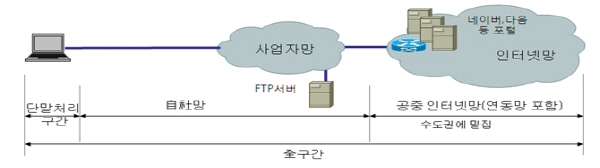
▲ 망 구성도 <이미지=과학기술정보통신부>
유튜브를 비롯한 네이버 TV캐스트, 카카오TV에 대한 모바일 동영상서비스의 영상체감 품질은 5점 기준에 4.14점을 기록하며 국제기준(4점)보다 양호한 수치를 보였으며 모바일 동영상의 전송 속도는 16.63Mbps(망 속도 132.34Mbps)를 기록했다.
통신사 자체 평가결과 정부평가와 유사
통신사가 자사 홈페이지를 통해 제공하는 유·무선 통신 커버리지 맵을 점검한 결과 2019년 10월 기준 3G·WiFi 및 유선 인터넷은 약 98% 이상 일치한 것으로 나타났다.
LTE의 경우 5.33%(2018년 12.94%)가 과대 표시되며 지난해보다 개선된 것으로 조사돼 정부는 이번 커버리지 점검 결과를 바탕으로 과대 표시된 부분에 대해서는 통신사에 시정조치를 내릴 계획이다.
올해부터 이용자 상시평가로 전환된 기가급 유선인터넷 평가결과는 ▲500Mbps급 평균 다운로드 및 업로드 속도는 각각 473.22Mbps, 476.09Mbps를 ▲1Gbps급 평균 다운로드 및 업로드 속도는 각각 951.67Mbps, 949.19Mbps를 기록했다.

▲ 통신사 자체 커버리지 맵 점검 결과 정부조사와 약 98% 이상 일치했다
이용자가 직접 측정한 LTE 속도는 단말기 성능에 따라 다운로드 속도가 최대 150.89Mbps에서 최소 24.27Mbps로 측정됐으며 정부평가와 유사한 단말로 측정한 LTE 다운로드 속도는 150.89Mbps를 기록하며 정부평가 결과인 158.53Mbps와 유사한 수치를 보였다.
사업자 자율로 진행된 초고속 인터넷(100Mbps)의 평균 다운로드 속도는 99.27Mbps, 업로드 속도는 98.85Mbps로 지난해와 비슷한 수준을 유지했으며 음성통화의 자사 통화성공률은 VoLTE의 경우 99.58%, 3G가 99.38%를 기록하며 양호한 수준으로 나타났다.
홍진배 과기정통부 통신정책관은 “올해 품질평가 결과 5세대(5G) 이동통신 서비스 도입에도 불구하고 LTE 서비스 품질은 지난해와 유사한 수준을 유지하는 상황”이라며 “2020년에는 5G에 대한 통신사의 투자를 촉진하고 이용자의 5G 커버리지 및 통신품질 우려를 해소하고자 5G에 대한 품질평가를 실시할 예정으로 평가 기본방향은 2020년 초 발표할 계획”이라고 말했다.
한편 정부는 이용자에게 통신서비스 품질 정보 제공을 목적으로 사업자의 통신 품질 개선 유도 및 이용자 편익 증진을 위해 지난 2007년부터 전기통신사업법에 따라 해마다 품질평가를 시행해 오고 있다.
2019년도 품질평가 결과는 오는 1월경 스마트 초이스와 공공데이터포털을 통해 게시될 예정이다.
Comments
Related news
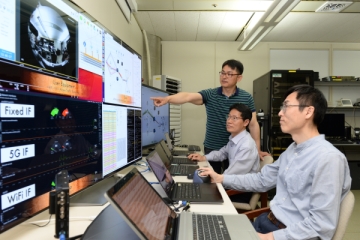
ETRI, Develops 5G-WiFi-Wired Combination Technology… Accommodates 40 Times More Traffic Than LTE
The Electronics and Telecommunications Research Institute has successfully developed foundational technology enabling high-capacity internet services of up to 40Gbps by combining 5G, WiFi, and wired internet networks through joint research with domestic small and medium-sized enterprises including KT, Ranbird Technology, and S-NET ICT. The technology developed by the research team is a multi-access traffic aggregation technique that consolidates three networks into one. By controlling different wired and wireless access environments through a single 5G core network, it enables accommodation of traffic 40 times greater than 4G. With this technology, when simultaneously using 5G, WiFi, and wired internet networks, theoretically a maximum transmission speed of 40Gbps can be achieved by combining 5G's 20Gbps (which is up to 20 times faster than LTE), next-generation WiFi (802.11ax) maximum speed of 10Gbps, and wired internet at 10Gbps. In this case, immediate control of access network conditions is possible, allowing provision of an optimal access environment to users.
2019.05.12by 이수민 기자
[5G Now] 28 billion wavelengths per second, how far has the development of 5G 28GHz come?
Since the 2018 PyeongChang Olympics, fierce 5G competition has been taking place among South Korea's three major telecommunications companies. However, due to the expansion of networks based on LTE infrastructure, they still have not shed the label of NSA (Non Stand Alone). Additionally, due to the low frequency band of 3.5GHz, 5G technology with the banner of high-speed, large-capacity communications has not been greatly recognized in the market. Japan and the United States recognized these issues and prepared to build market infrastructure from the 6GHz band and above, whereas in South Korea, perhaps due to the title of "world's first," the rollout began from what is commonly referred to as 4.5G, and currently multiple consumer complaints regarding telecommunications services continue to be raised. South Korea's three telecommunications companies announced a goal to implement 28GHz 5G communications by 2020 to address these issues. Whether 28GHz will actually become SA (Stand Alone) or whether it will become another NSA utilizing both 3.5GHz and 28GHz networks is a matter that remains to be seen.
2019.10.08by 명세환 기자

5G commercialization is about to begin for the first time? We're still in the 4.5G era.
The Ministry of Science and ICT projects that approximately 5 million people will subscribe to 5G mobile communication services by the end of the year. While the subscriber numbers alone represent a remarkable achievement, all three mobile carriers saw their third quarter results decline compared to the same period last year. Thus far, 5G commercial service has achieved success only in appearance. Service providers have not realized clear benefits through 5G, and users have failed to perceive any difference between 5G and LTE. Currently, 5G is not yet true 5G. It is 4.5G instead.
2019.11.07by 이수민 기자
European Patent Applications Surpass 200,000 for the First Time… South Korea Maintains 5th Place, Led by Batteries and Telecommunications
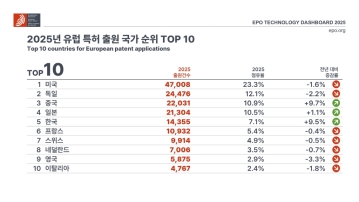
According to the European Patent Office (EPO)'s 'Technology Dashboard 2025', European patent applications last year reached 201,974, surpassing 200,000 for the first time. Korean companies and inventors filed 14,355 applications, representing a 9.5% increase from the previous year and maintaining 5th place by country. Battery, digital communication, and semiconductor technologies led the growth, with Samsung ranking as the top EPO applicant for the second consecutive year and LG reaching 3rd place. The presence of major domestic cities such as Seoul, Suwon, and Yongin was also confirmed. It was also revealed that Korea's European patent strategy is expanding beyond individual technologies to span the entire industry.
2026.03.24by 명세환 기자
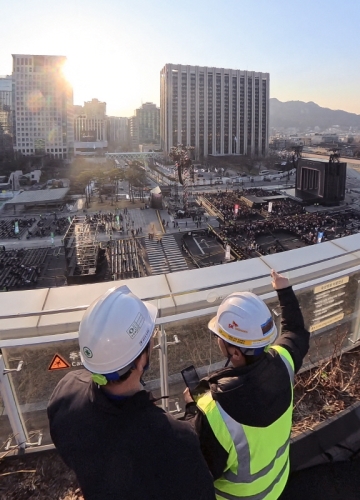
SK Telecom First Applies AI-Based Network Operations at Gwanghwamun K-Pop Concert
SK Telecom announced that it applied an AI-based network operation system for the first time at a large-scale K-pop concert held in the Gwanghwamun area of Seoul on March 21st, managing communication quality throughout the event. Mobile data usage during the three hours before and after the concert reached 12.15TB, approximately doubling compared to the same time slot the previous weekend. SK Telecom monitored traffic using the AI system 'A-One' in five-minute and 50-meter units to respond to potential overload situations, while also operating temporary communication facilities and on-site personnel in parallel. This case is interpreted as confirmation of the practical applicability of AI-based autonomous network operation in an environment where demand from dense events and foreign users increases simultaneously.
2026.03.23by 명세환 기자











