


2020 Consumer Goods Industry Outlook: "Eco-friendliness and transparency are more important than low prices."
 Published2020.01.20 09:24
Eco-friendly, traceable production and distribution history
The growing trend of consumer choice towards brands
Today's consumers appear to value the values a brand stands for more than cost or convenience.
On the 20th, IBM announced the results of a global consumer trend study conducted in collaboration with the National Retail Federation, targeting 19,000 consumers aged 18 to 73 in 28 countries around the world.
According to the results, 7 out of 10 consumers enjoy shopping in “micro-moments” – making instant purchases on their smartphones anytime, anywhere, even while doing other things.
As consumers have access to a wide variety of brands and products anytime, anywhere, corporate values have become more important than product price and convenience. Regardless of age and income level, consumers are willing to pay significantly higher prices for products that align with their personal beliefs.
70% of value-driven consumers would pay 35% more than the regular price for environmentally friendly brands, such as recycled and eco-friendly products. Fifty-seven percent of them also expressed a willingness to change their purchasing habits to reduce environmental impact.
Additionally, 79% of all consumers responded that they consider it important whether a brand guarantees authenticity through certifications or other means when purchasing a product. Of these, 71% said they would be willing to pay 37% more for a company that offered full transparency and traceability.
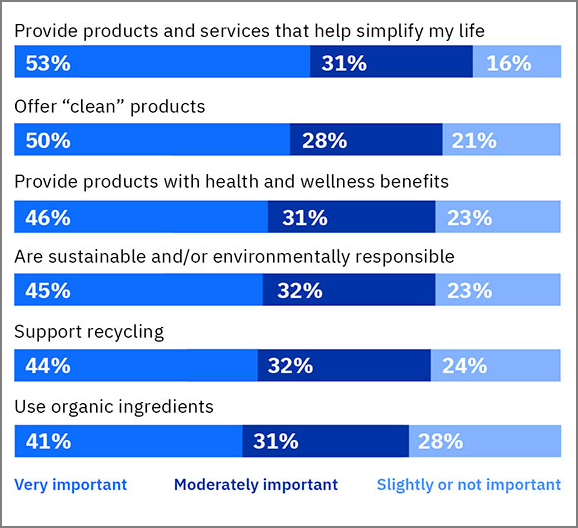
(Graph = IBM Meet the 2020 consumers driving change)
IBM suggests three ways retailers and consumer goods brands can build brand affinity, citing a fundamental shift in consumer purchasing behavior.
1. Securing consumer trust through transparency and traceability.
In the age of micro-moments, simply providing convenient or fast service is not enough to earn customers' trust.
Consumer goods brands must differentiate themselves by providing consumers with quick and easy access to information they previously didn't have to provide, such as information about the product's manufacturing process, the quality of its ingredients, whether it's environmentally responsible or ethically sourced, and the conditions under which it's used.
We need to differentiate ourselves by providing faster and more convenient access. For example, we can use blockchain technology to prove that coffee is produced through fair trade.
2. Enhancing environmentally friendly efforts
Efforts to reduce our environmental impact go beyond using recycled packaging and reducing our carbon footprint.
Brands must also participate in building a sustainable circular economy for future generations. To conserve resources and eliminate waste, manufacturers must incorporate environmentally friendly elements throughout their supply chains.
3. Creating value through flexibility, not product variety.
As digital interactions shape how consumers shop, retailers need to innovate their stores to deliver a consistent brand experience across all channels.
This requires implementing new technologies into existing store environments to continue to meet consumer expectations.
“Our research shows that shoppers are willing to pay more for retailers who can clearly prove the origin of their goods,” said Luq Niazi, global general manager, IBM Consumer Products Industry. “Transparency in logistics can be a brand differentiation strategy, and traceability can be implemented using data and blockchain technology.”
Comments
Related news
In an era where user experience takes precedence, what direction should home appliances evolve in?
Today's consumers expect positive life experiences—such as convenience, stability, and enjoyment—that products deliver, rather than product ownership itself. Samsung Electronics President Kim Hyun-suk defined the next decade as an era of experience, stating that home appliance manufacturers must work to provide increasingly personalized experiences and environments by combining hardware and software for individuals.
2020.01.07by 이수민 기자
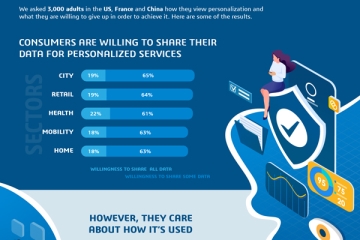
How far can consumers go with their personal information in exchange for personalized products and services?
Today's young consumers are driving personalization trends to improve products and services, quality of life, and personal safety, and survey results show they are willing to pay higher costs and provide personal information for these experiences. Additionally, across all generations, most consumers prioritize personalization for healthcare and personal safety, while expressing concerns about how data is collected and managed for these purposes, according to the findings.
2020.01.09by 이수민 기자
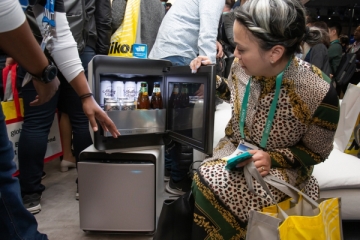
CES 2020 Becomes an "All-Industry" Expo Encompassing the 'Consumer Electronics Industry'
CES, which started as a consumer electronics exhibition, has recently been called the Las Vegas Motor Show as automotive companies' participation has increased. While it is true that automotive industry participation has grown, at CES 2020, both existing home appliance manufacturers and companies unrelated to home appliances presented impressive products, demonstrating a comprehensive approach spanning all industries.
2020.01.15by 이수민 기자

ESP32 Development Environment Selection and GPS Application Implementation
The ESP32 is a microcontroller that integrates Wi-Fi, Bluetooth, 12-bit ADC, capacitive touch, PWM, DAC, and UART in a single SoC. However, the abundance of features does not by itself solve the designer's problems. The real challenges lie in selecting the appropriate development environment, determining which pins can be used and which must be avoided, and converting raw data from modules into usable information. This document addresses ESP32 peripheral constraints (ADC2 and Wi-Fi coexistence limitation, UART1 occupancy, ADC non-linear regions), the trade-offs between Arduino IDE and ESP-IDF, and the process from connecting NEO-6M/NEO-M8N GPS modules to UART2, parsing NMEA sentences, and visualizing routes in Google Earth, all organized based on documented references.
2026.10.12by 편집부

MIPI CSI-2, DSI-2, C-PHY, D-PHY Test Solution Technical White Paper
The MIPI interface adopts a burst mode that transitions between low-power (LP) and high-speed (HS) states for low-power consumption, and in return, strict timing rules are imposed on state transitions. Additionally, the high-speed section operates as a packet-based protocol with headers, ECC, and CRC, so verification engineers must handle waveforms and protocols simultaneously. Traditional configurations combining general-purpose oscilloscopes and AWGs reveal limitations in setup complexity, measurement uncertainty, and lack of reproducibility when faced with these requirements. This white paper, based on webinar materials, organizes the structure of this problem and describes how the SV5C-DPTXCPTX generator for receiver testing and SV5C-DPRXCPRX analyzer for transmitter testing integrate state transition testing, stressed eye testing, and protocol analysis into a single bench, along with their application boundaries.
2026.10.12by 편집부











