



Smart gas meters to be demonstrated in 30,000 households nationwide
 Published2020.01.20 12:02
Smart gas meter distribution to begin in March
Jeju Island plans to complete 15,000 units by end of this year
The Ministry of Trade, Industry and Energy announced on the 20th that it has finalized the selection of five pilot regions including Seoul, Gyeonggi, Gangwon, Daegu, and Gwangju for smart gas meter demonstration projects, and plans to distribute a total of 15,000 smart gas meters by the end of this year.
The smart gas meter demonstration project is being pursued to enhance the quality of city gas metering and meter reading services, including protecting gas users' privacy, improving meter readers' working conditions, and enhancing safety regarding gas leaks.
To select pilot regions, the Ministry conducted a demand survey from November to December targeting single-person female households, elderly households, and areas where meter readers' working conditions need improvement.
A total of 11 local governments including Seoul and Gyeonggi expressed hope for pilot region selection, and multiple local governments proposed additional distribution of smart gas meters using their own budgets. The total installation demand for smart gas meters across the 11 regions is 53,963 households (2,348 single-person households, 51,615 households for meter readers' working condition improvement).
On the 16th, the Ministry held an evaluation committee consisting of the Korea Gas Corporation, the Urban Gas Association, the Korea Electronics Technology Institute (KETI), and external experts, and focused on evaluating "regional smart gas meter installation demand" and "local governments' willingness to distribute" by region.
As a result of the evaluation, Seoul (3,500 units) and Gyeonggi (4,500 units) were selected as pilot regions in the Seoul metropolitan area, Gangwon (500 units) in the central region, Daegu (4,000 units) in the Yeongnam region, and Gwangju (2,500 units) in the Honam region. The number of units supported by region was allocated in consideration of the smart gas meter installation demand for each pilot region.
Smart gas meter distribution is scheduled to begin in earnest in March of this year at the selected pilot regions following procedures including final confirmation of distribution households.
Meanwhile, Jeju Island, which is simultaneously pursuing a demonstration project with the pilot regions, plans to complete the distribution of 15,000 smart gas meters to Jeju City and Seogwipo City by the end of this year, starting with the installation of 100 units in Nohyeong-dong, Jeju City in December last year.
Through 2021, when the demonstration project is in progress, the Ministry plans to address technical and regulatory improvements that emerge in the operation of smart gas meters, and to verify the effectiveness of smart gas meters, including consumer satisfaction and real-time gas leak detection functionality.
Comments
Related news

How Wi-SUN, which ensures IoT device interconnectivity, is changing cities
Energy conservation, automatic metering control and monitoring requirements are top priorities for progressive cities and communities worldwide. Accordingly, internet-based control and monitoring strategies are being promoted. Wi-SUN is a physical layer technology standardized as IEEE 802.15.4g, and in order to create new IoT industries and activate services, the output in the 900MHz band has been increased from the existing 10mW to a maximum of 200mW, and its application is expected across various fields. Currently, Wi-SUN is widely used in smart metering and wiring automation in the United States and Japan, and many countries and companies are viewing it as an alternative for smart grids, infrastructure management, traffic management systems, and smart lighting, and have begun full-scale implementation reviews.
2019.09.03by 이수민 기자
KT Launches AI-Based Building Energy Management Pilot Service
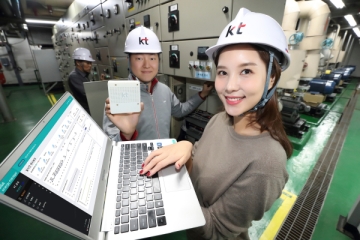
KT is launching a pilot service for Giga Energy Manager Building, which manages and controls energy in mid-to-large buildings based on AI. This service integrates KT's proprietary AI engine Robo Operator and intelligent controller iBox into the building automation system. Giga Energy Manager analyzes building energy consumption patterns and automatically controls the operation of air conditioning units, HVAC equipment, and other systems according to an optimized schedule, thereby improving energy efficiency and reducing costs while also saving administrators' working time. No additional equipment is required to use the service, and it can be applied to various types of buildings simply by installing the iBox terminal and electricity and gas meters.
2019.11.08by 이수민 기자

Korea-ASEAN Ministerial-level Smart City Council Established
Officials and vice ministers from 11 countries and the ASEAN Secretary-General, gathered at the first-ever Korea-ASEAN Smart City Ministerial Meeting held among Korea-ASEAN member states, shared each country's solutions to urban challenges and pledged continuous cooperation. The Ministry of Land, Infrastructure and Transport shared Korea-ASEAN smart city cooperation achievements to date and presented four measures to further expand cooperation.
2019.11.25by 이수민 기자
Refrigerator shutdown shakes food supply chain…'OT security' emerges as critical management priority
Supermarket refrigeration and freezing equipment across France was paralyzed by cyberattacks, highlighting the importance of OT (Operational Technology) security. Attackers infiltrated internet-connected control systems and manipulated temperature settings and defrost cycles, resulting in mass food disposal, store operation disruptions, and fire hazards. Notably, instead of installing malware, the attackers exploited existing defrost functions to disguise abnormal operations as normal activities. Experts warn that advances in AI are lowering the barrier to entry for attacks. They emphasize that companies must protect physical safety and supply chains through securing OT asset visibility, segregating IT and OT networks, controlling remote access, managing legacy equipment, and establishing anomaly detection systems.
2026.10.14by 배종인 기자
Camera for Both Humans and Machines: ST BrightSense 5MP Dual Shutter Image Sensor
Video consumed by humans and imagery analyzed by machines impose different requirements on the sensor in terms of shutter method and wavelength band. Until now, sensors had to be separated or supplemented with companion chips and high-performance processors, and this cost and complexity became a bottleneck in vision system design. The ST BrightSense next-generation 5MP image sensor (VD5943, VD1943, VB5943, VB1943) with 2.25 µm pixels supports both global and rolling shutters, and through on-chip staggered HDR (up to 100 dB), on-chip RGB-IR separation and 5MP NIR smart upscaling, and frame-by-frame context switching, absorbs both requirements internally at the sensor level. This white paper describes the rationale, choices, trade-offs, and results of each design decision based on presentation slides and technical Q&A, and specifies application boundaries. The product is scheduled for mass production in February 2026, and evaluation and sampling are currently available.
2026.10.13by 편집부











